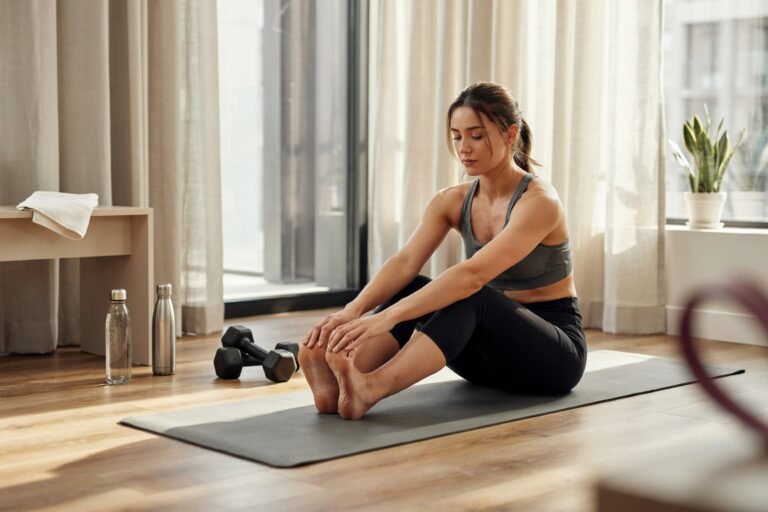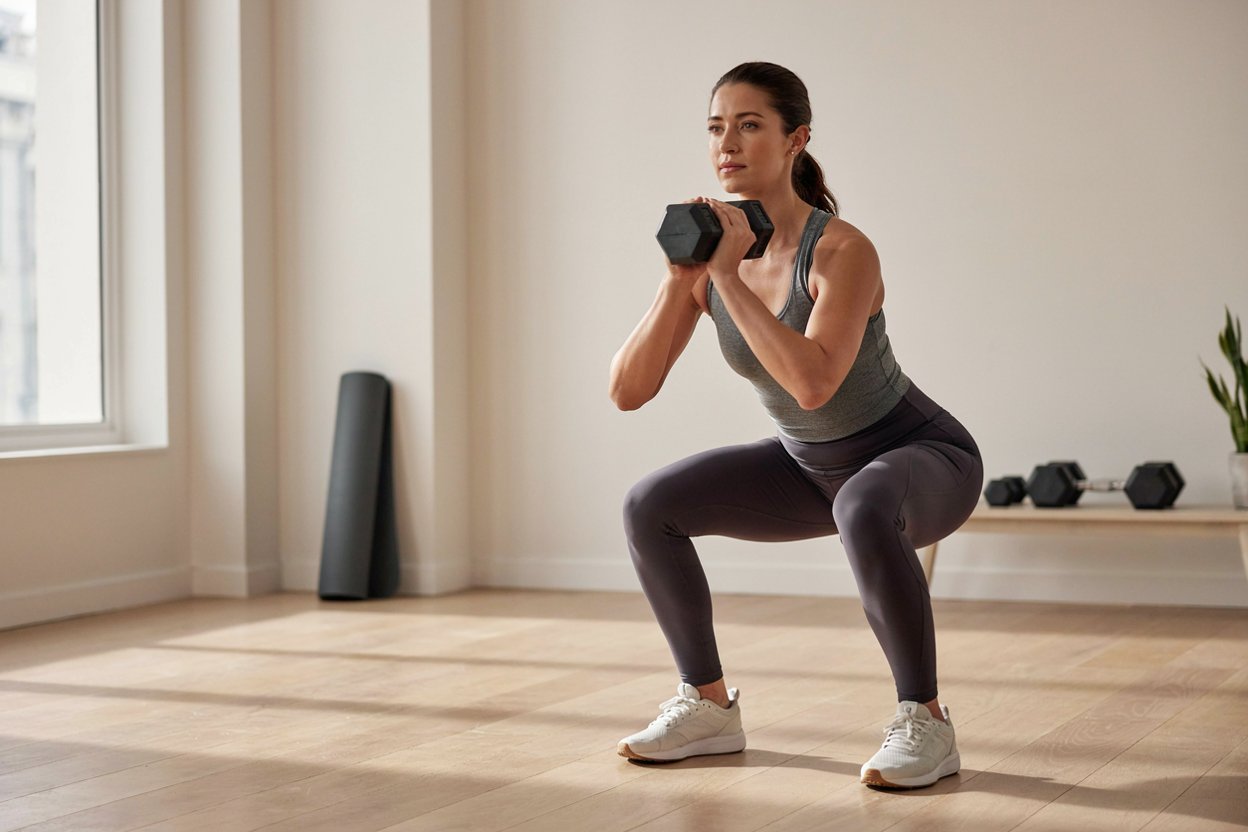
A strong lower body can make everyday movement feel easier, from walking up stairs to carrying groceries and keeping up with a busy day.
I also find that I do not need a complicated gym setup to work my legs effectively. A pair of dumbbells can provide enough resistance for squats, lunges, deadlift variations, and other lower body exercises while still giving me plenty of flexibility with my workouts.
When I am short on time, dumbbell leg exercises are one of the easiest ways for me to fit strength training into my day without spending a long time setting up equipment.
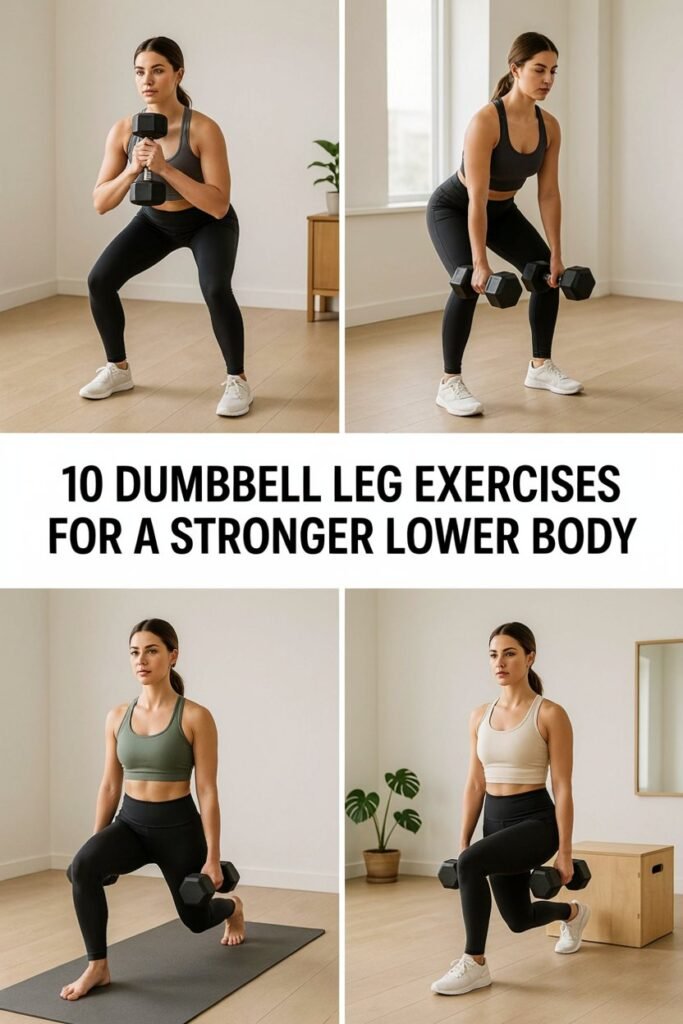
They allow me to work my quads, hamstrings, glutes, calves, and stabilizing muscles while also challenging my balance and coordination.
In this guide, I am sharing 10 dumbbell leg exercises that I regularly come back to when I want a practical lower body workout.
I will explain how I perform each movement, what muscles it targets, common mistakes to avoid, and how I adjust the exercises as my strength improves.
Why I Like Dumbbell Leg Exercises
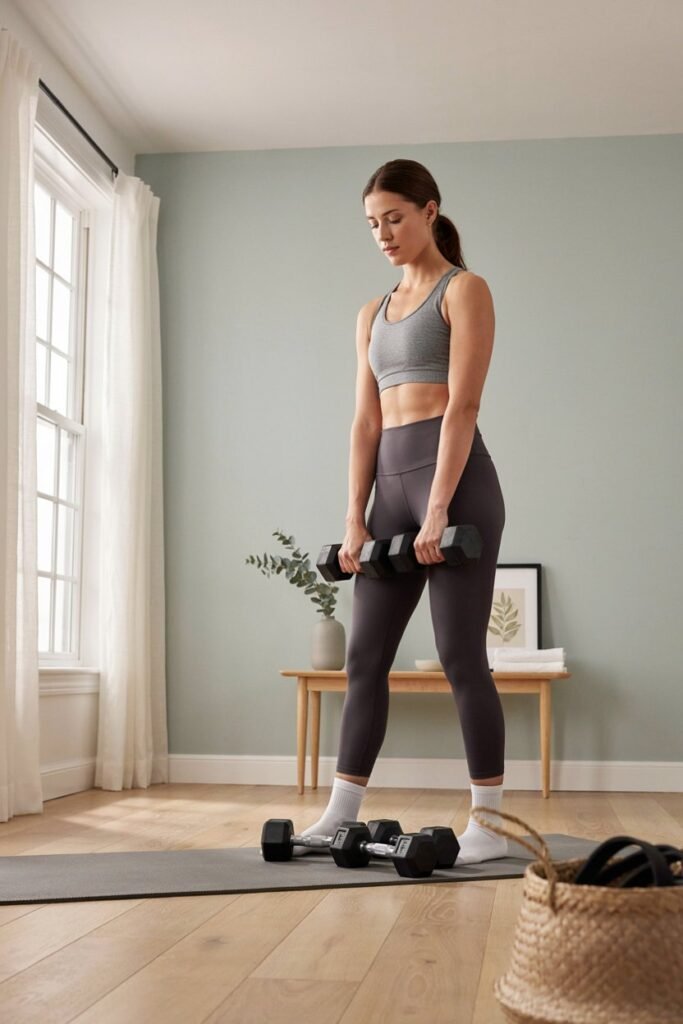
I have always liked workouts that are simple enough to actually fit into a normal day.
There are times when I have plenty of time for a longer workout, but there are also days when I have other things to do and cannot spend a lot of time preparing for exercise. This is where dumbbells work particularly well for me.
I can put them beside my workout area, warm up, and start training.
Dumbbells are also useful because they allow me to adjust my workout without changing the entire routine.
For example, I can make an exercise more challenging by:
• Increasing the dumbbell weight
• Adding a few repetitions
• Adding another set
• Slowing down the movement
• Pausing at the most difficult part of the exercise
• Using a single leg variation
Another reason I like dumbbell leg workouts is that they do not force me to rely on machines. I can train my legs through different movement patterns while also working on balance and stability.
That combination makes dumbbells particularly useful for home workouts.
What Muscles Do Dumbbell Leg Exercises Work?
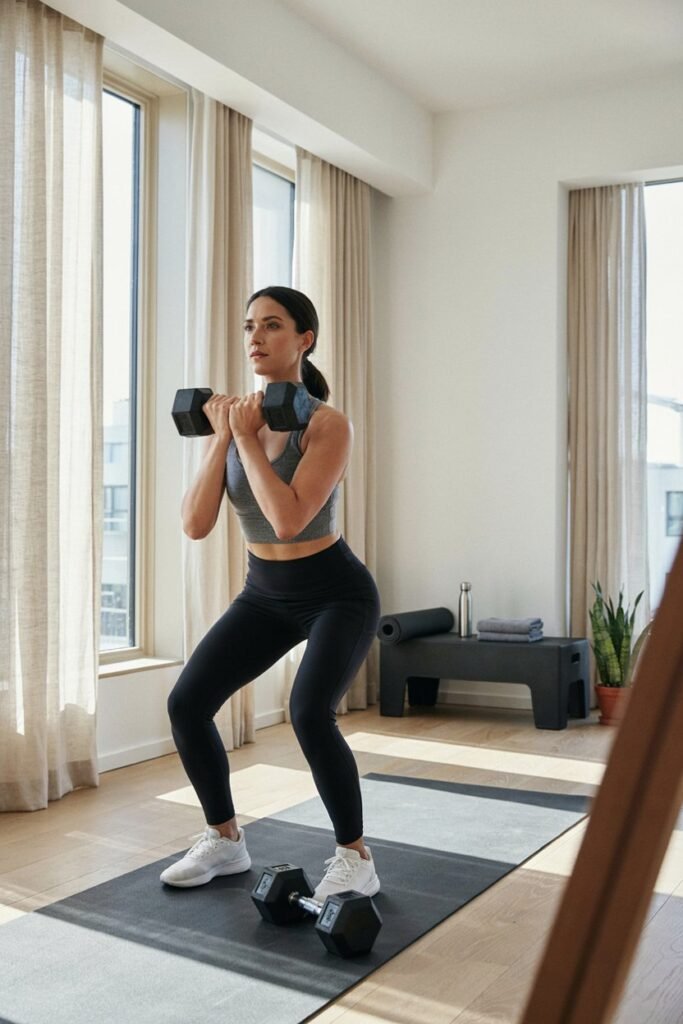
A good lower body workout should not focus on only one part of the legs.
I like combining exercises that involve different movement patterns so that my workout does not become repetitive.
Depending on the exercise, dumbbell leg training can work:
• Quadriceps at the front of the thighs
• Hamstrings at the back of the thighs
• Glutes around the hips and buttocks
• Calves at the lower part of the legs
• Core muscles that help stabilize the body
Single leg exercises can also challenge smaller stabilizing muscles because you have to control your balance while one leg is doing most of the work.
That is one reason I do not judge a workout only by how heavy the dumbbells are. A lighter dumbbell can still make an exercise extremely challenging when the movement requires more balance, control, or range of motion.
How Heavy Should Your Dumbbells Be?
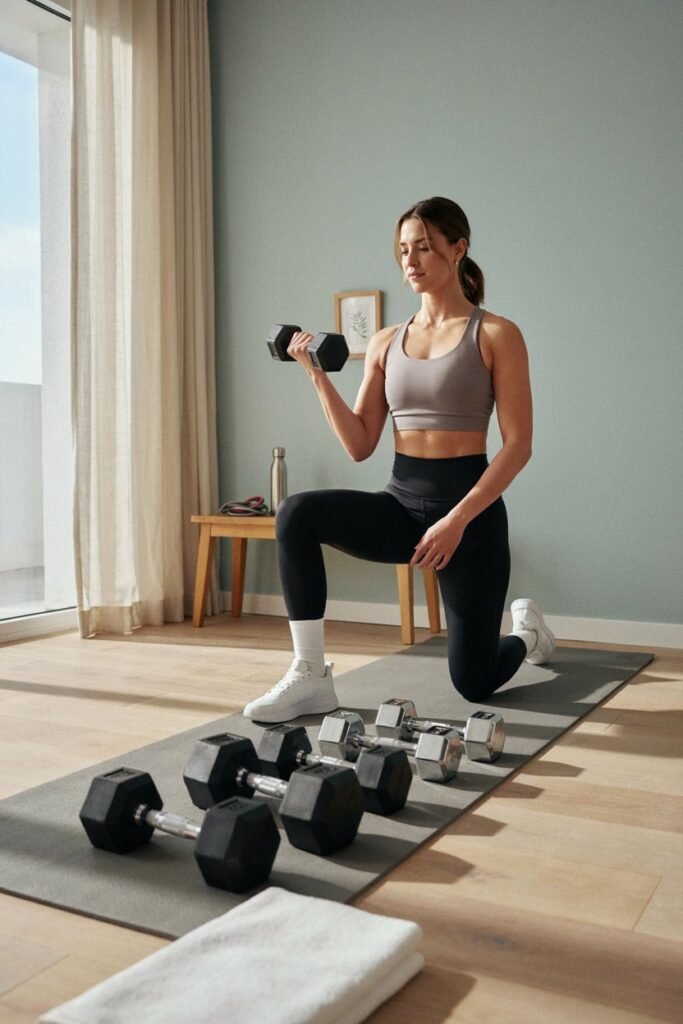
This is one of the questions I think about whenever I start a new dumbbell exercise.
There is no single dumbbell weight that will work for everyone. Your ideal weight depends on your current strength, experience, the exercise you are performing, and the number of repetitions you want to complete.
When I am learning a movement, I prefer starting lighter.
I would rather perform 10 controlled repetitions with a manageable weight than use a heavier dumbbell and spend the final few repetitions trying to maintain my balance.
A good weight should feel challenging toward the end of the set while still allowing you to maintain proper technique.
Signs Your Dumbbells May Be Too Heavy
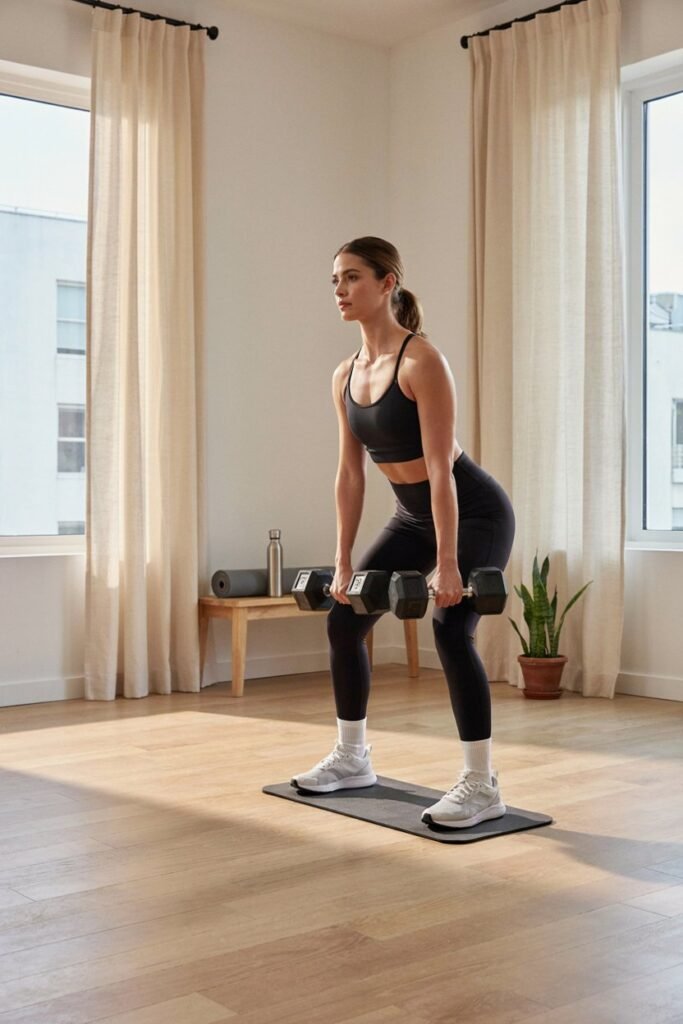
• Your posture changes during the exercise
• You have to swing or use momentum
• You cannot complete the planned repetitions
• Your knees become difficult to control
• Your back starts rounding during a hip hinge movement
• You feel that you are trying to move the weight rather than control the exercise
Signs You May Be Ready for More Weight
• You can complete every repetition comfortably
• Your final repetitions do not feel challenging
• You could easily perform several additional repetitions
• You have maintained excellent technique for several workouts
I also recommend remembering that different exercises require different amounts of resistance.
I might use a heavier dumbbell for goblet squats than I would for Bulgarian split squats. That is completely normal.
The goal is not to use the same weight for every exercise.
Warm Up Before Your Dumbbell Leg Workout
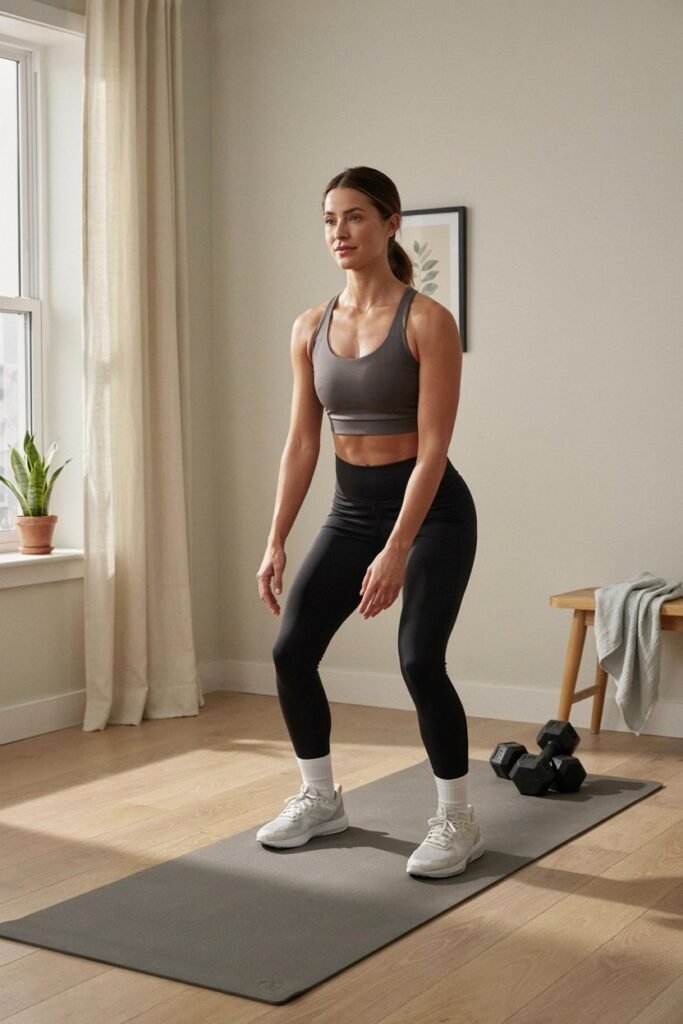
I do not like jumping straight into heavy leg exercises when my body has not had a chance to warm up.
A short warmup is enough to get me moving and prepare my legs for the workout.
You do not need a complicated warmup routine.
Before a lower body workout, you can spend around five to ten minutes doing simple movements such as:
• Walking in place
• Bodyweight squats
• Alternating reverse lunges without weights
• Glute bridges
• Gentle leg swings
• Calf raises
I usually start with bodyweight versions of the exercises I plan to perform. This gives me a chance to check how my body feels before adding dumbbells.
If something feels uncomfortable during the warmup, I would rather address it then than continue into a weighted exercise.
1. Dumbbell Goblet Squat
The dumbbell goblet squat is one of the first exercises I would recommend for someone learning how to incorporate dumbbells into a leg workout.
It is simple to understand, does not require much space, and works several major lower body muscles at the same time.
The main muscles involved include:
• Quadriceps
• Glutes
• Hamstrings
• Core muscles
How to Do a Dumbbell Goblet Squat
Stand with your feet around shoulder width apart.
Hold one dumbbell vertically with both hands and keep it close to your chest.
Before beginning the movement, brace your core and look straight ahead.
Then:
• Push your hips slightly backward
• Bend your knees
• Lower your body in a controlled manner
• Keep your feet firmly planted
• Keep your chest lifted
• Lower as far as you can while maintaining good form
• Push through your feet to return to standing
• Squeeze your glutes gently at the top
I do not try to force myself into the deepest possible squat.
The depth that works for one person may not feel comfortable for another person. I prefer a range of motion that allows me to keep my feet stable, control my knees, and maintain good posture.
What I Focus On During Goblet Squats
One thing I have learned is that slowing down the movement can make a familiar exercise feel completely different.
Instead of dropping quickly into the bottom position, I control the descent.
I also pay attention to my knees.
I want them to remain controlled and generally follow the direction of my toes rather than collapsing inward.
The dumbbell should stay close to my chest throughout the movement.
Common Goblet Squat Mistakes
• Using a dumbbell that is too heavy
• Allowing the knees to collapse inward
• Lifting the heels
• Rushing through repetitions
• Letting the dumbbell drift away from the chest
• Trying to squat deeper than your mobility allows
Goblet Squat Repetitions
For general strength and muscle building, a practical starting point is:
• 3 sets
• 8 to 12 repetitions
• 60 to 90 seconds of rest
Beginners can start with fewer repetitions and focus on learning the movement.
2. Dumbbell Romanian Deadlift
The dumbbell Romanian deadlift is one of my favorite exercises for working the back of the legs.
If squats give me more of a knee dominant movement, Romanian deadlifts give me an opportunity to focus on the hamstrings and glutes through a controlled hip hinge.
The main muscles involved include:
• Hamstrings
• Glutes
• Core and stabilizing muscles
How to Do a Dumbbell Romanian Deadlift
Stand with your feet around hip width apart.
Hold a dumbbell in each hand with your arms relaxed in front of your thighs.
Keep a slight bend in your knees.
Brace your core and begin pushing your hips backward.
As your hips move backward, allow the dumbbells to travel down the front of your legs.
Keep them close to your body.
Continue lowering until you feel a noticeable stretch through your hamstrings without losing control of your back position.
Then push your hips forward and return to standing.
The Most Important Thing I Watch
I do not worry about getting the dumbbells as close to the floor as possible.
This is one of the easiest ways to turn a good Romanian deadlift into a poorly controlled movement.
Your range of motion depends partly on your flexibility and mobility.
For me, the important part is feeling the hamstrings working while keeping the movement controlled.
Think About Your Hips
I find it helpful to think about pushing my hips backward rather than thinking about lowering the dumbbells.
That small change makes the movement much easier to understand.
The dumbbells are simply following the movement of my hips.
Common Romanian Deadlift Mistakes
• Rounding the back
• Bending the knees too much
• Turning the exercise into a squat
• Moving the dumbbells away from the legs
• Using momentum
• Trying to touch the floor when your mobility does not allow it
Romanian Deadlift Repetitions
A practical starting point is:
• 3 sets
• 8 to 12 repetitions
• Controlled lowering
• 60 to 90 seconds of rest
I would rather use a lighter dumbbell and feel the hamstrings working properly than increase the weight and lose control.
3. Dumbbell Reverse Lunge
Reverse lunges are particularly useful when I want to train each leg separately.
They challenge the quads and glutes while also requiring balance and control.
The main muscles involved include:
• Quadriceps
• Glutes
• Hamstrings
• Core and stabilizing muscles
How to Do a Dumbbell Reverse Lunge
Stand tall with a dumbbell in each hand.
Keep your feet comfortably positioned.
Take a controlled step backward with one leg.
Bend both knees as you lower your body.
Keep the front foot firmly planted.
Lower until you reach a comfortable position, then push through the front foot to return to standing.
Repeat on the other side.
Why I Like Reverse Lunges
I often prefer reverse lunges when I want more control.
Unlike walking lunges, I do not have to keep moving forward across the room.
That makes them especially practical for a home workout.
I can stay in one place and concentrate on:
• Keeping my balance
• Controlling the descent
• Keeping the front foot stable
• Driving through the working leg
• Maintaining good posture
My Tip for Beginners
If you have never performed weighted lunges before, there is no reason to start with heavy dumbbells.
Try the movement with your bodyweight first.
Once you can perform several controlled repetitions on both sides, add light dumbbells.
This also gives you a chance to notice whether one side feels less stable than the other.
Common Reverse Lunge Mistakes
• Taking a step that is too short
• Losing balance during the descent
• Rushing the movement
• Allowing the front knee to collapse inward
• Using excessive weight
• Pushing mostly from the back leg
Reverse Lunge Repetitions
A good starting point is:
• 2 to 3 sets
• 8 to 10 repetitions per leg
• 60 to 90 seconds of rest
How I Would Combine These Three Exercises
If I only had enough time for a short lower body workout, I could build a useful session around these three exercises.
Goblet Squat
• 3 sets
• 10 repetitions
Romanian Deadlift
• 3 sets
• 10 repetitions
Reverse Lunge
• 2 sets
• 8 repetitions per leg
I would rest between sets and give myself enough time to recover before starting the next exercise.
I also would not rush simply because I want the workout to be finished quickly.
One thing I have noticed with leg training is that controlled repetitions can make a relatively simple routine much more challenging. I would rather focus on the quality of each repetition than chase a number on the dumbbell.
This combination also gives me three different movement patterns:
• Squatting
• Hip hinging
• Single leg training
That makes these exercises a useful foundation for the rest of the workout.
4. Dumbbell Bulgarian Split Squat
The Bulgarian split squat is one of those exercises that looks fairly simple until I actually start doing it. Once one leg is doing most of the work, even a moderate dumbbell can make the exercise challenging.
I like this movement because it gives me a chance to work each leg separately while also challenging my balance and stability.
It primarily works:
• Quadriceps
• Glutes
• Hamstrings
• Hip stabilizing muscles
• Core
How I Set Up the Bulgarian Split Squat
I use a sturdy bench or elevated surface behind me.
I place the top of one foot on the surface and position my other foot far enough forward that I can lower comfortably without feeling cramped.
I hold a dumbbell in each hand and keep my arms relaxed by my sides.
Before lowering, I make sure my front foot feels stable.
Then I:
• Bend the front knee slowly
• Lower my hips toward the floor
• Keep my chest controlled
• Allow the back knee to move toward the floor
• Push through the front foot
• Return to the starting position
I complete my repetitions on one side before switching legs.
Getting Your Stance Right
The foot position makes a huge difference with this exercise.
If my front foot is too close to the bench, I usually feel cramped at the bottom.
If it is too far away, the movement can become awkward and difficult to control.
I recommend practicing the movement without dumbbells first.
Once you find a comfortable stance, adding weight becomes much easier.
My Tip for Making It More Comfortable
I do not force my back leg to take a large amount of the workload.
The front leg should be doing most of the work.
I also keep the movement controlled instead of dropping quickly toward the floor.
If balance is difficult, I sometimes reduce the dumbbell weight or hold onto something stable with one hand until I become more comfortable.
Common Bulgarian Split Squat Mistakes
• Using too much weight
• Starting with the front foot too close to the bench
• Losing balance during the descent
• Dropping quickly into the bottom position
• Allowing the front knee to collapse inward
• Relying too heavily on the back leg
How Many Should You Do?
For most people, I would start with:
• 2 to 3 sets
• 8 to 10 repetitions per leg
• 60 to 90 seconds of rest
You can increase the challenge gradually as your balance and strength improve.
5. Dumbbell Step Ups
Dumbbell step ups are another lower body exercise I like because they combine strength, balance, and controlled movement.
They primarily work:
• Quadriceps
• Glutes
• Hamstrings
• Calves
• Core stabilizing muscles
You only need a sturdy step or platform that is appropriate for your fitness level.
How I Do Dumbbell Step Ups
I stand in front of a stable platform with a dumbbell in each hand.
I place my entire right foot on the platform.
Then I press through that foot and bring my body upward.
Once I am standing on the platform, I carefully lower myself back down.
I then repeat the movement with the other leg.
The part I pay the most attention to is the lowering phase.
It is tempting to simply step down quickly, but controlling the descent makes the exercise feel much more demanding.
Keep the Platform Stable
I would never use a chair or unstable piece of furniture for weighted step ups.
The surface should be:
• Stable
• Firm
• Large enough for your foot
• Appropriate for your current strength and balance
There is no advantage to using a very high platform if it prevents you from maintaining good form.
A Mistake I Try to Avoid
I try not to push aggressively from the leg that remains on the floor.
The purpose of the movement is to have the working leg drive me onto the platform.
If I use too much assistance from the back leg, the exercise becomes easier but I lose some of the training effect.
My Step Up Tip
Start with a lower platform than you think you need.
Once you feel comfortable controlling both the upward and downward portions, you can gradually increase the challenge.
You can make the movement harder by:
• Increasing the dumbbell weight
• Using a slightly higher platform
• Slowing the lowering phase
• Increasing repetitions
How Many Step Ups Should You Do?
Try:
• 3 sets
• 8 to 10 repetitions per leg
• 60 to 90 seconds of rest
6. Dumbbell Sumo Squat
The dumbbell sumo squat gives me a useful alternative to the standard squat.
The wider stance changes the movement and allows me to focus more on the inner thighs and glutes while still working the quads.
It primarily works:
• Quadriceps
• Glutes
• Hamstrings
• Inner thighs
• Core
How I Do the Dumbbell Sumo Squat
I stand with my feet wider than shoulder width apart.
I turn my toes slightly outward.
I hold one dumbbell with both hands in front of my body.
Before lowering, I brace my core and keep my chest lifted.
Then I:
• Bend my knees
• Push my hips slightly backward
• Lower my body between my legs
• Keep my knees tracking in the direction of my toes
• Push through my feet
• Return to standing
I do not try to make my stance extremely wide.
A comfortable wide stance gives me much better control.
Where I Feel This Exercise
When I use a controlled tempo, I usually feel this exercise through my quads, glutes, and inner thighs.
The wider stance can also make the movement feel different from a regular goblet squat.
That is one reason I like including different squat variations rather than doing the exact same movement throughout a workout.
Common Sumo Squat Mistakes
• Taking an excessively wide stance
• Turning the toes too far outward
• Allowing the knees to collapse inward
• Rounding the upper body
• Using a dumbbell that is too heavy
• Rushing through the repetitions
My Form Tip
I pay attention to the direction of my knees.
As I squat, I want my knees to generally follow the direction of my toes.
If I cannot maintain that position comfortably, I reduce the range of motion or adjust my stance.
How Many Should You Do?
A practical starting point is:
• 3 sets
• 10 to 12 repetitions
• 60 to 90 seconds of rest
7. Dumbbell Walking Lunge
Walking lunges add movement to a leg workout and can make a simple dumbbell routine feel much more demanding.
I like them when I have enough space to move comfortably.
They work:
• Quadriceps
• Glutes
• Hamstrings
• Calves
• Core
• Balance and coordination
How I Do Walking Lunges
I start standing with a dumbbell in each hand.
I take a controlled step forward with one leg.
Then I lower my body by bending both knees.
I push through the front foot and bring the back leg forward.
Instead of returning to the exact starting position, I continue moving forward into the next lunge.
I keep alternating legs until I complete the planned number of repetitions.
What Makes Walking Lunges Different
The movement requires me to control my body while changing position with every repetition.
That means I have to pay attention to:
• Balance
• Foot placement
• Knee control
• Core stability
• Direction of movement
If I am already tired, I usually reduce the dumbbell weight rather than allowing my form to deteriorate.
No Space for Walking Lunges?
You do not need a long hallway or large room to train your legs.
If space is limited, replace walking lunges with alternating stationary reverse lunges.
You can also perform a lunge, return to your starting position, and switch sides.
The important thing is maintaining control rather than trying to recreate a specific exercise exactly.
Common Walking Lunge Mistakes
• Taking steps that are too short
• Moving too quickly
• Looking down constantly
• Losing control of the front knee
• Using excessive dumbbell weight
• Allowing the torso to lean excessively
My Tip for Better Lunges
I like thinking about taking a deliberate step rather than simply trying to get through the repetitions.
The quality of each step matters.
I also keep my eyes forward and my chest controlled rather than looking down at my feet throughout the movement.
How Many Walking Lunges Should You Do?
Start with:
• 2 to 3 sets
• 8 to 10 repetitions per leg
• 60 to 90 seconds of rest
If you are new to walking lunges, practice them without dumbbells first.
How I Would Use Exercises 4 Through 7
These four movements can make a more challenging lower body workout when combined thoughtfully.
A sample session could look like this:
Bulgarian Split Squat
• 3 sets
• 8 repetitions per leg
Dumbbell Step Up
• 3 sets
• 8 repetitions per leg
Dumbbell Sumo Squat
• 3 sets
• 10 repetitions
Dumbbell Walking Lunge
• 2 sets
• 8 repetitions per leg
I would not necessarily perform all seven exercises from Part 1 and Part 2 in one workout.
That can create more fatigue than necessary, especially for beginners.
Instead, I prefer choosing a few movements that complement each other.
For example, a workout could include:
• One squat movement
• One hip hinge
• One single leg exercise
• One additional lower body movement
This gives me a balanced workout without making the session unnecessarily long.
How I Know When to Increase the Weight
I do not increase my dumbbell weight simply because I completed one workout successfully.
I look for consistency first.
If I can complete all my planned sets and repetitions while maintaining good technique, and the final repetitions no longer feel particularly challenging, that is usually a sign that I can consider increasing the resistance.
When increasing weight, I prefer small changes.
A small increase can make a noticeable difference, especially with exercises such as Bulgarian split squats and walking lunges.
I also remember that progression does not always mean heavier dumbbells.
I can progress by:
• Adding one or two repetitions
• Adding another set
• Slowing the lowering phase
• Pausing briefly at the hardest point
• Improving my range of motion
• Reducing unnecessary momentum
This approach helps me keep making the workout challenging without constantly chasing heavier weights.
When to Stop an Exercise
Muscle fatigue is normal during a challenging leg workout.
Sharp pain, sudden discomfort, dizziness, or a movement that feels wrong is different.
If an exercise does not feel right, I stop and reassess my position, weight, and technique rather than trying to push through it.
For me, a productive workout should feel challenging without turning every repetition into a struggle to maintain control.
That is especially important with single leg exercises, where fatigue can affect balance very quickly.
8. Dumbbell Glute Bridge
The dumbbell glute bridge is one of the simpler exercises in this workout, but I do not consider it an easy exercise when I perform it slowly and focus on the right muscles.
I like adding glute bridges because they give me a way to work the glutes without putting as much emphasis on balance as lunges and split squats.
The main muscles involved include:
• Glutes
• Hamstrings
• Core
• Hip stabilizing muscles
How I Do the Dumbbell Glute Bridge
I start by lying on my back with my knees bent and my feet flat on the floor.
I place one dumbbell carefully across my hips.
I use a folded towel or exercise mat between the dumbbell and my body to make the position more comfortable.
Before lifting my hips, I brace my core.
Then I:
• Press my feet into the floor
• Drive my hips upward
• Squeeze my glutes at the top
• Pause briefly
• Lower my hips slowly
• Repeat without completely relaxing between repetitions
The movement should come from the hips rather than from aggressively arching the lower back.
What I Focus On
I find that simply moving my hips up and down is not enough.
I try to concentrate on squeezing my glutes at the top and keeping the movement controlled.
If I feel most of the work in my lower back, I reduce the weight and reassess my foot position and technique.
Common Glute Bridge Mistakes
• Arching the lower back excessively
• Moving too quickly
• Placing too much weight on the hips
• Allowing the knees to fall inward
• Failing to control the lowering portion
• Using momentum instead of the glutes
How Many Should You Do?
A good starting point is:
• 3 sets
• 10 to 15 repetitions
• 60 seconds of rest
You can make the exercise more challenging by gradually increasing the dumbbell weight or adding a pause at the top.
9. Dumbbell Front Foot Elevated Split Squat
The front foot elevated split squat is a variation I like when I want to make a regular split squat more challenging without immediately reaching for much heavier dumbbells.
Elevating the front foot slightly can increase the available range of motion, which makes the exercise feel considerably different from a standard split squat.
It works:
• Quadriceps
• Glutes
• Hamstrings
• Inner thighs
• Core and stabilizing muscles
How I Set Up the Exercise
I use a low, stable platform rather than something high.
I place my front foot securely on the platform and position my other foot behind me.
I hold a dumbbell in each hand and make sure my stance feels stable before beginning.
Then I:
• Bend the front knee
• Lower my body slowly
• Keep the front foot firmly planted
• Maintain control through the torso
• Lower as far as I comfortably can
• Push through the front foot
• Return to the starting position
I complete my repetitions on one side before switching.
Why I Like This Variation
I find that it gives me a different challenge from regular squats because one leg is doing most of the work.
It can also expose differences in strength between my legs.
If one side feels less stable, I do not try to compensate by rushing through the repetitions. I slow down and focus on controlling that side.
Start With a Low Platform
You do not need a tall platform to make this exercise effective.
In fact, I prefer starting low.
A low, stable surface gives me enough additional range of motion without making the exercise unnecessarily difficult.
Once I can control the movement comfortably, I can gradually increase the challenge.
Common Mistakes
• Using an unstable platform
• Choosing too much weight
• Placing the front foot too close to the edge
• Losing balance during the descent
• Dropping quickly into the bottom position
• Allowing the knee to collapse inward
How Many Should You Do?
Start with:
• 2 to 3 sets
• 8 to 10 repetitions per leg
• 60 to 90 seconds of rest
If the exercise feels very difficult, reduce the weight or practice a regular split squat first.
10. Dumbbell Calf Raise
I like finishing a lower body workout with calf raises because they are simple but easy to underestimate.
The main muscle targeted is the calf, particularly the muscles responsible for plantar flexion of the ankle.
How I Do Dumbbell Calf Raises
I stand upright with a dumbbell in each hand.
My feet are comfortably positioned, and I keep my core engaged.
Then I:
• Raise my heels from the floor
• Pause briefly at the top
• Lower my heels slowly
• Repeat under control
I try not to bounce at the bottom or use momentum to get higher.
How to Make Calf Raises More Challenging
Once regular calf raises become comfortable, you can increase the challenge by:
• Adding more dumbbell weight
• Increasing repetitions
• Pausing at the top
• Slowing the lowering phase
• Performing the exercise one leg at a time
You can also perform calf raises from a stable step to increase the range of motion, but I would only recommend this once you are comfortable with regular calf raises.
Common Calf Raise Mistakes
• Bouncing through repetitions
• Using momentum
• Moving too quickly
• Using more weight than you can control
• Failing to pause at the top
How Many Should You Do?
I like:
• 3 sets
• 12 to 20 repetitions
• 45 to 60 seconds of rest
Because calf raises are relatively simple, controlled repetitions can make a big difference.
How to Turn These 10 Exercises Into a Complete Leg Workout
You do not need to perform all 10 exercises every time you train your legs.
That is one of the biggest things I would keep in mind when putting together a dumbbell leg workout.
More exercises do not automatically mean a better workout.
Instead, I like choosing movements that cover the major lower body patterns.
A balanced workout can include:
• One squat variation
• One hip hinge
• One single leg exercise
• One glute focused exercise
• One calf exercise
Beginner Dumbbell Leg Workout
If you are relatively new to strength training, I would keep the workout simple.
Goblet Squat
• 3 sets
• 8 to 10 repetitions
Romanian Deadlift
• 3 sets
• 8 to 10 repetitions
Reverse Lunge
• 2 sets
• 8 repetitions per leg
Glute Bridge
• 2 sets
• 12 repetitions
Calf Raise
• 2 sets
• 15 repetitions
Rest for around 60 to 90 seconds between sets.
If you need more recovery time, take it.
There is no benefit to rushing into the next set when your breathing has not settled and your legs are still struggling to recover.
Intermediate Dumbbell Leg Workout
Once you have experience with the basic movements, you can increase the difficulty.
Goblet Squat
• 3 sets
• 10 to 12 repetitions
Romanian Deadlift
• 3 sets
• 10 repetitions
Bulgarian Split Squat
• 3 sets
• 8 repetitions per leg
Dumbbell Step Up
• 3 sets
• 10 repetitions per leg
Calf Raise
• 3 sets
• 15 to 20 repetitions
This workout gives me a good combination of bilateral and single leg movements without requiring a large amount of equipment.
Should You Do All 10 Exercises in One Workout?
You can, but you do not necessarily need to.
If I tried to perform all 10 exercises with several sets each, the workout would become quite long and the later exercises could suffer because of fatigue.
For most people, I think selecting four to six exercises is more practical.
You can rotate the exercises throughout the week.
For example, one workout could focus on:
• Goblet squats
• Romanian deadlifts
• Reverse lunges
• Glute bridges
• Calf raises
Another workout could include:
• Sumo squats
• Bulgarian split squats
• Step ups
• Walking lunges
• Calf raises
This allows you to train the same general muscle groups while giving yourself some variety.
How Many Times a Week Should You Train Your Legs?
I generally prefer giving my lower body enough time to recover before training it hard again.
For many people, two lower body strength sessions per week can be a practical starting point.
You do not need to train your legs intensely every day to make progress.
What matters more is consistency.
A simple routine that you can maintain week after week is much more useful than an extremely difficult workout that leaves you exhausted and makes you want to skip your next session.
If you are also doing running, cycling, sports, or other demanding activities, you may need to adjust your training frequency and recovery time.
How to Make Your Dumbbell Leg Workout More Challenging
Eventually, the same dumbbell workout may start feeling easier.
That does not mean the exercises have stopped working.
It usually means your body has adapted to the current level of resistance and volume.
When this happens, I like changing one variable at a time.
You can progress by:
• Increasing the dumbbell weight slightly
• Adding one or two repetitions
• Adding another set
• Slowing down the lowering phase
• Adding a pause
• Increasing your range of motion when appropriate
• Moving from a two leg exercise to a single leg variation
The important thing is to make gradual changes.
There is no need to double the weight simply because your current dumbbells feel comfortable.
How I Approach Recovery After Leg Day
Leg training can leave you feeling tired, particularly when you include several compound exercises.
I pay attention to recovery just as much as the workout itself.
Some of the things I focus on include:
• Getting enough sleep
• Drinking enough fluids
• Eating balanced meals
• Consuming enough protein throughout the day
• Giving tired muscles time to recover
• Keeping lightly active instead of staying completely sedentary
I also do not judge a workout by how sore I feel the next day.
Being extremely sore is not proof that a workout was better.
For me, being able to recover and return to my next workout with good energy is a much better goal.
Common Dumbbell Leg Workout Mistakes
Even simple exercises can become less effective when technique is rushed.
These are some of the mistakes I try to avoid.
Using Too Much Weight
Heavy dumbbells are not automatically better.
If the weight prevents you from controlling the exercise, reduce it.
Rushing Through Repetitions
I prefer controlled movements.
Especially during the lowering portion, slowing down can make a major difference.
Ignoring Single Leg Training
It is easy to rely entirely on squats and deadlifts.
I like including lunges, split squats, and step ups because they give each leg an opportunity to work independently.
Skipping the Warmup
A few minutes of preparation can help me feel more comfortable before beginning heavier exercises.
Never Progressing
Your body needs an increasing challenge to continue adapting.
That does not always mean adding more weight, but your training should gradually become more demanding.
Frequently Asked Questions
Can I build stronger legs with dumbbells?
Yes. Dumbbells can provide meaningful resistance for exercises that train the quads, hamstrings, glutes, and calves.
The key is choosing an appropriate level of resistance and gradually progressing your training.
Are dumbbell leg exercises good for home workouts?
Yes.
That is one of the reasons I like them.
You can perform many effective movements with very little space and equipment.
Exercises such as goblet squats, Romanian deadlifts, reverse lunges, glute bridges, and calf raises can all fit comfortably into a home workout.
How heavy should my dumbbells be for leg exercises?
Your weight should be challenging without preventing you from maintaining good form.
Start lighter when learning a new movement and increase gradually as you become more comfortable.
Can dumbbells help grow my glutes?
Dumbbell exercises such as squats, Romanian deadlifts, Bulgarian split squats, step ups, and glute bridges can all train the glutes.
Progressive resistance, consistent training, adequate nutrition, and recovery all matter when your goal is building muscle.
How often should I do dumbbell leg workouts?
Two lower body strength sessions per week can be a practical starting point for many people.
Your ideal schedule depends on your experience, recovery, and other physical activities.
Do I need heavy dumbbells to strengthen my legs?
No.
Heavy weights can be useful, but they are not the only way to make an exercise challenging.
You can also increase repetitions, slow the movement, add pauses, improve range of motion, or use single leg variations.
Final Thoughts
I like dumbbell leg workouts because they give me enough flexibility to train my lower body without making exercise feel unnecessarily complicated.
A pair of dumbbells can be used for:
• Squats
• Hip hinges
• Lunges
• Split squats
• Step ups
• Glute exercises
• Calf raises
The biggest lesson I have taken from this type of training is that consistency matters more than trying to make every workout extreme.
I would rather perform a handful of exercises with good technique, gradually increase the challenge, and give my body enough time to recover than constantly chase heavier weights.
If you are building your own dumbbell leg workout, start with movements you can perform confidently. Focus on controlled repetitions, choose weights that challenge you without compromising your form, and gradually make the workout more demanding as your strength improves.
You do not need 10 exercises every time you train your legs.
You simply need a routine you can perform consistently and progress over time.