Getting through the day should not leave your body feeling stiff, sore, or restricted.
Yet many adults notice that simple movements like bending to tie their shoes, reaching for something on a high shelf, or getting up after sitting for a while become less comfortable over time.
It is easy to assume this is just a normal part of getting older, but in many cases the real issue is that our bodies are not moving enough throughout the day.
Mobility is something that can improve with regular practice, regardless of your fitness level.
I started paying more attention to mobility after realizing that even though I stayed active, I still felt tight in my hips, shoulders, and lower back after long hours at my desk.
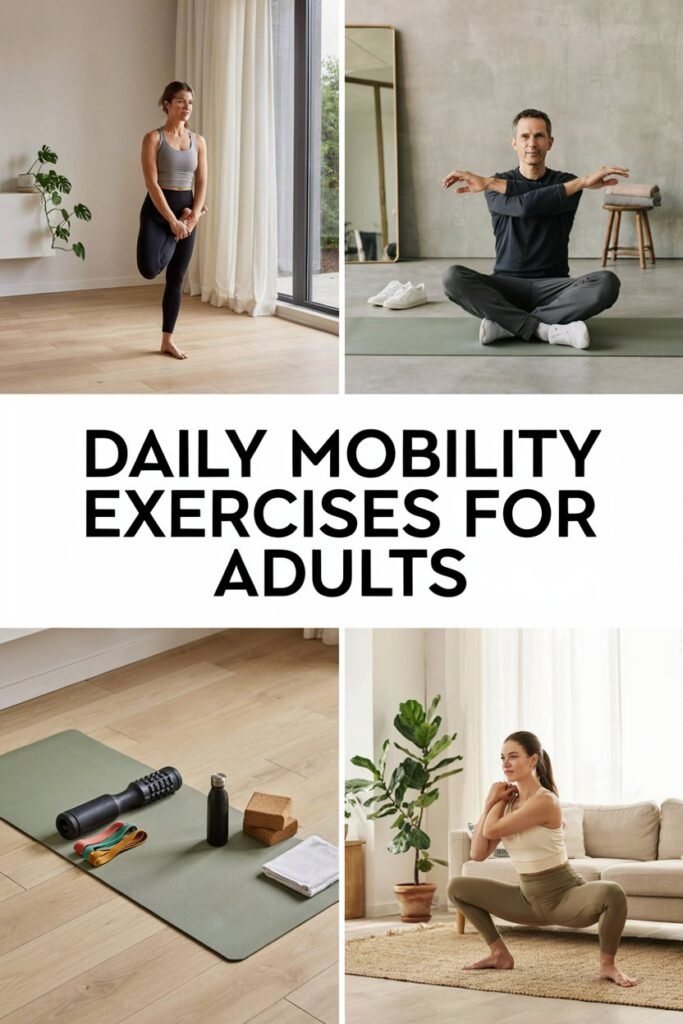
Some mornings I would wake up feeling stiff, and after writing or working on my computer for most of the day, I noticed my posture was getting worse. Instead of looking for complicated workout programs, I began adding a few simple mobility exercises to my daily routine.
The difference was gradual, but it was noticeable. Everyday movements became easier, my workouts felt smoother, and I finished each day feeling less tense than before.
The best part about mobility exercises is that they are suitable for almost everyone. You do not need expensive equipment, a gym membership, or even a large amount of time. Just a few minutes each day can help improve joint movement, increase flexibility, reduce stiffness, and support better overall movement for daily life.
In this guide, I will share the daily mobility exercises that have worked well for me, explain why they are effective, and show you how to build a simple routine that fits naturally into your day.
What Are Mobility Exercises?

Mobility exercises are controlled movements designed to improve how well your joints move through their full range of motion while strengthening the muscles that support those movements.
Unlike traditional stretching, which often focuses on lengthening muscles, mobility combines flexibility, balance, stability, coordination, and strength.
Think about everyday activities like squatting to pick something up, reaching behind you to fasten a seat belt, climbing stairs, or carrying groceries into the house.
These movements require your joints and muscles to work together efficiently. When mobility is limited, even these ordinary tasks can become uncomfortable.
One thing I learned after making mobility part of my routine is that flexibility alone is not enough.
I could easily stretch my hamstrings, but that did not automatically improve how comfortably I could squat or move my hips.
Once I focused on exercises that encouraged movement instead of simply holding stretches, I noticed much better results in both my daily activities and workouts.
Mobility exercises often target the body’s major joints, including:
- Neck
- Shoulders
- Upper back
- Spine
- Hips
- Knees
- Ankles
- Wrists
Keeping these joints moving regularly helps reduce stiffness and encourages smoother movement throughout the day.
Mobility Versus Flexibility
Many people use these terms interchangeably, but they are not the same.
Flexibility refers to how much a muscle can lengthen.
Mobility refers to how well a joint moves while remaining stable and controlled.
For example, someone may have flexible hamstrings but still struggle to perform a deep squat because their hips or ankles lack mobility.
Likewise, someone might stretch every day yet still feel stiff because their joints are not moving through their full range regularly.
The easiest way I think about it is this.
Flexibility gives your muscles the ability to lengthen.
Mobility teaches your body how to use that flexibility during real life movement.
That is why a balanced routine includes both.
Why Adults Lose Mobility
Many adults assume reduced mobility simply happens with age, but lifestyle often plays an even bigger role.
One of the biggest contributors is prolonged sitting. Whether you work at a computer, drive frequently, or spend evenings relaxing on the couch, staying in the same position for hours allows muscles to tighten while joints move less often.
I noticed this myself during particularly busy work weeks. Some days I would spend hours writing without taking many breaks.
By evening, my shoulders felt rounded, my hips felt tight, and standing up after sitting for too long became noticeably uncomfortable.
Once I started getting up every hour and adding a few mobility exercises into my morning routine, those feelings gradually became much less common.
Other factors that reduce mobility include:
- Lack of regular physical activity
- Poor posture throughout the day
- Repetitive movement patterns
- Previous injuries
- Muscle weakness
- Stress related muscle tension
- Natural changes that occur with aging
Fortunately, mobility responds well to consistent practice. Even adults who have not exercised regularly can often improve their movement by following a simple routine several times each week.
Benefits of Daily Mobility Exercises
Daily mobility exercises do much more than help you become more flexible.
They support better movement throughout your entire body, making everyday tasks feel easier and helping you stay active as the years go by.
Reduces Morning Stiffness
Many people wake up feeling tight through their hips, back, or shoulders after remaining in one position overnight.
A few gentle mobility exercises first thing in the morning help increase circulation, loosen stiff joints, and prepare your body for the day ahead.
I have found that spending just ten minutes moving before sitting down to work helps me feel far more comfortable than jumping straight into my day.
Improves Posture
Modern lifestyles encourage us to spend countless hours looking at computer screens and phones.
Over time this can lead to rounded shoulders, tight chest muscles, and poor spinal alignment.
Mobility exercises encourage healthier movement patterns that help restore better posture naturally.
Makes Everyday Activities Easier
Improved mobility benefits much more than exercise.
You may notice everyday activities become more comfortable, including:
- Walking
- Climbing stairs
- Picking up children
- Carrying shopping bags
- Gardening
- Cleaning the house
- Reaching overhead
- Getting in and out of the car
These small improvements often have the biggest impact because they affect your daily quality of life.
Helps You Exercise More Comfortably
Whether you enjoy walking, strength training, cycling, swimming, yoga, or running, mobility prepares your joints to move more efficiently.
Since adding mobility work before my workouts, I have noticed that exercises like squats, lunges, and overhead movements feel smoother and require less effort to perform with good technique.
Supports Joint Health
Healthy joints rely on regular movement.
Gentle mobility exercises help lubricate the joints, improve circulation to surrounding tissues, and encourage comfortable movement throughout the day.
While mobility exercises cannot prevent every joint problem, staying active is one of the best habits you can build for long term movement and independence.
How Often Should Adults Do Mobility Exercises?
One of the questions I hear most often is whether mobility exercises need to be done every day. In my experience, consistency matters much more than spending a long time on each session.
A short routine that you actually stick with will almost always produce better results than an hour long session that only happens once every couple of weeks.
I aim for about 10 to 15 minutes of mobility work most mornings because it helps me start the day feeling more comfortable.
On days when I have less time, I will spend just five minutes moving through a few of my favorite exercises.
Even those shorter sessions help prevent the stiffness that used to build up after hours of sitting at my desk.
For most adults, this schedule works well:
- Daily for maintaining healthy movement
- Before workouts as part of a warm up
- After workouts to encourage recovery
- On rest days to keep the body moving without intense exercise
The key is to move slowly, stay in control, and focus on quality instead of rushing through each exercise.
10 Best Daily Mobility Exercises for Adults
These are the mobility exercises I come back to again and again because they are simple, effective, and suitable for most fitness levels.
They target the areas that commonly become stiff from sitting, working, driving, and everyday life.
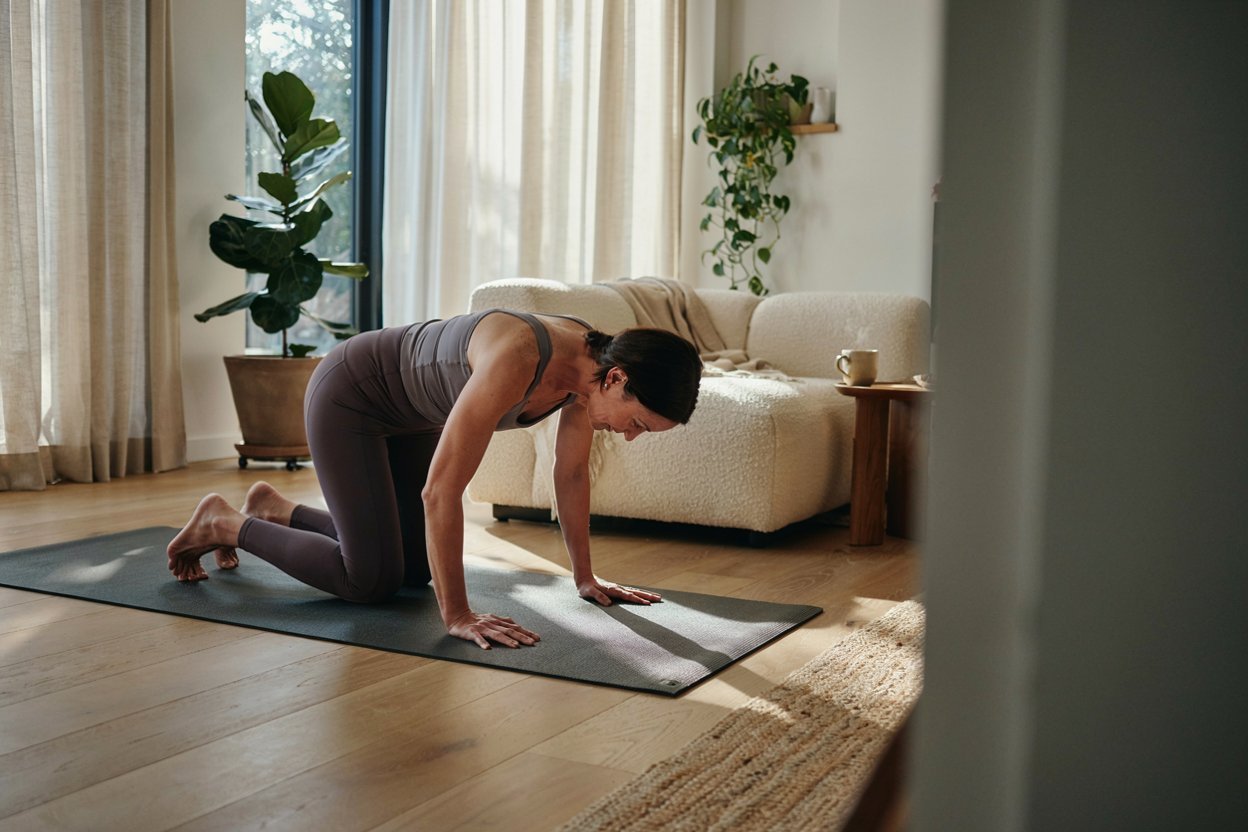
1. Cat Cow
Why I Like This Exercise
Whenever my back feels tight after spending hours writing, this is usually the first movement I do. It gently wakes up the spine without putting unnecessary pressure on the joints.
How to Do It
- Start on your hands and knees.
- Place your hands directly under your shoulders.
- Position your knees under your hips.
- Slowly lift your head while allowing your stomach to move toward the floor.
- Reverse the movement by gently rounding your back and tucking your chin.
- Continue moving slowly between both positions.
Common Mistakes
- Moving too quickly
- Holding your breath
- Forcing the movement beyond what feels comfortable
Recommended Repetitions
Perform 8 to 12 slow repetitions.
2. Hip Circles
Why I Like This Exercise
Long periods of sitting often leave my hips feeling stiff. Hip circles help loosen the joints before walks and workouts while making everyday movement feel smoother.
How to Do It
- Stand with your feet shoulder width apart.
- Place your hands on your hips.
- Slowly rotate your hips in a large circle.
- Complete several circles in one direction.
- Reverse the movement.
Common Mistakes
- Making very small circles
- Leaning the upper body excessively
- Moving too fast
Recommended Repetitions
Perform 10 circles in each direction.
3. Shoulder Rolls
Why I Like This Exercise
After working at a computer for several hours, I often notice tension around my shoulders. Shoulder rolls help release that tight feeling in just a few minutes.
How to Do It
- Stand tall.
- Relax your arms.
- Lift your shoulders upward.
- Roll them backward.
- Lower them slowly.
- Repeat before changing direction.
Common Mistakes
- Shrugging aggressively
- Rushing through the movement
Recommended Repetitions
10 to 15 repetitions forward and backward.
4. Thoracic Rotations
Why I Like This Exercise
The upper back is easy to neglect, especially if you spend much of the day sitting. Improving movement here can also help reduce neck and shoulder tightness.
How to Do It
- Begin on your hands and knees.
- Place one hand behind your head.
- Rotate your elbow toward the ceiling.
- Slowly return to the starting position.
- Repeat before switching sides.
Common Mistakes
- Rotating from the hips instead of the upper back
- Moving too quickly
Recommended Repetitions
8 to 10 repetitions on each side.
5. World’s Greatest Stretch
Why I Like This Exercise
If I only had time for one mobility exercise, this would probably be it. It stretches several major muscle groups while improving movement through the hips, spine, and shoulders.
How to Do It
- Step into a forward lunge.
- Place both hands on the floor.
- Rotate your upper body toward your front leg.
- Reach one arm toward the ceiling.
- Return to the starting position.
- Repeat before changing sides.
Common Mistakes
- Rushing through the stretch
- Allowing the front knee to collapse inward
Recommended Repetitions
5 to 8 repetitions per side.
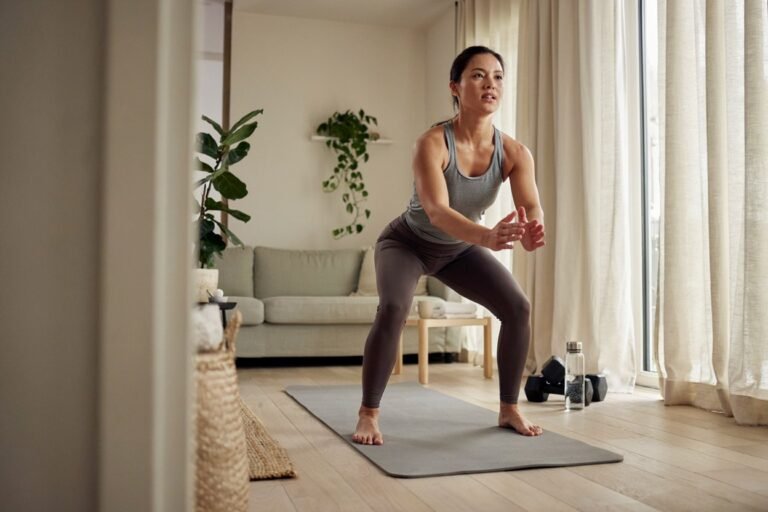
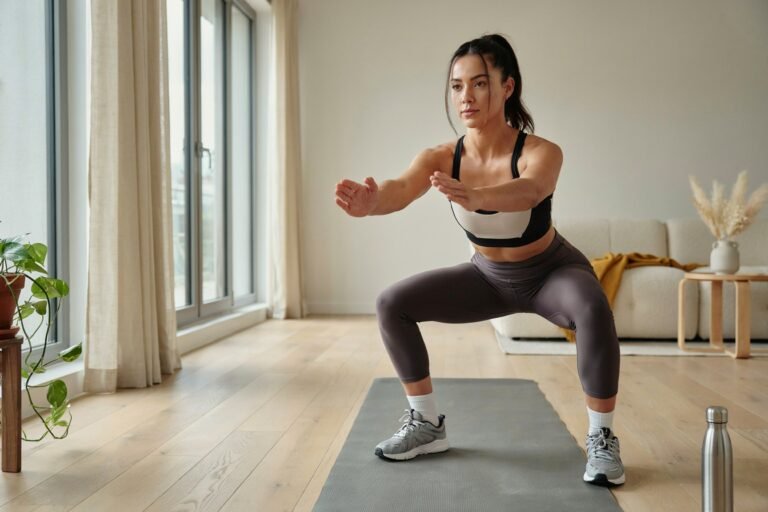
6. Deep Squat Hold
Why I Like This Exercise
This movement has made everyday activities like picking things up from the floor feel much easier. It also challenges the hips, knees, ankles, and lower back all at once.
How to Do It
- Stand with your feet slightly wider than shoulder width.
- Slowly lower into a squat.
- Keep your heels on the floor if possible.
- Hold the position while breathing normally.
- Stand up slowly.
Common Mistakes
- Forcing yourself lower than your body allows
- Holding your breath
- Letting your heels lift excessively
Recommended Hold
20 to 40 seconds.
7. Standing Leg Swings
Why I Like This Exercise
I often use this before walks or lower body workouts because it helps loosen the hips while gently warming up the legs.
How to Do It
- Hold onto a wall or chair.
- Swing one leg forward and backward.
- Keep the movement controlled.
- Repeat before switching legs.
Common Mistakes
- Swinging too forcefully
- Leaning backward
Recommended Repetitions
12 to 15 swings each leg.
8. Ankle Mobility Stretch
Why I Like This Exercise
Healthy ankle movement makes walking, climbing stairs, and squatting feel much smoother.
How to Do It
- Stand facing a wall.
- Place one foot slightly behind the other.
- Bend the front knee toward the wall.
- Keep the heel flat on the floor.
- Return to the starting position.
Common Mistakes
- Allowing the heel to lift
- Moving too quickly
Recommended Repetitions
10 repetitions on each side.
9. Child’s Pose
Why I Like This Exercise
I usually finish my mobility routine with this stretch because it helps my entire body relax after moving through the other exercises.
How to Do It
- Kneel on the floor.
- Sit back toward your heels.
- Stretch your arms forward.
- Relax your chest toward the floor.
- Breathe slowly.
Common Mistakes
- Holding tension in the shoulders
- Forgetting to breathe deeply
Recommended Hold
30 to 60 seconds.
10. Neck Rotations
Why I Like This Exercise
Working on a computer can leave my neck feeling stiff by the end of the day. Gentle neck rotations help relieve that tight feeling without requiring any equipment.
How to Do It
- Sit or stand with good posture.
- Slowly turn your head to one side.
- Return to the center.
- Turn to the opposite side.
- Continue slowly.
Common Mistakes
- Moving too quickly
- Rotating into pain
- Tilting the head excessively
Recommended Repetitions
8 to 10 repetitions on each side.
Common Mistakes That Can Limit Your Progress
Mobility exercises are simple, but a few common mistakes can reduce their effectiveness.
Rushing Through Each Movement
Mobility is about controlled movement, not speed. Slow movements allow your joints and muscles to work together properly.
Holding Your Breath
Steady breathing helps your muscles relax and allows your body to move more naturally.
Ignoring Pain
You may feel gentle stretching or mild discomfort, but sharp pain is a sign to stop and reassess the movement.
Being Inconsistent
The biggest improvements come from regular practice. Even ten minutes each day is more beneficial than doing a long session once in a while.
Comparing Yourself to Others
Everyone begins with a different level of mobility. Focus on your own progress rather than trying to match someone else’s range of motion.
A Simple 10 Minute Daily Mobility Routine
One of the biggest reasons people give up on mobility is because they think they need to spend thirty minutes or more every day.
That has never been realistic for me. Between work, family responsibilities, and everything else that fills the day, I have found that keeping my routine simple makes it much easier to stay consistent.
Most mornings, I spend about ten minutes moving through a few exercises before sitting down to work. If I know I have been sitting for long periods the previous day, I may spend an extra couple of minutes on my hips or shoulders.
The goal is not to complete the perfect routine. It is simply to prepare my body for the day ahead and reduce the stiffness that can build up from long hours at a desk.
Here is a routine that works well for most adults.
Minute 1
Shoulder Rolls
Start by loosening the shoulders and upper back with slow, controlled circles.
Minute 2
Neck Rotations
Gently rotate your head from side to side to reduce tension around the neck.
Minute 3
Cat Cow
Move slowly between arching and rounding your back to wake up the spine.
Minute 4
Thoracic Rotations
Improve movement through the upper back while helping relieve stiffness around the shoulders.
Minute 5
Hip Circles
Loosen the hips with smooth circles in both directions.
Minute 6
World’s Greatest Stretch
Open the hips while improving movement through the spine and shoulders.
Minute 7
Deep Squat Hold
Spend about thirty seconds in a comfortable squat before standing and repeating if time allows.
Minute 8
Standing Leg Swings
Warm up the hips and legs with controlled forward and backward swings.
Minute 9
Ankle Mobility Stretch
Improve ankle movement to support walking, climbing stairs, and squatting.
Minute 10
Child’s Pose
Finish the routine by slowing your breathing and allowing your body to relax.
Even if you cannot complete the full routine every day, doing a few of these exercises is still worthwhile. Some movement is always better than none.
Morning or Evening Mobility
Many readers ask whether mobility exercises are better in the morning or the evening.
After trying both for several months, I have realized that there is no single right answer. The best time is the one you can stay consistent with.
Morning Mobility
Morning sessions help prepare your body for the day.
Benefits include:
- Reducing overnight stiffness
- Improving circulation
- Increasing energy
- Supporting better posture throughout the day
- Making everyday movement feel easier
Morning mobility has become part of my routine because I spend much of the day working on a computer.
Starting the day with movement helps prevent the tightness that used to build up by the afternoon.
Evening Mobility
Evening mobility focuses more on recovery and relaxation.
Benefits include:
- Releasing muscle tension
- Helping the body unwind
- Improving flexibility
- Encouraging relaxation before bed
- Reducing stiffness after a long day
If your mornings are busy, an evening routine can still provide excellent results.
Who Can Benefit From Daily Mobility Exercises?
Almost everyone can benefit from improving their mobility, regardless of age or fitness level.
These exercises are especially helpful for:
Office Workers
Sitting for several hours can lead to tight hips, rounded shoulders, and back stiffness.
Older Adults
Regular mobility exercises help maintain independence by making everyday activities more comfortable.
Beginners
Mobility is an excellent starting point for anyone returning to exercise after a long break.
Strength Trainers
Better mobility often improves squat depth, lifting technique, and overall movement quality.
Runners
Healthy hips and ankles contribute to smoother running mechanics.
Parents
Picking up children, carrying bags, and staying active throughout the day all become easier with improved mobility.
No matter your lifestyle, keeping your joints moving regularly can make daily life feel more comfortable.
Tips for Staying Consistent
The hardest part is rarely learning the exercises. It is remembering to do them regularly.
These habits have helped me stay consistent.
Keep Your Routine Short
A ten minute routine feels much easier to maintain than committing to an hour every day.
Link Mobility to an Existing Habit
Try doing your exercises after brushing your teeth, before breakfast, or before your workout.
Focus on Progress
Some days your body will feel more mobile than others. That is completely normal. Small improvements add up over time.
Listen to Your Body
Move within a comfortable range and avoid forcing any position that causes pain.
Stay Patient
Mobility improves gradually through regular practice. You may notice small changes within a few weeks, while larger improvements often come after several months of consistency.
Frequently Asked Questions
How long should a daily mobility routine be?
For most adults, 10 to 15 minutes is enough to improve movement and reduce stiffness. Even five minutes can be beneficial when done consistently.
Can I do mobility exercises every day?
Yes. Most mobility exercises are gentle enough to perform daily, provided you move with control and avoid painful ranges of motion.
Do I need any equipment?
No. Most daily mobility exercises use only your body weight. A yoga mat can make floor exercises more comfortable, but it is not required.
Should I do mobility before or after exercise?
Mobility works well before exercise because it prepares your joints for movement. Gentle mobility can also be performed after exercise as part of your recovery routine.
Will mobility improve flexibility?
Mobility and flexibility work together. Regular mobility exercises can improve flexibility while also teaching your body to move with better control.
How long does it take to notice results?
Everyone is different, but many people notice less stiffness and smoother movement after a few weeks of regular practice. Larger improvements often come from staying consistent over several months.
Are mobility exercises safe for older adults?
In most cases, yes. Gentle mobility exercises can help older adults maintain joint movement and make everyday activities more comfortable. Anyone with a medical condition, recent surgery, or ongoing joint problems should speak with a healthcare professional before starting a new exercise routine.
Can mobility exercises help with posture?
They can certainly support better posture by improving movement in areas such as the shoulders, hips, and upper back. Combining mobility exercises with strength training and good daily habits often provides the best results.
Final Thoughts
Mobility is one of those habits that often gets overlooked until everyday movements start feeling more difficult.
I used to think stretching every now and then was enough, but I noticed the biggest difference when I committed to a short mobility routine that I could realistically stick with every day.
It did not happen overnight, but over time I found myself moving more comfortably, sitting with better posture, and feeling less stiff after long hours of work.
You do not need to be an athlete or spend hours exercising to enjoy the benefits of better mobility.
A few minutes of intentional movement each day can make ordinary activities like walking, bending, lifting, and reaching feel easier and more comfortable.
Start with just a handful of the exercises in this guide and focus on performing them with slow, controlled movements.
As the routine becomes part of your daily schedule, you will likely notice that your body feels more capable, more relaxed, and better prepared for whatever the day brings.
The most important step is simply getting started. Consistency will always have a greater impact than trying to do everything perfectly on day one.