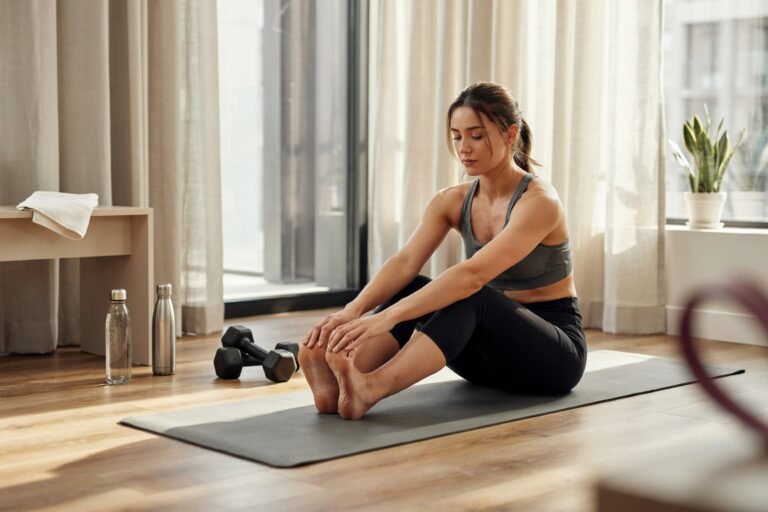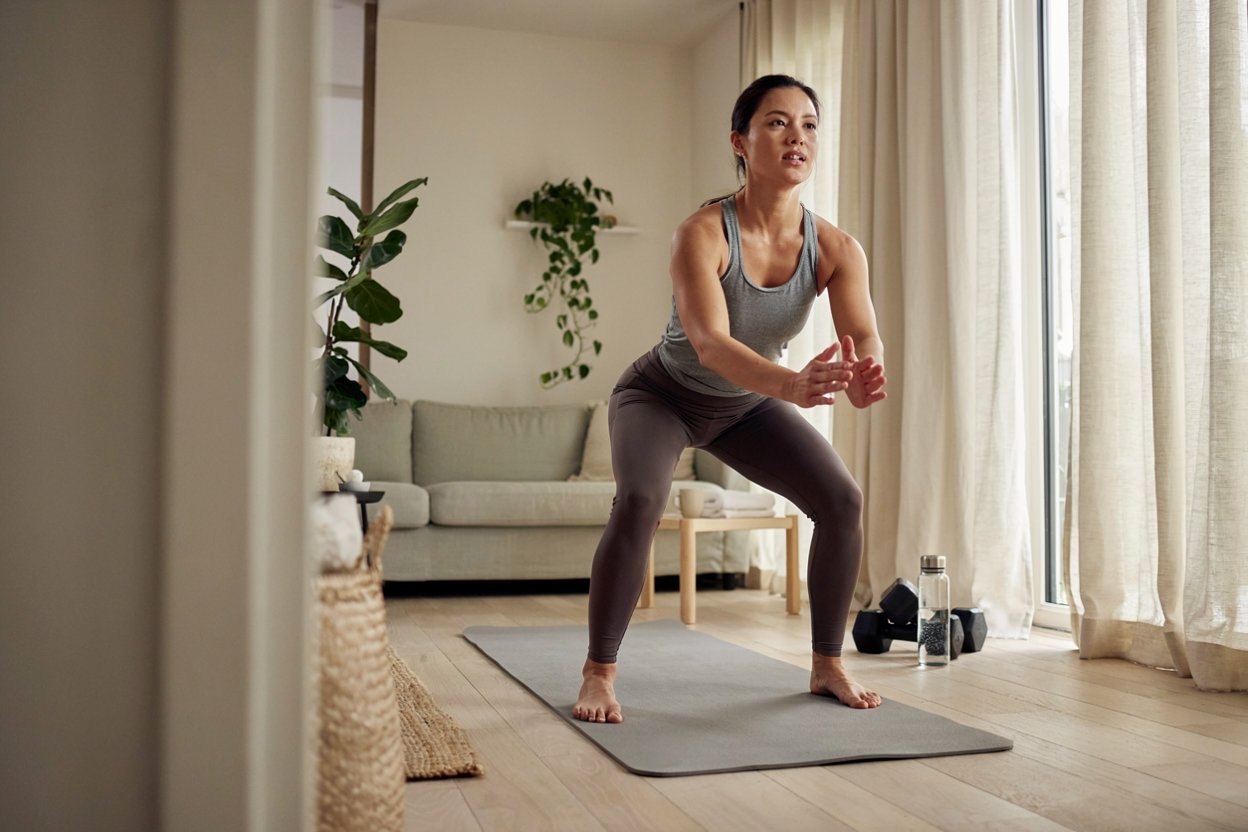
Finding time to exercise can feel impossible when work, family, and daily responsibilities compete for your attention.
I have learned that staying toned is not about spending hours in a crowded gym or buying expensive fitness equipment.
It comes from building a routine that fits into everyday life and sticking with it.
Some of my best workouts have happened right in my living room with nothing more than a little floor space and a commitment to show up.
On days when motivation is low, I remind myself that even a short workout is better than doing nothing at all.
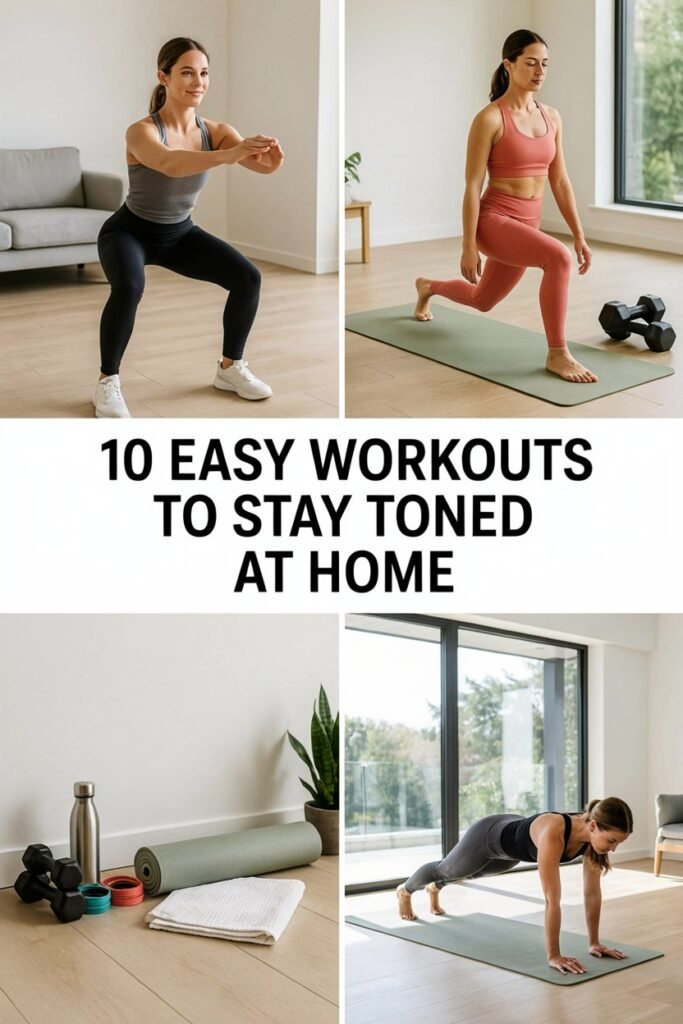
Those small efforts have helped me stay stronger, improve my energy, and maintain lean muscle without leaving home.
In this guide, I am sharing the easy home workouts that I genuinely return to again and again because they are simple, effective, and suitable for almost any fitness level.
Whether your goal is to tone your body, build strength, improve endurance, or simply feel healthier, these exercises can help you create a routine that delivers real results with consistency.
What Does It Really Mean to Stay Toned?
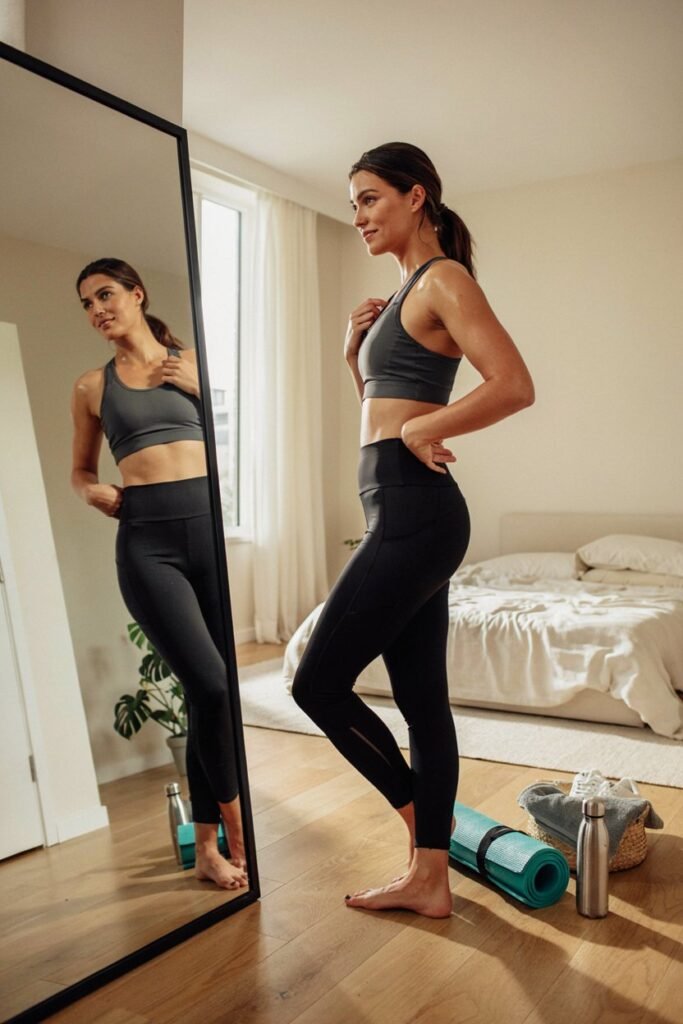
One of the biggest misconceptions about fitness is the idea that “toning” is a completely different type of exercise.
In reality, staying toned means building lean muscle while keeping body fat at a level where those muscles become more visible.
It is a combination of strength training, regular movement, balanced nutrition, and patience.
I used to believe that long cardio sessions were the only way to look fit.
While cardio certainly has its place, I noticed much better changes once I added simple bodyweight exercises to my weekly routine.
My posture improved, everyday activities became easier, and I felt stronger without needing complicated workout programs.
The good news is that you do not need a home gym filled with equipment to achieve these results.
Your own body weight provides enough resistance to build strength, especially if you focus on proper form and gradually challenge yourself as you become stronger.
Consistency has always been the deciding factor for me. Twenty to thirty minutes of focused exercise several times a week has been far more effective than doing one intense workout and then skipping the rest of the week.
Who These Home Workouts Are Perfect For
The workouts in this guide are designed for people who want effective exercises without making fitness feel overwhelming.
They are especially suitable if you:
- Want to stay toned without joining a gym
- Prefer workouts that require little or no equipment
- Have a busy schedule and limited free time
- Are just beginning your fitness journey
- Want to build strength at your own pace
- Need exercises that can be done in a small space
- Enjoy short workouts that still challenge your muscles
Even if you have some experience with exercise, these movements remain valuable because they focus on building a strong foundation.
I still include many of them in my own workouts because they continue to challenge me when performed with proper form and controlled movement.
Before You Begin
Before starting any workout, I always spend a few minutes warming up.
It helps prepare my muscles, increases blood flow, and makes the exercises feel much smoother.
Skipping a warm up often leaves my body feeling stiff, while taking just five minutes helps me perform better throughout the workout.
A simple warm up can include:
- Marching in place
- Arm circles
- Bodyweight squats
- Hip circles
- Leg swings
- Shoulder rolls
- Gentle stretching
Keep a bottle of water nearby and wear comfortable clothing that allows you to move freely.
Most importantly, focus on performing each exercise correctly rather than rushing through repetitions.
Good form will always give you better results than moving quickly with poor technique.
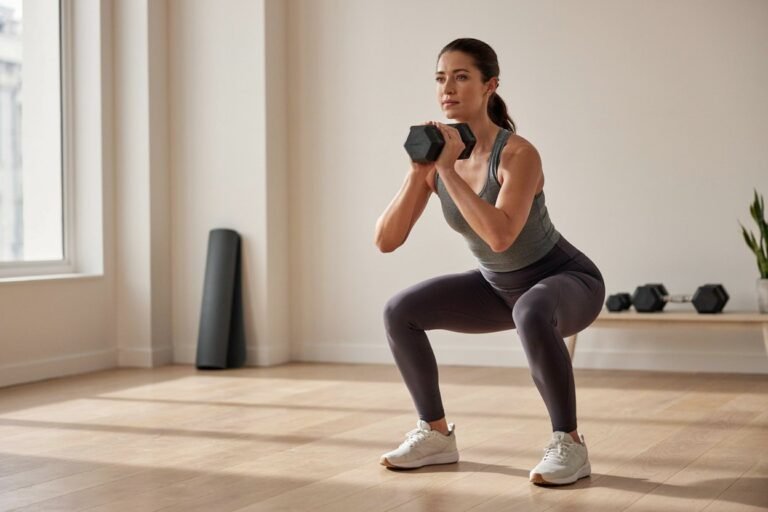
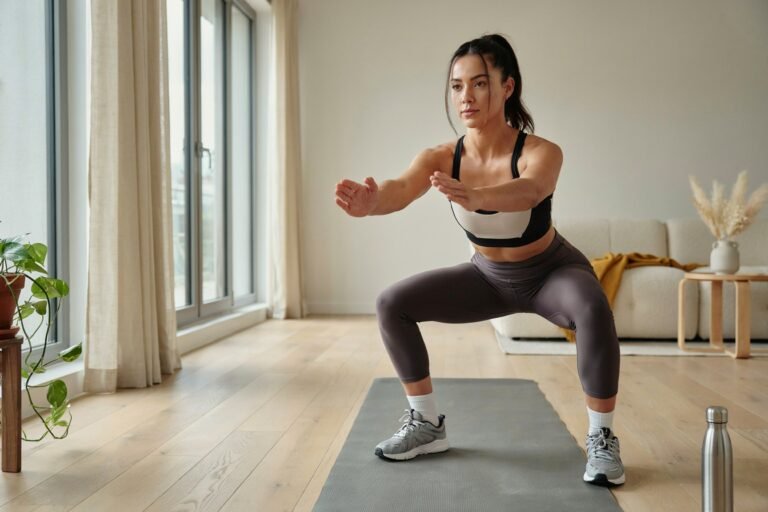
1. Bodyweight Squats
If I could recommend just one exercise for staying toned at home, bodyweight squats would always be near the top of the list.
They work multiple muscle groups at the same time while improving balance, coordination, and lower body strength.
Every time I include squats in my routine, I notice the difference in everyday activities. Walking upstairs feels easier, lifting groceries becomes less tiring, and my legs feel stronger during other workouts.
Muscles Worked
- Quadriceps
- Hamstrings
- Glutes
- Core
- Calves
How to Perform Bodyweight Squats
Stand with your feet about shoulder width apart and keep your chest lifted.
Slowly bend your knees while pushing your hips backward as though you are sitting into a chair.
Lower until your thighs are close to parallel with the floor or as low as your mobility allows.
Press through your heels to return to the starting position while squeezing your glutes at the top.
My Tip
I always keep my movement slow and controlled instead of trying to complete as many repetitions as possible.
Slowing down each squat makes the muscles work harder and improves balance at the same time.
Recommended Sets
Complete 3 sets of 12 to 15 repetitions while resting for about 45 seconds between each set.
2. Glute Bridges
Glute bridges are one of those exercises that look simple but become surprisingly challenging when you focus on proper form.
I never overlook them because they help strengthen the muscles that support the hips and lower back.
Whenever I spend long hours sitting at my desk, adding glute bridges to my workout helps loosen tight hips and activates muscles that often become inactive throughout the day.
I also like this exercise because it places very little stress on the knees while still providing an effective lower body workout.
It has become one of my favorite movements to include before more demanding leg exercises.
Muscles Worked
- Glutes
- Hamstrings
- Core
- Lower back
How to Perform Glute Bridges
Lie on your back with your knees bent and your feet flat on the floor about hip width apart.
Rest your arms comfortably by your sides.
Press through your heels while lifting your hips toward the ceiling until your body forms a straight line from your shoulders to your knees.
Pause for one or two seconds at the top while squeezing your glutes.
Slowly lower your hips back to the floor without letting them drop quickly.
Common Mistakes
- Pushing through the toes instead of the heels
- Arching the lower back too much
- Rushing through each repetition
- Lifting the hips higher than necessary
Easier Variation
Lift your hips only halfway until you build more strength.
Harder Variation
Hold the bridge position for five seconds during every repetition or perform single leg glute bridges.
My Experience
When I first started adding glute bridges to my routine, I underestimated how effective they were.
After staying consistent for several weeks, I noticed better stability during squats and lunges, and my lower back felt less stiff after long periods of sitting.
Recommended Sets
Complete 3 sets of 15 repetitions.
3. Forward Lunges
Forward lunges are excellent for improving strength, coordination, and balance.
Since each leg works independently, they also help correct muscle imbalances that often develop over time.
I include lunges every week because they challenge muscles that traditional squats sometimes miss.
Although they require more balance, the results are worth the effort.
Muscles Worked
- Quadriceps
- Glutes
- Hamstrings
- Calves
- Core
How to Perform Forward Lunges
Stand upright with your feet together.
Take a comfortable step forward with one foot.
Lower your body until both knees form roughly ninety degree angles.
Keep your upper body upright throughout the movement.
Push through your front heel to return to the starting position.
Repeat on the opposite leg.
Common Mistakes
- Taking steps that are too short
- Allowing the front knee to move far beyond the toes
- Leaning the upper body too far forward
- Losing balance by rushing the movement
Easier Variation
Hold onto a sturdy chair or wall for support while practicing.
Harder Variation
Pause for two seconds at the bottom of each lunge or perform walking lunges.
My Experience
Lunges were challenging for me at first because balance was my biggest weakness.
Instead of trying to perform them quickly, I slowed every repetition and focused on control.
That simple adjustment helped me improve much faster while reducing unnecessary strain on my knees.
Recommended Sets
Perform 3 sets of 10 to 12 repetitions on each leg.
4. Push Ups
Push ups remain one of the most effective upper body exercises you can do at home without equipment.
They strengthen several muscle groups at once while also improving core stability.
I still include push ups in my workouts because they continue to provide a challenge regardless of fitness level.
As strength improves, there are many ways to make them more difficult without adding weights.
Muscles Worked
- Chest
- Shoulders
- Triceps
- Core
How to Perform Push Ups
Begin in a high plank position with your hands slightly wider than shoulder width.
Keep your body in a straight line from your head to your heels.
Slowly bend your elbows while lowering your chest toward the floor.
Stop just before your chest touches the ground.
Push yourself back to the starting position.
Common Mistakes
- Letting the hips sag
- Raising the hips too high
- Flaring the elbows excessively
- Performing only partial repetitions
Easier Variation
Perform incline push ups using a sturdy bench, countertop, or wall.
Harder Variation
Slow the lowering phase or perform decline push ups with your feet elevated.
My Experience
I could not perform many full push ups when I first started exercising.
Incline push ups helped me gradually build strength without sacrificing proper form.
That steady progression made full push ups much more achievable than trying to force difficult repetitions too soon.
Recommended Sets
Complete 3 sets of 8 to 15 repetitions depending on your strength level.
5. Plank
The plank is one of the simplest looking exercises, but maintaining proper form quickly reminds you how much your core contributes to overall strength.
I like adding planks near the end of my workouts because they challenge not only the abdominal muscles but also the shoulders, back, and glutes.
Muscles Worked
- Core
- Shoulders
- Lower back
- Glutes
How to Perform a Plank
Place your forearms on the floor directly beneath your shoulders.
Extend your legs behind you.
Keep your body in a straight line without allowing your hips to drop or rise too high.
Look slightly ahead while keeping your neck relaxed.
Hold the position while breathing normally.
Common Mistakes
- Holding your breath
- Allowing the lower back to sag
- Raising the hips too high
- Looking straight upward
Easier Variation
Perform the plank with your knees resting on the floor.
Harder Variation
Lift one leg for a few seconds while maintaining balance.
My Experience
At first, holding a plank for even thirty seconds felt difficult.
Rather than focusing on long holds, I concentrated on maintaining excellent form.
Once that became comfortable, increasing the time felt much easier.
Recommended Sets
Hold for 30 to 60 seconds and repeat 3 times.
6. Mountain Climbers
Mountain climbers are one of my favorite exercises whenever I want to increase my heart rate while strengthening my core.
They combine cardio with bodyweight resistance, making them ideal for short home workouts.
Whenever I am limited on time, adding mountain climbers helps make the workout feel more complete because they challenge multiple muscle groups while improving endurance.
Muscles Worked
- Core
- Shoulders
- Chest
- Hip flexors
- Legs
How to Perform Mountain Climbers
Start in a high plank position.
Bring one knee toward your chest.
Quickly switch legs while keeping your hips stable.
Continue alternating at a comfortable pace while maintaining good form.
Common Mistakes
- Allowing the hips to bounce excessively
- Moving too quickly with poor technique
- Letting the shoulders drift behind the hands
- Forgetting to engage the core
Easier Variation
Slow the pace and step each foot forward instead of running.
Harder Variation
Increase your speed while maintaining complete control throughout the exercise.
My Experience
I used to rush through mountain climbers because I thought faster was always better.
Once I slowed down and focused on keeping my core engaged, I realized the exercise became much more effective and far less tiring on my shoulders.
Recommended Sets
Perform 3 rounds of 30 to 45 seconds with a short rest between each round.
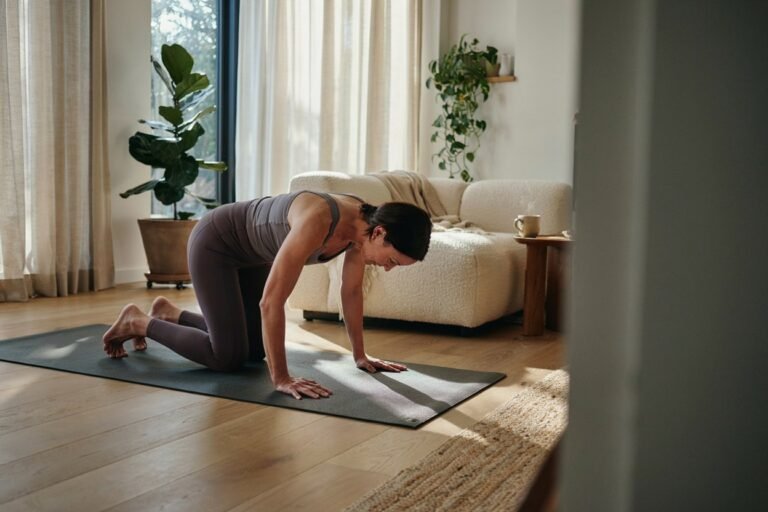
7. Bird Dog
The bird dog is one of the most underrated exercises for building core stability and improving balance.
It may not leave you out of breath like some other workouts, but it teaches your body how to move with better control.
I like including it in my routine because it strengthens the muscles that support the spine and helps improve posture, especially after spending hours working at a desk.
One thing I have noticed is that slowing down each repetition makes a huge difference.
The goal is not speed but maintaining balance and keeping your body stable throughout the movement.
Muscles Worked
- Core
- Lower back
- Glutes
- Shoulders
How to Perform the Bird Dog
Start on your hands and knees with your hands directly under your shoulders and your knees under your hips.
Extend your right arm forward while extending your left leg behind you.
Keep your hips level and avoid twisting your body.
Pause for a second before returning to the starting position.
Repeat on the opposite side.
Common Mistakes
- Moving too quickly
- Arching the lower back
- Raising the leg too high
- Looking up instead of keeping your neck neutral
Easier Variation
Extend only your arm or only your leg until your balance improves.
Harder Variation
Hold each repetition for five seconds before switching sides.
My Experience
Whenever my lower back feels tight after sitting for long periods, I include bird dogs during my warm up or cool down.
They help me feel more stable during the rest of my workout and remind me to focus on quality movement rather than rushing through exercises.
Recommended Sets
Perform 3 sets of 10 repetitions on each side.
8. Wall Sit
Wall sits are one of the simplest exercises you can do at home, but they challenge your legs in a completely different way.
Instead of moving through repetitions, you hold one position, forcing your muscles to work continuously.
I often add wall sits at the end of a leg workout because they provide a great finishing challenge without requiring any equipment.
Muscles Worked
- Quadriceps
- Glutes
- Hamstrings
- Calves
How to Perform a Wall Sit
Stand with your back against a wall.
Walk your feet forward slightly.
Slide down until your knees are bent at about ninety degrees.
Keep your back flat against the wall.
Hold the position while breathing steadily.
Common Mistakes
- Sliding too low
- Holding your breath
- Placing the feet too close to the wall
- Leaning forward
Easier Variation
Hold the position for twenty seconds before resting.
Harder Variation
Increase the hold time or lift one foot off the floor for a few seconds.
My Experience
The first few times I tried wall sits, my legs started shaking much sooner than I expected.
Rather than feeling discouraged, I shortened the hold time and gradually increased it every week.
That steady progress made a noticeable difference in my leg strength.
Recommended Sets
Hold for 30 to 60 seconds and repeat 3 times.
9. High Knees
High knees are an excellent exercise for improving cardiovascular fitness while also strengthening the lower body.
They increase your heart rate quickly, making them perfect for anyone looking to combine strength and cardio in one workout.
Whenever I need a quick energy boost, high knees are one of the first exercises I choose because they wake up the entire body.
Muscles Worked
- Core
- Hip flexors
- Quadriceps
- Calves
How to Perform High Knees
Stand with your feet about hip width apart.
Jog in place while lifting one knee toward your chest.
Alternate legs quickly while swinging your arms naturally.
Stay on the balls of your feet and maintain an upright posture.
Common Mistakes
- Leaning too far backward
- Taking heavy steps
- Looking down constantly
- Moving too fast without control
Easier Variation
March in place while lifting your knees as high as comfortable.
Harder Variation
Increase your speed while maintaining good posture.
My Experience
I enjoy adding high knees between strength exercises because they keep my heart rate elevated without making the workout feel repetitive.
Even a short burst can make the entire session more challenging.
Recommended Sets
Complete 3 rounds of 30 to 45 seconds.
10. Bicycle Crunches
Bicycle crunches remain one of my favorite abdominal exercises because they target multiple core muscles at once.
When performed slowly and correctly, they provide a much better workout than simply rushing through as many repetitions as possible.
I always remind myself that proper technique matters more than speed.
Controlled movements help engage the abdominal muscles far more effectively.
Muscles Worked
- Rectus abdominis
- Obliques
- Hip flexors
How to Perform Bicycle Crunches
Lie on your back with your hands gently behind your head.
Lift your shoulders slightly off the floor.
Bring one knee toward your chest while rotating your opposite elbow toward it.
Extend the other leg without letting it touch the floor.
Alternate sides using slow and controlled movements.
Common Mistakes
- Pulling on the neck
- Moving too quickly
- Using momentum instead of muscle control
- Holding your breath
Easier Variation
Keep your feet closer to the floor and reduce your range of motion.
Harder Variation
Pause briefly each time your elbow meets your knee.
My Experience
I used to think faster bicycle crunches meant better results.
Once I slowed each repetition and focused on engaging my core, I noticed much greater muscle activation and less strain on my neck.
Recommended Sets
Perform 3 sets of 15 to 20 repetitions on each side.
A Simple Weekly Home Workout Plan
One of the biggest lessons I have learned is that you do not need to work out every single day to see progress.
Giving your body time to recover is just as important as exercising.
This is a weekly routine that has worked well for me and is easy to follow if you are building consistency.
Monday
- Bodyweight Squats
- Push Ups
- Plank
Tuesday
- Glute Bridges
- Forward Lunges
- Bicycle Crunches
Wednesday
Take a brisk walk, stretch, or enjoy a light yoga session.
Thursday
- Bodyweight Squats
- Wall Sit
- High Knees
Friday
- Push Ups
- Bird Dog
- Mountain Climbers
Saturday
Complete one round of all ten exercises at a comfortable pace for a full body workout.
Sunday
Take a full rest day or enjoy gentle stretching to help your muscles recover.
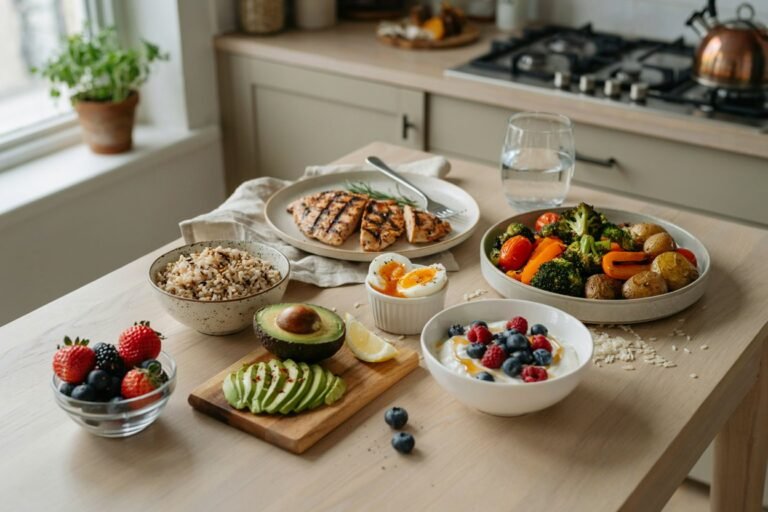
Nutrition Tips to Support a Toned Body
Exercise alone is only part of the equation.
I have found that eating balanced meals and staying hydrated makes a noticeable difference in my energy levels and recovery.
Some habits that have helped me include:
- Eating a source of protein with every meal
- Including plenty of vegetables and fruit throughout the day
- Choosing whole grains over heavily processed foods
- Drinking enough water before and after workouts
- Getting enough sleep each night to support muscle recovery
- Avoiding the temptation to skip meals after exercising
You do not need a perfect diet to see results.
Consistently making better food choices has always worked better for me than following strict eating plans that are difficult to maintain.
Common Mistakes That Can Slow Your Progress
Even simple home workouts can become less effective if you overlook the basics.
These are some of the mistakes I have made myself and learned to avoid.
- Skipping your warm up
- Using poor exercise form
- Exercising without enough recovery
- Trying to progress too quickly
- Comparing your progress with others
- Ignoring proper nutrition
- Expecting instant results instead of trusting the process
Frequently Asked Questions
Can I stay toned without going to the gym?
Yes. Bodyweight exercises performed consistently can help build strength and improve muscle definition without expensive equipment.
How many days a week should I work out?
Aim for three to five workout sessions each week, depending on your schedule and fitness level.
Do I need weights to tone my body?
No. Many effective exercises use only your body weight. As you become stronger, you can add resistance bands or dumbbells if you want more of a challenge.
How long should each workout last?
Most people can complete an effective workout in twenty to forty five minutes.
When will I start seeing results?
Everyone progresses differently, but with consistent exercise and balanced nutrition, many people begin noticing positive changes within four to eight weeks.
Should I do cardio every day?
Not necessarily. Combining strength training with moderate cardio throughout the week is usually enough for most people.
Is it okay to work out if I am a beginner?
Absolutely. Start slowly, focus on proper technique, and increase the intensity as your strength improves.
What should I eat after a workout?
A balanced meal containing protein and healthy carbohydrates can help support muscle recovery and replenish energy.
Final Thoughts
Staying toned at home does not require complicated workout programs or expensive fitness equipment.
What has made the biggest difference for me is staying consistent, focusing on proper form, and choosing exercises that fit naturally into my daily routine.
There are days when motivation is high and days when it is not, but showing up for even a short workout has always been better than doing nothing.
Remember that progress does not happen overnight.
Small improvements made consistently can lead to meaningful changes in your strength, endurance, and confidence.
Start with the exercises that feel comfortable, give yourself time to improve, and celebrate each milestone along the way.
The best workout routine is the one you can enjoy and stick with, because consistency will always produce better results than chasing perfection.