
For the longest time, I thought cardio for weight loss had to be intense, exhausting, and time-consuming.
I tried pushing myself too hard, skipping rest days, and doing workouts I couldn’t maintain — and every time, I burned out before I saw real results.
What finally worked wasn’t doing more, but doing cardio consistently and smartly.
This 21-day cardio workout plan is the exact structure I use when I want to lose weight, boost my energy, and feel lighter without feeling overwhelmed.
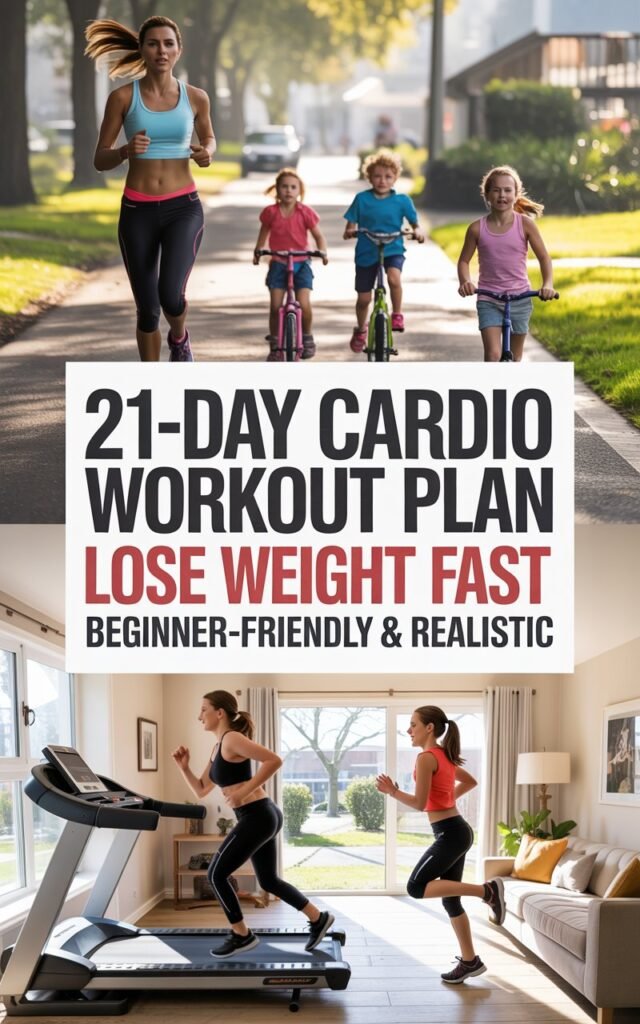
It’s designed for real life — busy days, low-motivation days, and days when you don’t feel like working out at all.
The focus isn’t perfection or extreme calorie burn, but building momentum that actually leads to visible weight loss over time.
If you’ve been struggling to stay consistent with workouts or you’re not sure how much cardio you really need to lose weight, this 21-day plan gives you a clear, doable path to follow — one day at a time.
Affiliate Disclaimer: Some links in this post are affiliate links. I may earn a small commission at no extra cost to you.
AMAZON SHOPPING LIST (CARDIO WORKOUT ESSENTIALS)
- Adjustable Dumbbells (5–25 lbs)
Add resistance to home cardio and full-body workouts
BUY NOW ON AMAZON - Resistance Bands Set (Loop & Tube Bands)
Perfect for warming up, strengthening, and toning during cardio
BUY NOW ON AMAZON - Non-Slip Exercise Mat
Provides comfort and safety during floor-based cardio exercises
BUY NOW ON AMAZON - Adjustable Ankle Weights (1–5 lbs)
Boost calorie burn and leg toning during cardio moves like leg lifts and kickbacks
BUY NOW ON AMAZON - Fitness Tracker / Smart Watch
Track heart rate, calories burned, and daily activity for optimal results
BUY NOW ON AMAZON
How This 21-Day Cardio Plan Helps You Lose Weight

Before jumping into the daily workouts, it’s important to understand why this plan works and how it’s different from random cardio sessions.
1. Builds Consistency Without Burnout
The biggest reason people fail with cardio is overdoing it at first. This plan gradually increases intensity and duration over 3 weeks, which helps your body adapt without leaving you exhausted or sore.
- Week 1 focuses on light to moderate cardio
- Week 2 adds shorter high-intensity bursts
- Week 3 combines steady-state cardio with short HIIT sessions
This gradual increase is what helps the weight start coming off safely and sustainably.
2. Targets Fat Loss and Energy Boost
Cardio helps burn calories, yes — but it also:
- Improves circulation
- Reduces bloating
- Boosts metabolism
- Enhances endurance for other workouts
By sticking to this plan, you’ll not only burn calories but feel more energetic in your daily life.
3. Flexible for Home, Gym, or Outdoors
You don’t need fancy equipment. This plan includes options like:
- Walking or jogging outside
- Treadmill sessions at home
- Low-impact cardio for joints
- Optional jump rope or step exercises
This makes it easy to adapt to your schedule and environment.
4. Short but Effective
Each daily session is 20–40 minutes, making it easy to fit even on busy days. You don’t need hours in the gym to see results. Consistency over time beats intensity over a single day.
5. Encourages Recovery
Rest and active recovery are built into the plan to prevent injury and keep you motivated. On “lighter” days, you’ll do:
- Slow walks
- Gentle stretching
- Yoga-inspired mobility moves
This helps your body recover while still burning some calories.
Related Weight Loss Guides

- 10-Day Oatmeal Diet to Shed Pounds
- How to Lose 11 Pounds in a Month (Safely & Realistically)
- How to Lose Your First 20 Pounds Fast: A Complete Fat Loss Plan
- How I Dropped Pounds and Toned Up in a Week With Bodyweight Workouts
- How to Lose Up to 5 Pounds in One Week Using Kettlebells
Week 1: Getting Started (Building the Habit)

Week 1 is all about ease and consistency. When I start a new cardio routine, I focus on showing up every day rather than going all out.
These workouts are short enough to do even on busy days, and they helped me feel lighter and more energized by day 5.
Day 1 – Light Walk or Treadmill Warm-Up
What I do:
- Outdoor: 25–30 minutes brisk walk around my neighborhood
- Treadmill: 25 minutes at a comfortable pace, incline 1–2%
- Home: March in place, add light arm movements, or use a mini stepper
Personal tip:
I like to start my morning with music or a podcast — it makes the walk feel less like a workout and more like “me time.”
Why Day 1 works:
It gets your body moving and sets the tone for the week without leaving you exhausted.
Day 2 – Light Jog / Steady-State Cardio
What I do:
- Outdoor: 20 minutes easy jog or run/walk intervals
- Treadmill: 20–25 minutes jog at a comfortable speed
- Home: Low-impact jog in place or use a jump rope for 15–20 minutes
Personal tip:
I remind myself it’s okay to mix jogging with walking. On my first few tries, I couldn’t run straight for 20 minutes — and that’s fine. Consistency matters more than speed.
Day 3 – Active Recovery / Gentle Movement
What I do:
- 20–25 minutes slow walk
- Stretching or yoga for 10 minutes afterward
Personal tip:
I use this day to check in with my body. Some people skip recovery, but I noticed that taking it easy prevents soreness and keeps me motivated.
Day 4 – Interval Cardio (Short Bursts)
What I do:
- Outdoor: Alternate 1 minute fast walk/jog, 2 minutes slow walk for 20 minutes
- Treadmill: 1 min speed increase, 2 min easy pace, repeat for 20 minutes
- Home: March/jump in place fast for 30–60 seconds, slow down for 90 seconds, repeat
Personal tip:
I set a timer on my phone. Short bursts make it less intimidating than a full high-intensity workout.
Day 5 – Steady-State Cardio (Longer Walk or Jog)
What I do:
- Outdoor: 30–35 minutes brisk walk or light jog
- Treadmill: 30 minutes moderate pace
- Home: Step exercises, march in place, or low-impact aerobics
Personal tip:
I like to do this in the evening after dinner — it helps me digest and wind down.
Day 6 – Optional Cross-Training / Fun Cardio
What I do:
- Dance to my favorite playlist for 20–30 minutes
- Try a short online Zumba or low-impact aerobics video
Personal tip:
I always make this “fun.” Weight loss is easier when you actually enjoy moving.
Day 7 – Rest or Light Walk
What I do:
- Take a slow 15–20 minute walk if I feel like it
- Otherwise, just stretch and rest
Personal tip:
I remind myself: rest is part of progress. Skipping rest can lead to burnout and injury.
💡 Week 1 Notes from My Experience:
- I noticed more energy after Day 3
- Morning workouts were easier to stick to than evenings
- Music, podcasts, or audiobooks make workouts feel shorter
- Even light movement counts — showing up daily is the biggest win
Week 2: Stepping Up (Making Cardio a Part of My Life)

By Week 2, I’ve already gotten used to moving every day. My kids are running around the house, and I’ve realized that sneaking in workouts while they play or before dinner is easier than I thought.
This week, I increased the intensity slightly, but I still kept it realistic so I could stick with it even on busy mornings.
Day 8 – Steady-State Cardio + Light Jog
- This morning, I grabbed my headphones while my kids were getting ready for school and went for a 25–30 minute brisk walk around the neighborhood. For 5–10 minutes, I added light jogging, trying to keep my heart rate steady.
- On treadmill days, I set it at a comfortable pace with a slight incline for 25–30 minutes, then increased the speed for the last 5 minutes to push myself.
- If I’m at home, I march in place or jog around the living room while my kids play nearby, adding arm movements to keep my upper body active.
Day 9 – Beginner HIIT Intervals
- I alternate 30 seconds of faster movement with 90 seconds of slower recovery, repeating for 20–25 minutes. Sometimes I do this in the living room while my kids are playing or helping them with their homework nearby.
- High knees, jumping jacks, or a quick treadmill sprint works for me. Even short bursts are enough to make me sweat and feel accomplished.
Day 10 – Active Recovery / Light Movement
- I take a 20–25 minute slow walk with my kids around the block or let them ride bikes while I walk alongside.
- Afterward, I do 5–10 minutes of stretching — sometimes the kids copy me, which keeps it fun.
Day 11 – Steady-State Longer Session
- I usually wait until the kids are at school or napping. A 30–35 minute brisk walk or light jog outside clears my head.
- At home, I use step exercises in the living room while they play or watch a show. Keeping my body moving for 30–35 minutes helps me feel energized and ready for the rest of the day.
Day 12 – HIIT + Fun Cardio
- I set a timer for 30 seconds of high-intensity movement and 60–90 seconds of recovery, repeating for 20–25 minutes.
- Sometimes I turn on a short dance cardio video and the kids join in. It’s fun and makes the workout feel like playtime rather than exercise.
Day 13 – Optional Cross-Training
- On weekends, I like to take my family for a 30–40 minute bike ride or brisk walk at the park.
- If we stay indoors, I follow a 25–30 minute low-impact dance routine or cardio video with the kids dancing along.
Day 14 – Rest or Gentle Activity
- We all enjoy a slow family walk together for 15–20 minutes, or I stretch while they play.
- This day is for recovery — even a gentle walk counts and prepares us for Week 3.
Week 3: Maximize Results (Steady-State + HIIT)

By Week 3, I’m feeling more consistent. My kids are back in their school routines, and I’ve figured out when I can sneak in workouts without feeling stressed.
This week focuses on combining steady-state cardio with short HIIT bursts for maximum fat-burning while keeping it realistic and part of my everyday life.
Day 15 – Steady-State Cardio (Moderate)
- I wake up a little earlier and go for a 35–40 minute brisk walk around the neighborhood while the kids get ready for school.
- On treadmill days, I set it at a moderate pace with a slight incline and aim for 35–40 minutes.
- If I’m at home, I march or jog in place, adding arm movements while preparing breakfast for the family.
The focus today is building endurance while keeping my heart rate steady.
Day 16 – Beginner HIIT Intervals
- I alternate 30 seconds of fast movement (running, high knees, or jumping jacks) with 90 seconds of slower recovery, repeating for 20–25 minutes.
- Sometimes I do this in the living room while my kids play nearby — they enjoy copying the moves.
This session pushes my body just enough to boost calorie burn without leaving me exhausted.
Day 17 – Active Recovery / Low-Impact Cardio
- I take a 20–25 minute walk with the kids, letting them ride their bikes while I walk beside them.
- Afterward, I spend 5–10 minutes stretching or doing gentle mobility exercises.
Active recovery today prepares my muscles for the next few days of more intense workouts.
Day 18 – Steady-State Longer Session
- I take advantage of the morning quiet: 40 minutes brisk walk or light jog outside while listening to music or a podcast.
- At home, I use step exercises or march in place for 35–40 minutes while the kids play around me.
This longer session improves stamina and consistent calorie burn.
Day 19 – HIIT Intervals
- Alternate 30 seconds of high-intensity movement with 60–90 seconds of recovery for 20–25 minutes.
- Options include running, jump rope, or fast marching in place.
- I sometimes make it fun by putting on an upbeat song and moving along with the kids.
This day focuses on maximizing calorie burn in short bursts.
Day 20 – Optional Cross-Training / Cardio Variety
- We often go for a family bike ride or brisk nature walk for 30–40 minutes.
- At home, a 25–30 minute low-impact dance or cardio video keeps things fun and active.
Variety helps prevent boredom and challenges different muscles.
Day 21 – Rest or Gentle Activity
- I take a 15–20 minute slow walk around the neighborhood with the kids, or do gentle stretching at home.
- No structured cardio today — the goal is recovery and preparing for another cycle.
Why I Love This 21-Day Cardio Workout Plan for Weight Loss

What I love most about this 21-day cardio workout plan is how structured and simple it is to follow.
Instead of guessing what workout to do each day, I have a clear plan that keeps me consistent and focused on my weight loss goals.
Another reason I love it is how effective it feels without needing a gym.
I can do everything at home with basic movements like jumping jacks, high knees, marching, and brisk walking, which makes it easy to stay active no matter how busy my day is.
I also love how quickly I start feeling the benefits. Within a few days, I notice more energy, better mood, and improved stamina.
As I continue, I can feel my body getting stronger and more toned over time.
Most importantly, this plan keeps me motivated because it’s short-term but powerful.
Knowing it’s only 21 days makes it feel achievable, and that helps me stay committed from start to finish.
How to Stay Committed to a 21-Day Cardio Workout Plan

Staying committed to a 21-day cardio workout plan is all about keeping things simple, realistic, and consistent.
Instead of focusing on perfection, I focus on showing up every day—even if the workout is short or low intensity. Consistency is what creates real results.
One thing that helps me stay committed is having a fixed schedule.
When I decide my workout time in advance, it becomes part of my daily routine, just like eating or sleeping, which makes it harder to skip.
I also make my workouts enjoyable by mixing different cardio movements like dancing, brisk walking, jumping jacks, and low-impact exercises.
This keeps me from getting bored and helps me look forward to each session.
Tracking my progress is another big motivator. I notice changes in my energy, mood, and endurance, not just the scale.
Seeing small improvements keeps me going even on low-motivation days.
Finally, I remind myself that it’s only 21 days. Breaking it into a short, focused challenge makes it feel achievable and helps me stay mentally committed from start to finish.
FAQ: 21-Day Cardio Workout Plan for Weight Loss
1. Can I really lose weight in 21 days with cardio?
Yes, you can start seeing fat loss and improved fitness in 21 days when combined with a healthy diet and consistency.
2. What type of cardio is best for weight loss?
Brisk walking, jogging, jumping jacks, high knees, cycling, and dancing are all effective options.
3. How long should each workout be?
Most sessions can be 20–45 minutes depending on your fitness level.
4. Do I need equipment for this plan?
No, most cardio workouts can be done at home using just your body weight.
5. How many days a week should I do cardio?
5–6 days per week is ideal, with at least 1 rest day for recovery.
6. Can beginners follow a 21-day cardio plan?
Yes, beginners can start with low-impact versions and gradually increase intensity.
7. What should I eat during the plan?
Focus on balanced meals with protein, fiber, fruits, vegetables, and healthy fats.
8. Why am I not losing weight even with cardio?
It may be due to diet, inconsistency, or not being in a calorie deficit.
Final Thought
A 21-day cardio workout plan can be a powerful way to kickstart your weight loss journey, but the real transformation comes from consistency, not perfection.
What matters most is showing up every day, even in small ways, and building a habit you can maintain beyond the 21 days.
Stay patient with yourself, trust the process, and focus on progress over time. Every workout counts, and every step forward brings you closer to your goals.