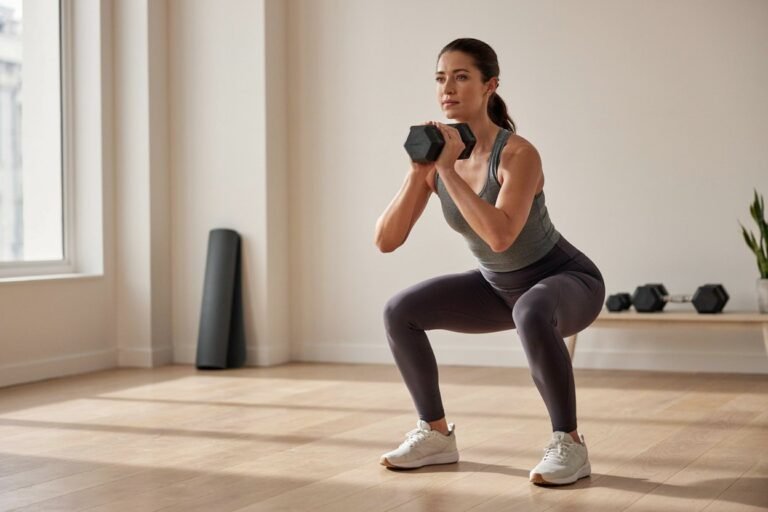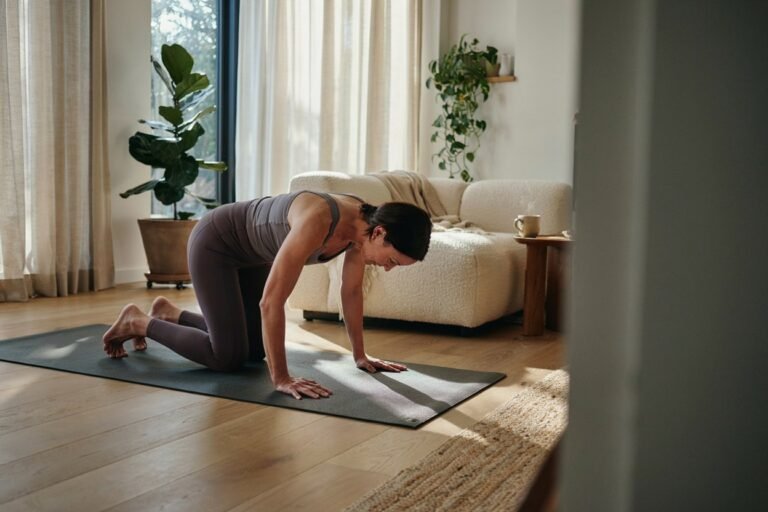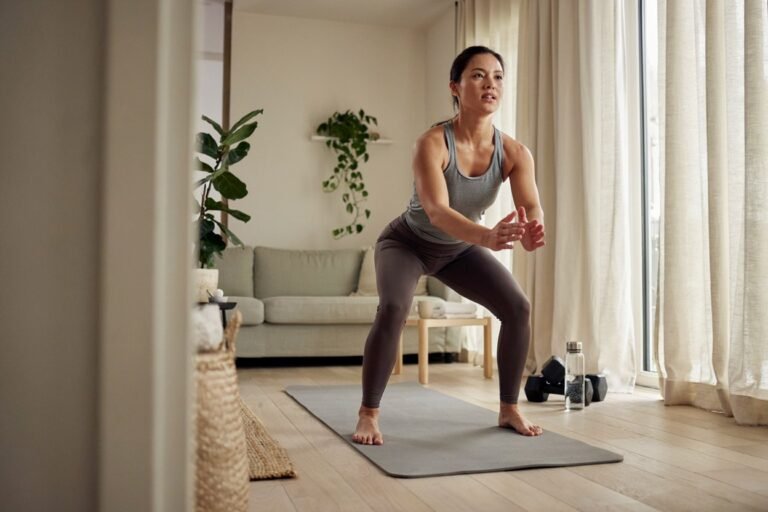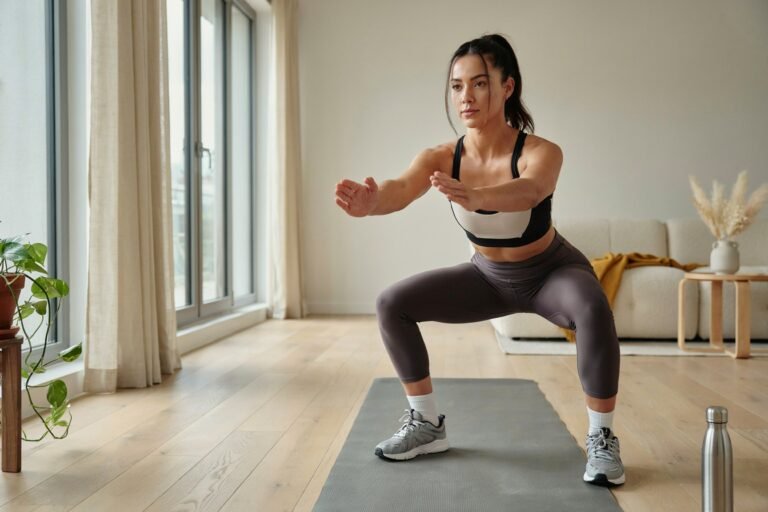
There was a time I kept waiting for the “perfect moment” to start losing weight.
A free schedule, more energy, fewer responsibilities… none of that ever really came.
Between home routines, making meals, and trying to keep up with everything, I needed something realistic.
Something I could actually stick to without turning my day upside down.
That’s when I started doing simple yoga at home.
No pressure. No long sessions. Just small movements that slowly added up. And over time, I noticed something I felt lighter, less bloated, and more in control of my body.
If you’re looking for a calm but effective way to support weight loss, these simple yoga exercises are a great place to start.
Disclaimer: This post may contain affiliate links, which means I may earn a small commission at no extra cost to you. Exercise and weight loss results vary, and it’s best to consult a qualified health professional before starting a new fitness or yoga routine.
Amazon Shopping List: 10 Simple Yoga Exercises You Can Do at Home for Weight Loss
- Non-Slip Yoga Mat
- Yoga Blocks Set
- Yoga Strap Stretching Band
- Yoga Wheel for Flexibility & Support
- Comfortable High-Waist Yoga Leggings
- Fitness Water Bottle (Leakproof)
- Yoga Bolster Pillow for Support
How Yoga Helps With Weight Loss
Yoga might not feel as intense as other workouts, but it works in a different way.
From my experience, it helps by:
- Improving metabolism over time
- Reducing stress (which helps with overeating)
- Supporting better digestion
- Toning muscles gently
- Encouraging consistency
And honestly, consistency is what made the biggest difference for me.
What You Need to Get Started
You don’t need much at all:
- A yoga mat or soft surface
- Comfortable clothes
- A quiet space at home
That’s it. No equipment, no complicated setup.
Here Are the 10 Simple Yoga Exercises You Can Do at Home
If you’re looking for an easy way to stay active at home, these simple yoga exercises are a great place to start.
They’re beginner-friendly, require no equipment, and can help support weight loss, flexibility, and overall body strength when done consistently.
1. Sun Salutations (Surya Namaskar)
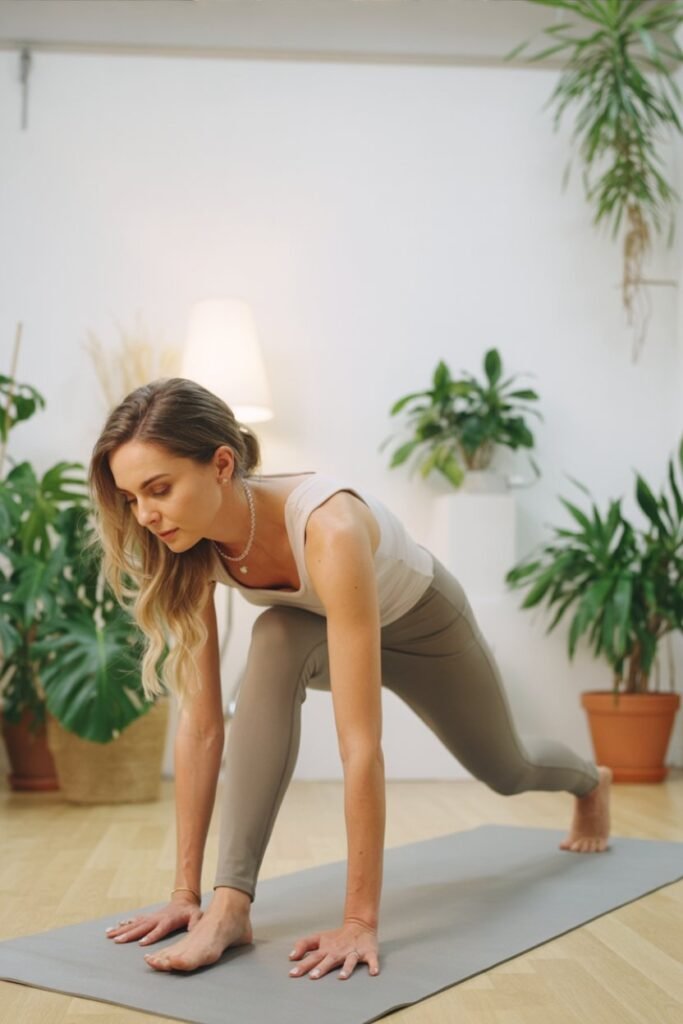
This is one of the first things I added to my routine when I started doing yoga at home, and it’s still one of the most effective.
It’s a simple flow that moves your body from standing to bending, to plank, to stretching, and back up again — all in one smooth sequence.
How to do it:
Start standing, raise your arms overhead, bend forward, step back into a plank, lower your body, lift your chest into a gentle backbend, push into downward dog, then step forward and return to standing.
Why it works:
- Keeps your body moving continuously
- Engages your core, arms, and legs
- Gently increases your heart rate
How I do it:
I usually do 3–5 rounds in the morning to wake up my body.
Beginner tip:
Take it slow and focus on your breathing. You don’t need perfect form — just keep it steady and consistent.
2. Downward Dog
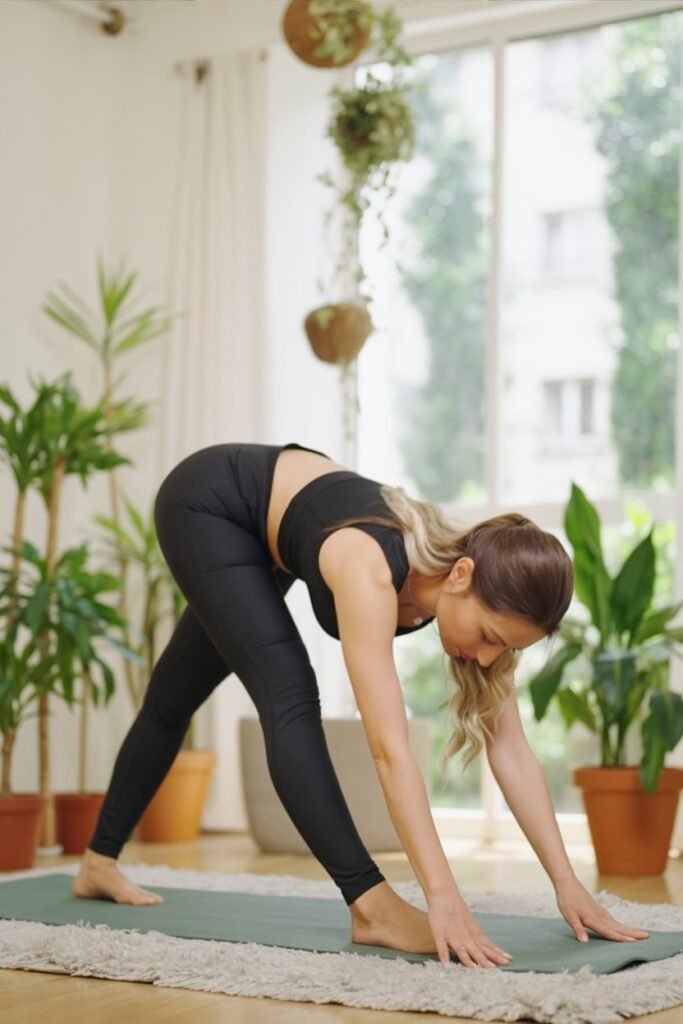
This is one of those yoga poses I keep coming back to because it instantly stretches my whole body, especially on days I feel stiff or tired.
You start on your hands and knees, then lift your hips up and back so your body forms an upside-down “V” shape.
Your hands stay firmly on the floor while your heels reach toward the ground.
How to do it:
Place your hands shoulder-width apart and feet hip-width apart.
Press into your palms, lift your hips upward, straighten your legs as much as comfortable, and let your head relax between your arms.
Why it works:
- Stretches your legs, back, and shoulders
- Engages your arms and core
- Helps improve blood flow and energy
- Supports calorie burn when held consistently
How I do it:
I usually hold this pose for 20–40 seconds, sometimes repeating it 2–3 times during my routine.
Beginner tip:
Don’t worry if your heels don’t touch the floor — mine didn’t at first either. Just focus on keeping your back long and your breathing steady.
3. Plank Pose
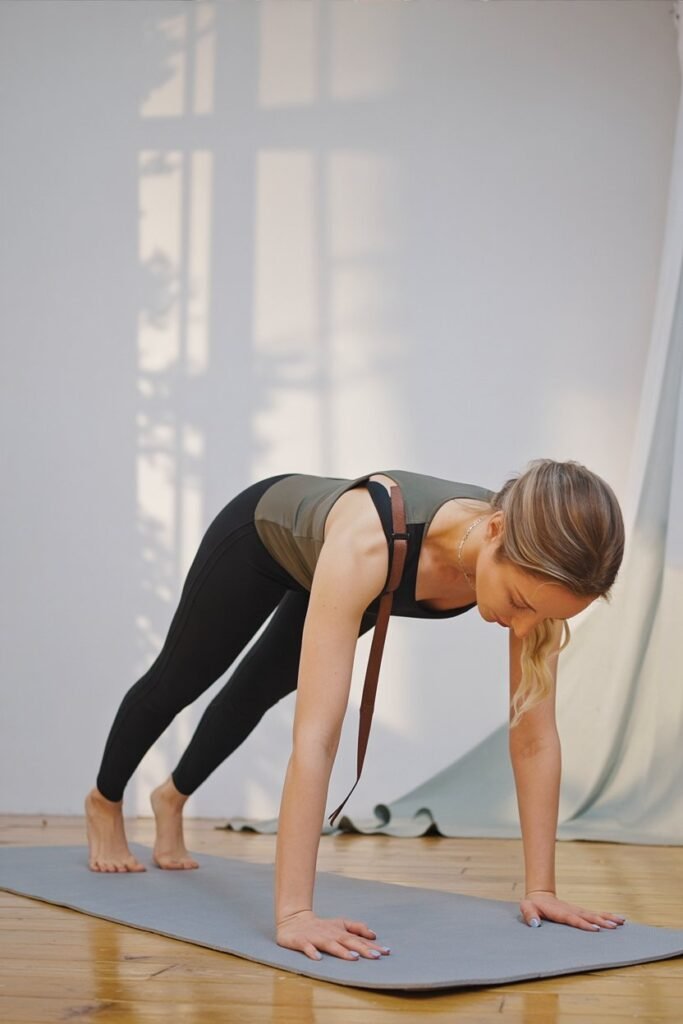
This is one of the simplest-looking yoga moves, but it’s actually one of the most powerful for weight loss and core strength.
You hold your body in a straight line, like a push-up position, and just stay steady while engaging your muscles.
How to do it:
Place your hands directly under your shoulders and stretch your legs back so your body forms a straight line from head to heels.
Keep your core tight, don’t let your hips drop, and look slightly forward or down.
Why it works:
- Strengthens your core and belly area
- Engages arms, shoulders, and legs at the same time
- Helps build endurance and burn calories
- Improves overall body stability
How I do it:
I usually hold it for 20–40 seconds, and as I get stronger, I try to increase the time gradually.
Beginner tip:
If it feels hard at first, drop your knees for support. I started that way too — it still counts and helps you build strength safely.
4. Warrior II
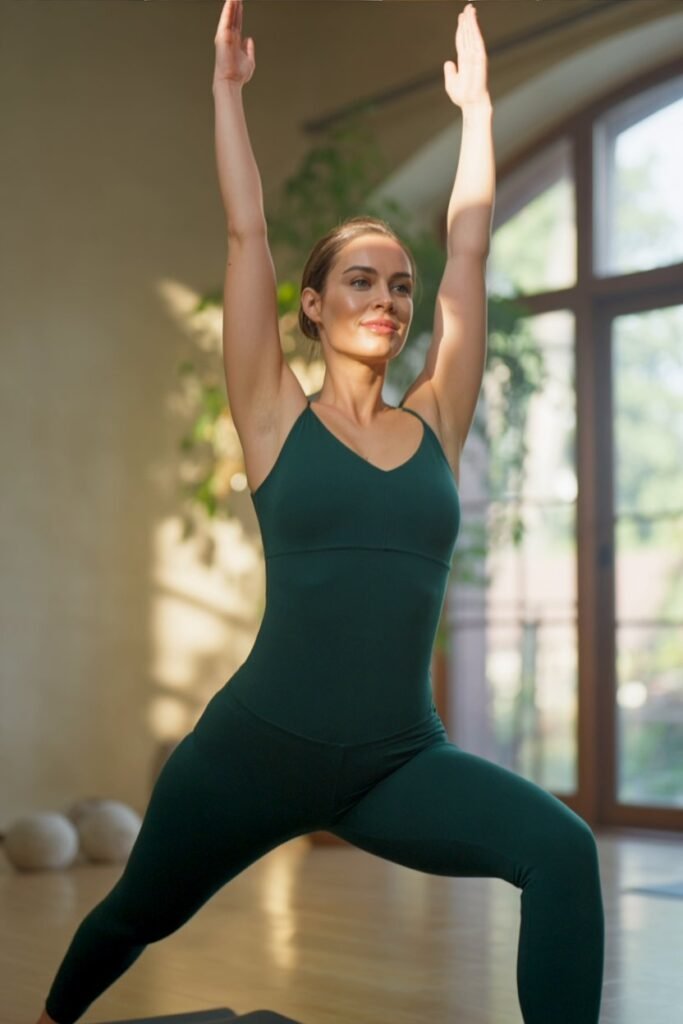
This is one of those yoga poses that makes me feel strong and steady the moment I get into it. It looks simple, but you’ll definitely feel it in your legs and core.
You step one foot forward, bend the front knee, and extend your arms out wide so your body feels open and balanced.
How to do it:
Step one foot forward and bend your front knee (keep it above your ankle).
Turn your back foot slightly outward, stretch both arms out to the sides at shoulder level, and look over your front hand. Keep your chest open and stay steady.
Why it works:
- Strengthens legs, thighs, and glutes
- Engages core muscles for balance
- Builds stamina and endurance
- Helps tone the lower body over time
How I do it:
I usually hold each side for 20–30 seconds, then switch legs and repeat.
Beginner tip:
Don’t go too deep into the bend at first. Keep it comfortable and focus on balance — it gets easier with practice.
5. Boat Pose
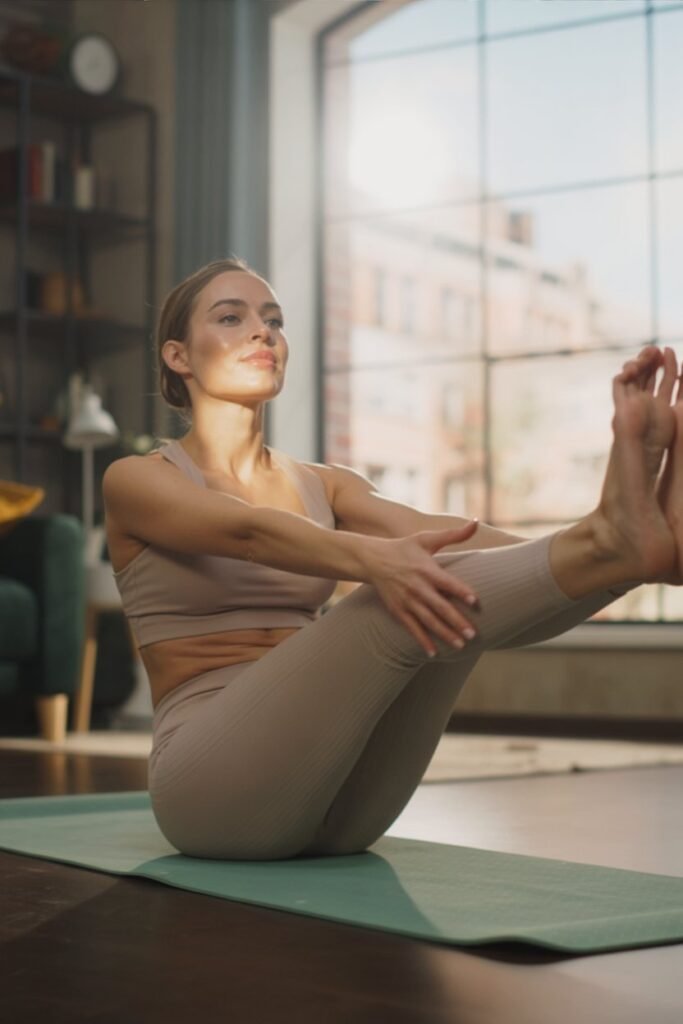
This is one of the best yoga moves I use when I want to feel my core working. It’s simple, but you’ll feel it quickly, especially around the stomach area.
You sit on the floor and lift your legs while balancing on your sit bones, forming a “V” shape with your body.
How to do it:
Sit down with your knees bent, lean back slightly, then lift your feet off the ground.
Try to straighten your legs if you can, and stretch your arms forward to help balance. Keep your chest lifted and core tight.
Why it works:
- Strengthens the core and lower abs
- Helps tone the stomach area
- Improves balance and control
- Engages hip and back muscles
How I do it:
I usually hold it for 15–30 seconds, rest, then repeat 2–3 times.
Beginner tip:
If it feels hard, keep your knees bent instead of straightening your legs. That’s how I started, and it still works your core effectively.
6. Bridge Pose
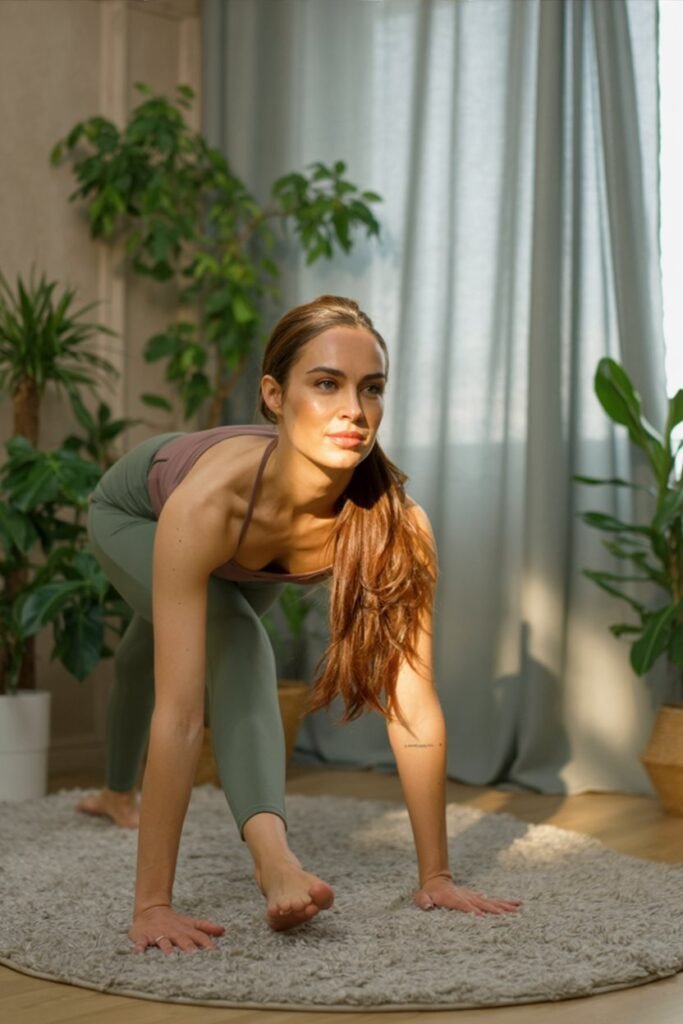
This is one of my favorite gentle poses because it feels calming but still works your body in a really effective way, especially the lower body.
You lie on your back, bend your knees, and lift your hips up while keeping your feet planted on the floor.
How to do it:
Lie flat on your back with knees bent and feet hip-width apart.
Press your feet into the floor, lift your hips upward, and squeeze your glutes. Keep your shoulders relaxed and arms flat beside you.
Why it works:
- Strengthens glutes and lower body
- Engages core muscles
- Helps tone and support the lower back
- Supports better posture and stability
How I do it:
I usually hold it for 20–40 seconds, then slowly lower down and repeat 2–3 times.
Beginner tip:
Don’t lift too high at first. Focus on slow, controlled movement — that’s what makes it effective and safe.
7. Chair Pose
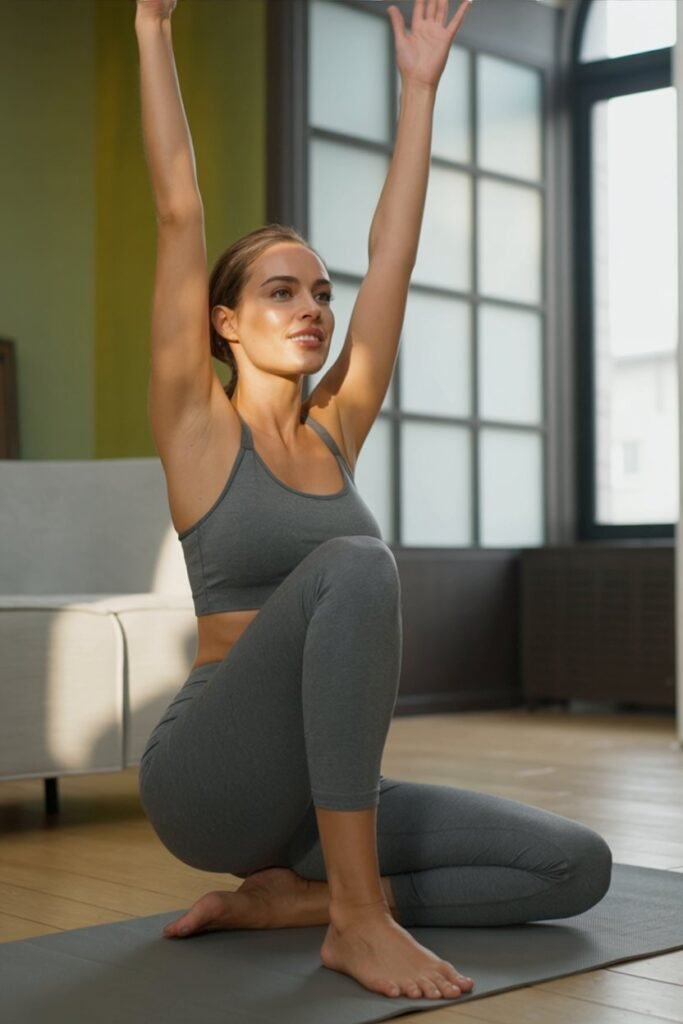
This one always surprises me because it looks simple, but you’ll really feel it in your legs after a few seconds.
It’s basically like sitting back into an invisible chair while keeping your body strong and steady.
How to do it:
Stand with your feet together or hip-width apart. Bend your knees and push your hips back like you’re sitting down.
Raise your arms overhead and keep your chest lifted. Hold the position while keeping your weight in your heels.
Why it works:
- Strengthens thighs, glutes, and calves
- Engages core for balance
- Helps burn calories through muscle activation
- Builds lower body endurance
How I do it:
I usually hold it for 15–30 seconds, rest, then repeat 2–3 times.
Beginner tip:
Don’t go too low at first. Even a small bend is enough what matters is keeping your body stable and controlled.
8. Cobra Pose
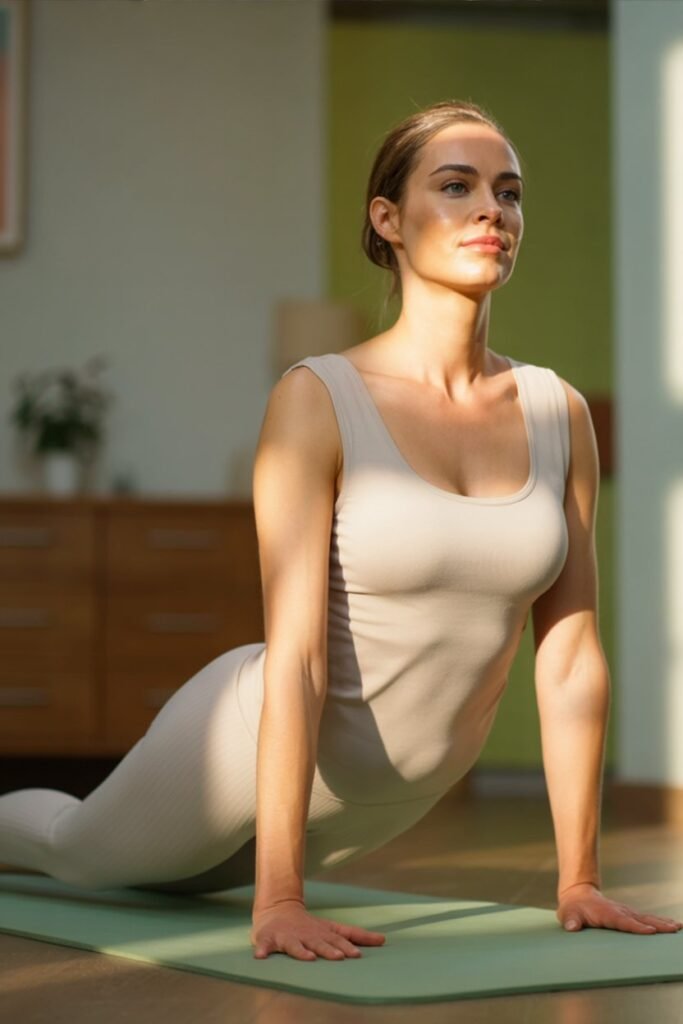
This is a simple but really effective pose, especially when my back feels stiff from sitting too long. It also helps open up the chest and gently activates the core.
You lie on your stomach and slowly lift your upper body using your hands.
How to do it:
Lie flat on your stomach with your legs stretched back.
Place your palms under your shoulders, press gently into the floor, and lift your chest up while keeping your hips on the ground. Look slightly upward without straining your neck.
Why it works:
- Strengthens the lower back and core
- Helps improve posture
- Opens the chest and shoulders
- Gently engages abdominal muscles
How I do it:
I usually hold it for 15–30 seconds, then lower down and repeat 2–3 times.
Beginner tip:
Don’t push too high. Keep it small and controlled — the stretch is more important than how high you lift.
9. Twisting Pose (Seated Twist)
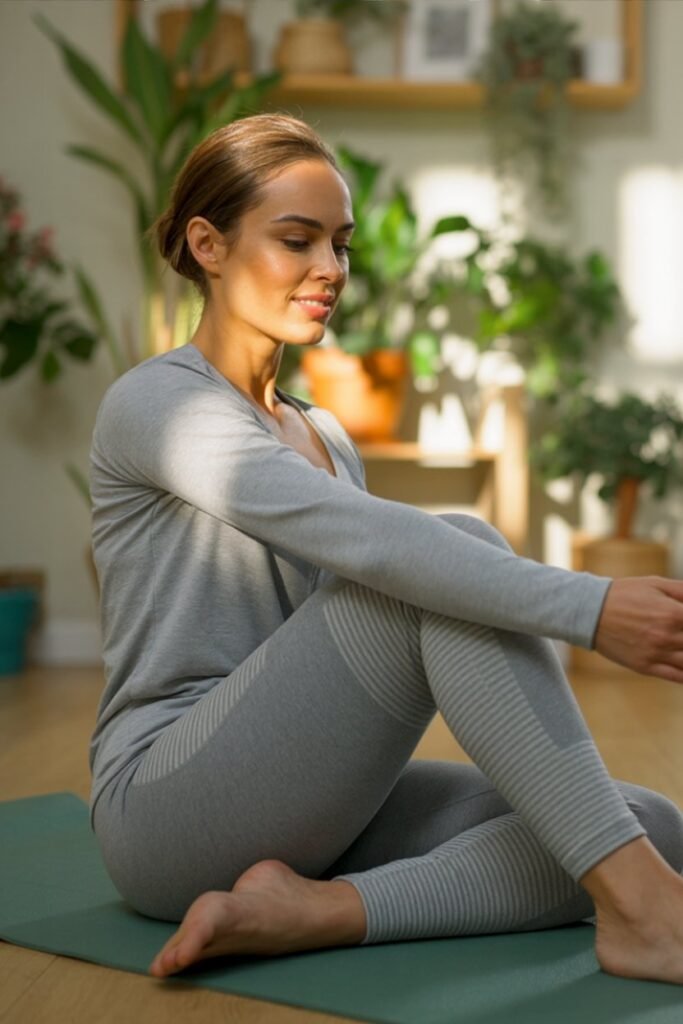
This is one of those simple yoga moves I use when I want to feel a light stretch and also help my body feel less “heavy,” especially after sitting or eating.
You sit on the floor and gently twist your upper body to one side, then the other.
How to do it:
Sit with your legs extended or bent (whatever is comfortable).
Place one hand behind you for support, bring the other hand across your body, and gently twist your torso toward the back hand. Keep your spine tall and switch sides.
Why it works:
- Helps improve digestion
- Gently tones the waist area
- Improves spine flexibility
- Reduces stiffness in the back
How I do it:
I usually hold each side for 15–25 seconds, then switch and repeat once or twice.
Beginner tip:
Don’t force the twist. Keep it slow and comfortable — the stretch should feel easy, not painful.
10. Legs Up the Wall
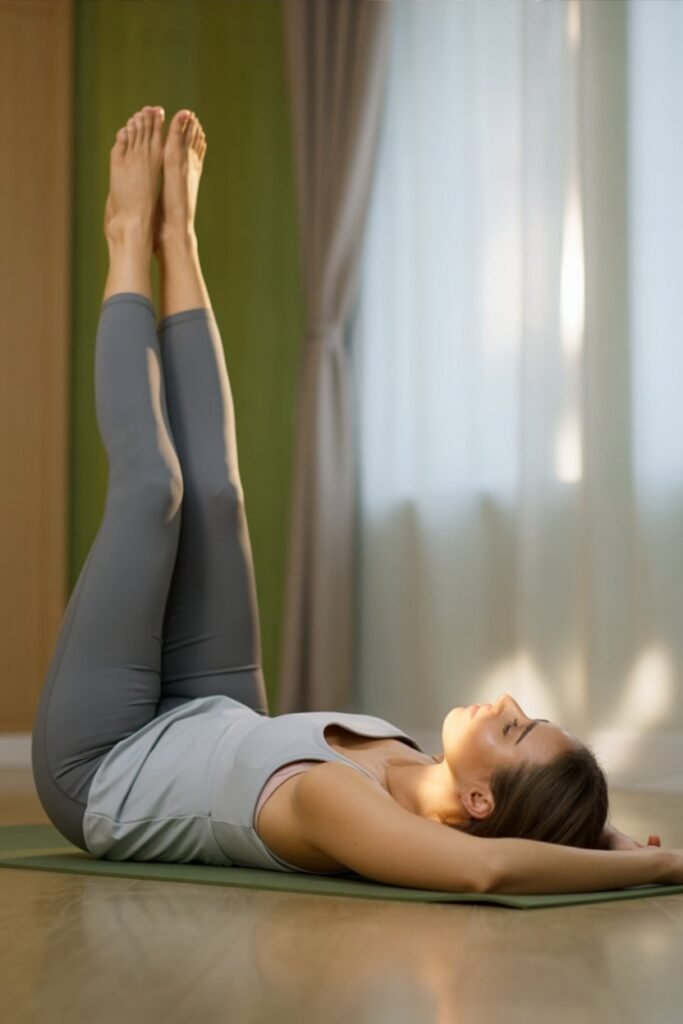
This is my favorite way to end a yoga session, especially on days when my legs feel tired or I just want to relax my whole body.
You simply lie on your back and rest your legs straight up against a wall.
How to do it:
Sit close to a wall, lie back gently, and swing your legs up so they rest vertically on the wall.
Keep your arms relaxed by your sides, close your eyes, and breathe slowly.
Why it works:
- Helps reduce swelling and tiredness in the legs
- Improves blood circulation
- Calms the body and mind
- Supports recovery after movement
How I do it:
I usually stay in this pose for 2–5 minutes, especially at the end of my routine or before bed.
Beginner tip:
You don’t need to stay long at first. Even 1–2 minutes is enough to feel relaxed and refreshed.
Simple Routine I Follow at Home
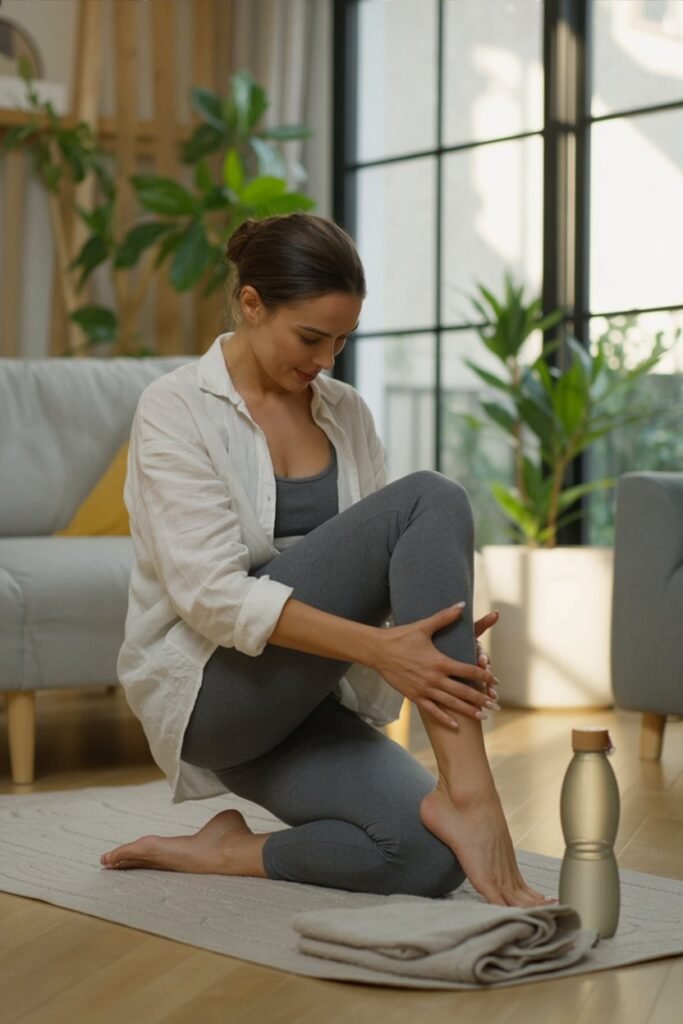
On most days, I don’t overcomplicate it.
- 5 minutes: warm-up (Sun Salutations)
- 10 minutes: main poses (mix of the above)
- 5 minutes: cool down and breathing
That’s just 20 minutes — and it’s manageable even on busy days.
Tips That Helped Me See Results
- Stay consistent, even if it’s just a few minutes
- Focus on controlled breathing
- Combine yoga with simple eating habits
- Don’t rush the process
- Make it part of your daily routine
What worked for me wasn’t doing everything perfectly — it was showing up daily.
Common Mistakes to Avoid
- Expecting instant weight loss
- Skipping breathing techniques
- Overdoing it in the beginning
- Not being consistent
Small efforts done daily work better than intense sessions you can’t maintain.
Benefits of Doing These Yoga Exercises at Home
When I started doing these simple yoga moves consistently, I noticed changes that went beyond just weight loss.
- Helps support gradual fat loss when done consistently
- Improves metabolism and overall body movement
- Tones muscles gently without heavy workouts
- Reduces stress, which can affect weight gain
- Improves flexibility and posture
- Boosts energy levels throughout the day
- Supports better digestion and less bloating
- Makes it easier to stay active daily without pressure
The biggest benefit for me wasn’t just physical — it was consistency. I could actually stick with it.
FAQ
Can yoga alone help with weight loss?
Yes, but it works best when combined with balanced eating and consistency. Yoga helps burn calories, tone the body, and reduce stress-related weight gain.
How often should I do these exercises?
Start with 3–5 times a week. Even 15–20 minutes daily can make a difference over time.
How long before I see results?
Most people start noticing small changes in energy and body tone within a few weeks, but real visible changes take consistent practice.
Is this beginner-friendly?
Yes, all the poses listed are beginner-friendly and can be adjusted to your comfort level.
Do I need equipment?
No. A yoga mat is helpful, but not required. You can do all of these at home on a soft surface.
What is the best time to do yoga for weight loss?
Morning is ideal for energy and metabolism, but any time you can stay consistent is perfect.
Final Thoughts
Weight loss doesn’t always have to come from intense workouts or strict routines.
For me, it started with simple yoga sessions at home — nothing perfect, nothing complicated. Just a quiet space, a few minutes, and the decision to stay consistent.
If you’re starting today, keep it simple and realistic. That’s what actually works.
Disclaimer
This content is for informational purposes only and is not a substitute for professional medical or fitness advice. Always consult with a qualified professional before starting any new exercise routine.