When it comes to weight loss supplements, most people end up in one of two places.
They either fall for heavily marketed products with exaggerated claims, or they miss out entirely on supplements that actually work because they simply don’t know they exist.
Some of the most effective weight loss supplements tend to fly under the radar, not because they’re ineffective, but because they aren’t hyped the same way fad products are.
As a result, many people spend time and money on supplements that do very little, while overlooking options that could genuinely support their weight loss efforts.

In this post, I want to walk through five effective weight loss supplements that most people have never heard of, explain how they work, and share when they make the most sense to use.
As always, it’s important to remember that supplements are meant to support weight loss, not replace the fundamentals.
Diet, exercise, and lifestyle changes come first.
When supplements are used correctly, they can make those efforts more effective and help you see better results over time.
A Quick Note on Weight Loss Supplements

Before getting into the list, it’s worth setting realistic expectations.
Weight loss supplements do not work the same way for everyone.
Individual results vary, and no supplement will override poor nutrition or a sedentary lifestyle.
The goal of using supplements is to enhance what you are already doing, whether that’s improving appetite control, supporting blood sugar balance, reducing inflammation, or making exercise more effective.
With that in mind, here are five weight loss supplements that deserve far more attention than they get.
1. Glucomannan: A Powerful Fiber for Appetite Control
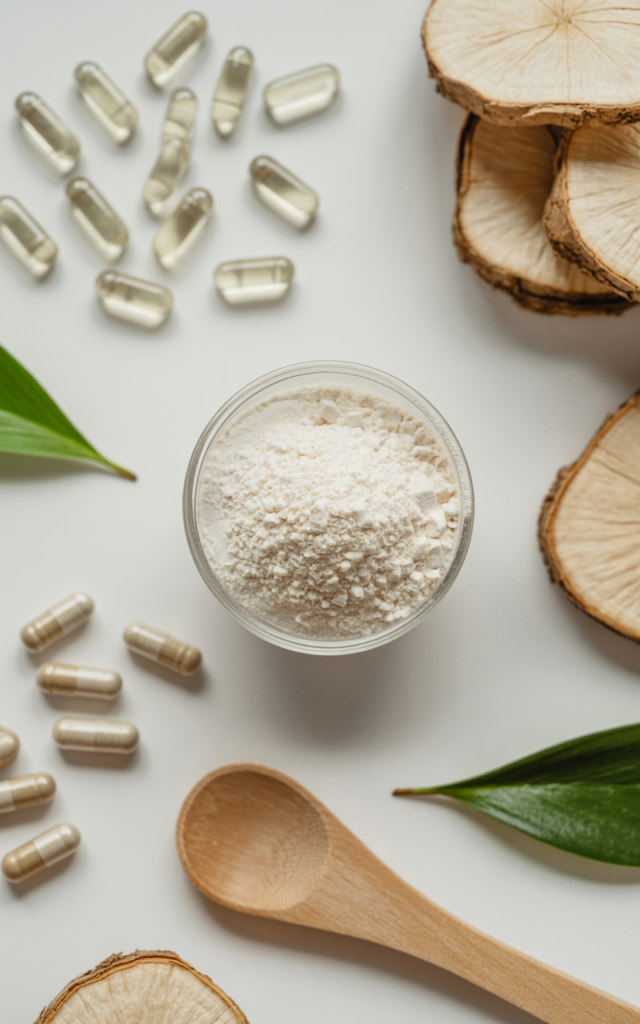
Glucomannan is technically a dietary fiber, which might sound surprising at first. What makes it unique is how it behaves once it’s consumed.
When glucomannan comes into contact with water, it expands significantly. This expansion creates several effects that can support weight loss.
First, it puts pressure on the inside of the stomach, which sends a signal to the brain that you’re full.
This makes it easier to control appetite and reduce overall calorie intake, especially when used strategically before meals or during fasting periods.
Second, glucomannan forms a thick, glue-like substance in the digestive tract.
This slows down the absorption of food, leading to a more gradual rise in blood sugar and a more muted insulin response.
Stable blood sugar levels are closely tied to improved fat loss and reduced cravings.

Finally, as a fiber, glucomannan acts as a food source for healthy gut bacteria.
Supporting a healthier gut microbiome can make weight loss easier by improving digestion, metabolism, and overall metabolic health.
Studies on glucomannan show mixed results, which is common with natural therapies.
However, several studies demonstrate that taking it daily for around eight weeks can lead to an average weight loss of about five pounds.
For a natural supplement with minimal side effects, this is a meaningful result.
Glucomannan is especially helpful for people who practice intermittent fasting, prolonged fasting, or struggle with overeating and binge eating.
It is generally well tolerated, though some people may experience mild bloating during the first few days of use.
It should not be used by individuals who have undergone bariatric surgery or who have structural issues with the esophagus.
2. Berberine: Supporting Metabolism and Blood Sugar

Berberine is a plant-derived compound and one of the most well-researched supplements on this list.
It works by activating an enzyme called AMPK, which is the same enzyme your body activates during exercise.
While berberine does not replace physical activity, it can mimic some of exercise’s metabolic benefits.
Berberine supports weight loss in several ways. It helps increase mitochondrial density in muscle cells, which improves energy production.
It can suppress appetite, support a healthier gut microbiome, and may even increase the body’s ability to burn stored fat.
A large meta-analysis that reviewed more than 12 studies found that daily berberine supplementation was associated with reductions in BMI, waist circumference, and levels of CRP, a marker of inflammation.
These effects make it especially useful for people dealing with insulin resistance, type 2 diabetes, or chronically elevated blood sugar.
For best results, berberine should be combined with regular exercise. This is where its effects are most noticeable and beneficial.
3. Black Seed Oil: An Anti-Inflammatory Approach to Weight Loss

Black seed oil is one of the most versatile supplements available.
It has been used for conditions ranging from infections to joint pain and inflammation, and research now suggests it may also support weight loss.
Several studies, including a meta-analysis of over 13 trials, show that daily supplementation with Nigella sativa leads to reductions in BMI and body weight.
The average weight loss observed was around 4.5 pounds over eight weeks, placing it in a similar range to glucomannan.
One reason black seed oil may work so well for some people is its strong anti-inflammatory properties.
If weight gain is driven in part by inflammation, black seed oil may help by addressing that underlying issue.
This makes it particularly relevant for individuals with autoimmune conditions, thyroid dysfunction, insulin resistance, or leptin resistance.
You may see this supplement labeled as Nigella sativa, black seed oil, or thymoquinone.
These terms are closely related, as thymoquinone is the primary active compound found in black seed oil.
The biggest downside of black seed oil is its taste.
While some people tolerate it without issue, others find it unpleasant.
Gel capsules are available, but they usually contain lower doses than liquid forms.
Aside from the taste, black seed oil is generally well tolerated.
4. Yohimbine: Enhancing Fat Burn During Exercise

Yohimbine is often marketed as a powerful fat burner, though its effects are frequently overstated.
What makes it interesting is its unique mechanism of action.
Yohimbine enhances the body’s fight-or-flight response, also known as the sympathetic nervous system.
It works by blocking alpha-adrenergic receptors, which essentially removes some of the brakes on fat breakdown.
This allows more fat to be released into circulation.
However, this is where many people misunderstand how Yohimbine works.
Releasing fat into the bloodstream is only helpful if that fat is then burned for energy.
If you are not exercising, Yohimbine offers little benefit. In fact, using it without physical activity is unlikely to produce meaningful results.
For individuals who already exercise regularly and want to make those workouts more effective,
Yohimbine can be a useful addition. For those unwilling to make lifestyle changes, it is not an ideal choice.
5. Probiotics: Supporting Weight Loss Through Gut Health

Probiotics are rarely thought of as weight loss supplements, but the research suggests they can play a meaningful role.
A meta-analysis of 27 studies found that 23 showed a positive impact of daily probiotic use on body weight.
The exact mechanisms aren’t fully understood, but probiotics clearly influence the gut microbiome, which affects hormone regulation, neurotransmitter production, calorie absorption, and metabolism.
A healthier gut environment often leads to increased energy levels, better workout performance, higher calorie burn at rest, and improved overall health.
From personal experience and research, taking a probiotic daily supports general well-being and may also contribute to weight loss over time.
Rather than taking probiotics solely for weight loss, it’s better to view them as a foundation for overall health, with weight loss as a potential added benefit.
For those specifically targeting weight loss, higher doses appear to be more effective.
This typically means at least 100 billion CFU per serving, which is significantly higher than the standard 20 billion CFU found in many probiotic supplements.
Final Thoughts
Weight loss supplements can be helpful tools when used correctly, but they are never a replacement for healthy habits.
The supplements discussed here work through different mechanisms, from appetite control and blood sugar regulation to inflammation reduction and gut health support.
If you’re considering adding supplements to your routine, it’s also important to pay attention to hormonal health.
Hormonal imbalances can significantly impact weight loss efforts, and addressing them may be just as important as choosing the right supplement.
Used thoughtfully, these lesser-known supplements can support your weight loss journey and help you get more out of the efforts you’re already making.