Losing weight does not mean every workout needs to leave you exhausted, sore, or jumping around the room.
I have found that low impact workouts can be much easier to stay consistent with, especially on days when my energy is lower or I simply want to exercise without putting unnecessary stress on my joints.
What matters most is finding movement that you can actually enjoy and repeat regularly.
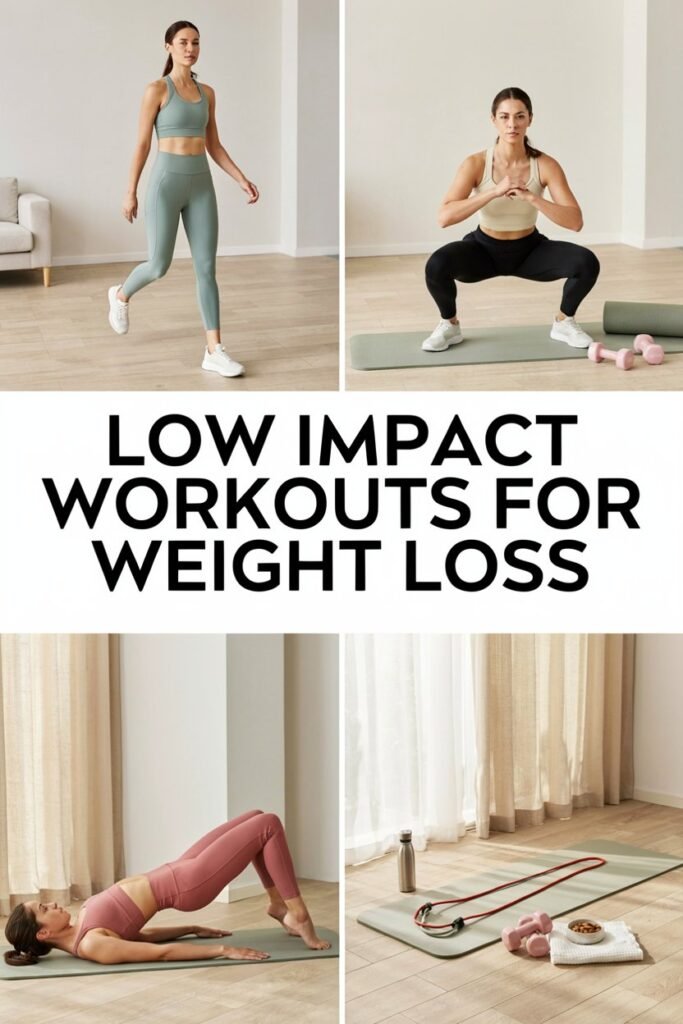
When I am working toward a weight loss goal, I like having a mixture of walking, simple strength exercises, and low impact cardio rather than relying on one type of workout.
It gives me more variety and makes it easier to keep moving throughout the week.
These workouts are also useful when you are exercising at home and do not have much equipment available.
In this guide, I am sharing some of the low impact exercises I personally find practical, along with simple ways to make them easier or more challenging.
I will also show you how to put the exercises together into realistic workouts so you are not left wondering what to do after choosing a few exercises.
Why I Like Low Impact Workouts for Weight Loss
One thing I appreciate about low impact exercise is that it gives you more options.
You do not need to run, jump, or perform intense burpees to have a productive workout.
You can still raise your heart rate, strengthen your muscles, increase your daily movement, and build your fitness with controlled exercises.
I also find low impact workouts easier to fit into normal life.
There are days when I have plenty of time for a longer workout, but there are also days when I am busy with regular responsibilities and only have 15 or 20 minutes.
Having exercises that can be done at home makes it much easier to keep that appointment with myself instead of skipping exercise completely.
For weight loss, I would rather build a routine that I can realistically maintain than follow an extremely demanding workout plan for a week and then stop.
What Counts as a Low Impact Workout?
Low impact exercise generally means movements where at least one foot stays on the floor or where there is less repetitive pounding and landing compared with activities such as running and jumping.
That does not mean the workout has to be easy.
A brisk walk can become surprisingly challenging when you increase your pace.
Bodyweight squats can make your legs work hard without any jumping.
Standing knee lifts can raise your heart rate, while resistance exercises can help you build strength.
Some of my favorite options include walking, marching in place, step touches, squats, glute bridges, wall push ups, standing knee lifts, cycling, and controlled full body movements.
The best choice depends on your current fitness level, available space, equipment, and what feels comfortable for your body.
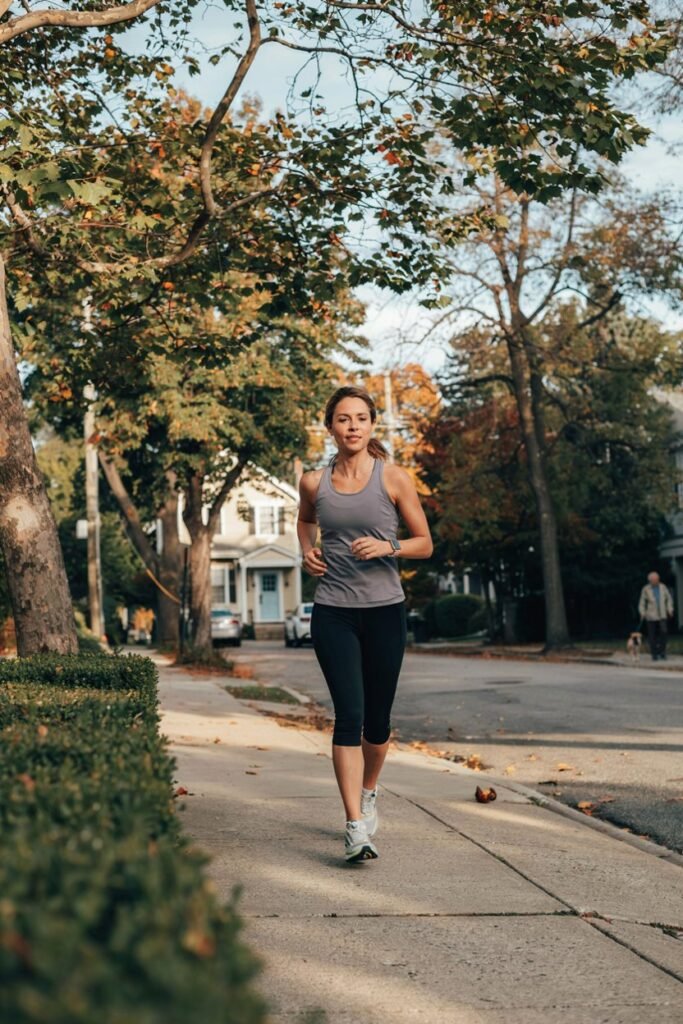
1. Brisk Walking
Walking is probably the easiest low impact exercise to underestimate.
It does not look complicated, and you do not need special skills to get started, but a purposeful brisk walk can become a very useful part of a weight loss routine.
I especially like walking because it does not require me to plan an elaborate workout. I can put on comfortable shoes and get moving.
When I have more time, I can make the walk longer. When I am busy, even a shorter walk gives me a reason to get away from the desk or step out of the house.
For a more effective workout, walk at a pace that feels noticeably faster than a casual stroll while still allowing you to maintain control.
How I Use Walking
I usually start with a comfortable pace for a few minutes and gradually increase my speed. I do not try to make every walk as difficult as possible.
If you are new to exercise, start with 10 to 15 minutes and build gradually.
If you already walk regularly, try extending your walking time or adding a few faster sections to your usual route.
Beginner: 15 minutes
Intermediate: 25 to 30 minutes
More advanced: 40 minutes or longer
You can also split your walking throughout the day if one long session does not fit your schedule.
2. Marching in Place
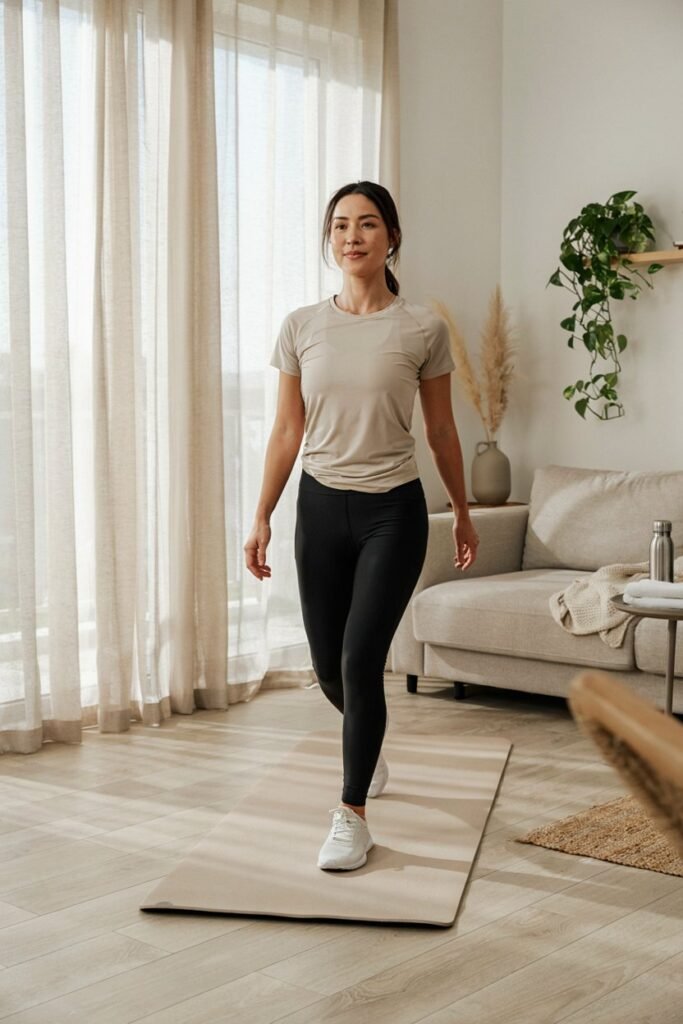
Marching in place is one of my favorite choices when I want something simple that I can do at home.
There is no need for a treadmill or large workout space. You simply lift one foot at a time and keep moving your arms naturally.
I like using this exercise as a warm up, but it can also become part of a longer low impact cardio workout.
How to Do It
Stand tall with your feet about hip width apart.
Lift one knee comfortably toward your waist while keeping your other foot planted.
Lower the foot and repeat on the opposite side.
Continue alternating while gently moving your arms.
Keep your movements controlled rather than trying to lift your knees as high as possible.
Make It Easier
Slow down your pace and keep the knee lift lower.
You can also hold onto a sturdy surface if you need additional balance.
Make It Harder
Increase your pace or lift your knees slightly higher.
You can also add controlled arm movements to involve more of your upper body.
Try:
30 seconds of marching
20 seconds of rest
Repeat for 5 rounds.
3. Step Touches
Step touches are another simple movement that I like using when I want to keep moving without jumping.
They are particularly useful for beginners because you can control the speed and range of motion.
How to Do It
Stand with your feet together.
Step your right foot out to the side.
Bring your left foot toward your right foot.
Then step your left foot out and bring your right foot toward it.
Continue alternating from side to side.
Once the movement feels comfortable, allow your arms to move naturally with your steps.
The goal is not to make the movement complicated. Keep your posture comfortable and focus on maintaining a steady rhythm.
Beginner Version
Take smaller steps and move at a slower pace.
More Challenging Version
Take slightly larger steps and increase the pace while keeping both feet controlled.
Try performing step touches for 30 to 60 seconds before moving to your next exercise.
4. Chair Squats
Chair squats are particularly useful if regular squats feel uncomfortable or you are still building confidence with lower body exercises.
I like having a chair nearby because it gives you a clear target and can make the movement feel more controlled.
How to Do It
Stand in front of a sturdy chair with your feet about hip width apart.
Keep your chest lifted and your core gently engaged.
Push your hips backward as you bend your knees.
Lower yourself slowly toward the chair.
Lightly touch the chair with your hips, then press through your feet to stand again.
Try not to completely relax onto the chair between repetitions.
Beginner Version
Use a higher chair or reduce how far you lower yourself.
More Challenging Version
Slow down the lowering portion of the movement or perform the exercise without touching the chair.
Aim for:
8 to 12 repetitions
Rest briefly.
Repeat for 2 to 3 rounds.
5. Standing Knee Lifts
Standing knee lifts are an easy way to add more movement to a low impact routine without getting down onto the floor.
I like them when I want something that feels more active than a basic march.
How to Do It
Stand tall with your feet about hip width apart.
Lift your right knee toward your waist.
Lower it carefully and repeat with your left knee.
Continue alternating.
Keep your stomach gently engaged and avoid leaning backward as you lift your knees.
Your knee does not have to reach your waist. A comfortable range of motion is perfectly fine.
Make It Easier
Slow the movement down and keep the knee lift lower.
Make It Harder
Increase your pace while maintaining control.
You can also reach the opposite hand toward the lifted knee to add a little more full body movement.
Try 30 to 45 seconds, followed by a short rest.
6. Wall Push Ups
Weight loss workouts should not focus entirely on cardio.
I like including strength exercises because building strength gives the workout more variety and helps you work your upper body at the same time.
Wall push ups are a good starting point if traditional floor push ups are currently too difficult.
How to Do It
Stand facing a wall.
Place both hands against the wall around chest height.
Walk your feet slightly backward.
Keep your body in a straight line from your head toward your heels.
Bend your elbows and slowly bring your chest toward the wall.
Press through your hands to return to the starting position.
Keep the movement controlled throughout each repetition.
Beginner Version
Stand closer to the wall.
More Challenging Version
Move your feet farther away from the wall.
Try:
8 to 15 repetitions
Rest.
Repeat for 2 to 3 rounds.
7. Glute Bridges
Glute bridges are one of the exercises I like adding to a home workout because they require very little space and do not involve jumping or complicated movements.
They primarily work the glutes while also involving the muscles around the hips and core.
How to Do It
Lie on your back with your knees bent.
Place your feet flat on the floor.
Keep your arms beside your body.
Press through your feet and gently lift your hips toward the ceiling.
Pause briefly at the top while squeezing your glutes.
Lower your hips slowly back toward the floor.
Avoid rushing through the repetitions.
Aim for:
10 to 15 repetitions
Rest for about 30 seconds.
Repeat for 2 to 3 rounds.
One thing I always remind myself with exercises like this is that more repetitions do not automatically make the exercise better. Controlled repetitions are much more useful than rushing through a large number just to finish the set.
Part 2: More Low Impact Exercises for Weight Loss
The exercises above are a good starting point, but I would not build an entire weight loss routine around cardio alone. I like mixing cardio movements with strength and core exercises because it keeps my workouts more balanced and gives me different ways to challenge my body.
Another thing I have learned is that a low impact workout does not need to feel repetitive. Small changes in pace, range of motion, rest time, and resistance can make a familiar exercise feel completely different.
If you are just getting started, do not worry about doing every exercise in this guide. Choose a few that feel comfortable and build from there.
8. Side Steps
Side steps are one of those exercises that look very simple but work well when you keep moving continuously.
I like using them between strength exercises because they give my legs a chance to move while still keeping the workout active.
How to Do It
Stand with your feet together and your knees slightly bent.
Step your right foot out to the side.
Bring your left foot toward your right.
Then step your left foot out and bring your right foot toward it.
Continue moving from side to side.
Keep your shoulders relaxed and maintain a steady rhythm.
Make It Easier
Take smaller steps and slow down.
Make It Harder
Take wider steps or add a gentle squat each time you move to the side.
Try doing side steps for 45 seconds, followed by 15 seconds of rest.
Repeat 3 to 5 times.
9. Standing Side Leg Raises
Standing side leg raises are useful when you want to work your hips and outer thighs without getting down on the floor.
They are also easy to fit into a short home workout.
How to Do It
Stand tall beside a sturdy chair or counter if you need support.
Keep your standing leg slightly bent.
Lift your opposite leg slowly out to the side.
Pause briefly.
Lower your leg with control.
Complete your repetitions and then switch sides.
Try not to lean your upper body in the opposite direction as your leg moves.
Beginner Version
Hold onto a chair for balance and use a smaller range of motion.
More Challenging Version
Slow down each repetition or add a resistance band around your legs.
Aim for 10 to 15 repetitions per side.
10. Heel Taps
Heel taps are a simple cardio movement that can be added almost anywhere in a workout.
I like them because they give me a way to keep my feet moving without having to jump.
How to Do It
Stand tall with your feet slightly apart.
Extend your right foot forward and lightly tap your heel on the floor.
Bring it back to the starting position.
Repeat with your left heel.
Continue alternating.
Move your arms naturally as you step.
Make It Easier
Keep the steps small and slow.
Make It Harder
Increase your pace and add controlled arm movements.
Try 45 seconds of heel taps, followed by 15 seconds of rest.
11. Standing Cross Body Crunches
If you prefer not to spend a lot of time doing floor exercises, standing core movements are an easy alternative.
Standing cross body crunches can also add more movement to your workout while working your abdominal muscles.
How to Do It
Stand tall with your hands lightly behind your head or extended beside you.
Lift your right knee while bringing your left elbow toward it.
Return to the starting position.
Repeat on the opposite side.
Continue alternating in a controlled rhythm.
You do not need to force your elbow and knee to touch.
Focus on bringing your torso and leg toward each other comfortably.
Try 10 to 15 repetitions per side.
12. Calf Raises
Calf raises are simple enough to include in a beginner workout, but they can become surprisingly challenging when you slow the movement down.
How to Do It
Stand with your feet about hip width apart.
Hold onto a wall or sturdy chair if necessary.
Slowly raise your heels so you are standing on the balls of your feet.
Pause briefly at the top.
Lower your heels slowly back toward the floor.
Repeat.
Make It Easier
Use a chair for balance and perform a smaller movement.
Make It Harder
Pause longer at the top or perform the movement on one leg if you have good balance and strength.
Aim for 12 to 20 repetitions.
13. Modified Reverse Lunges
Lunges can be uncomfortable for some beginners, so there is no reason to force a deep lunge just because a workout plan tells you to.
I prefer starting with a controlled version.
How to Do It
Stand tall with your feet together.
Step your right foot backward.
Bend both knees slightly while keeping your chest lifted.
Push through your front foot to return to standing.
Repeat on the opposite side.
You can hold onto a sturdy chair or countertop for additional balance.
Beginner Version
Take a smaller step backward and bend your knees only slightly.
More Challenging Version
Take a longer step backward and increase the depth gradually.
Try 8 to 10 repetitions per side.
If your knees or other joints are uncomfortable during this movement, replace it with chair squats or sit to stands.
14. Bird Dogs
Bird dogs are one of my favorite controlled core exercises because they involve more than just the abdominal muscles.
They also require balance and coordination, so I prefer doing them slowly rather than trying to complete as many repetitions as possible.
How to Do It
Start on your hands and knees.
Place your hands underneath your shoulders and your knees underneath your hips.
Extend your right arm forward while extending your left leg backward.
Pause briefly.
Return to the starting position.
Switch sides.
Keep your hips as steady as possible throughout the movement.
Beginner Version
Move only one arm or one leg at a time.
More Challenging Version
Hold the extended position for a few seconds before returning to the starting position.
Aim for 8 to 10 repetitions per side.
15. Sit to Stands
Sit to stands are another exercise I recommend for beginners because they closely resemble a movement we already perform in everyday life.
You are simply practicing standing up and sitting down with control.
How to Do It
Sit toward the front of a sturdy chair.
Place your feet flat on the floor.
Lean your chest slightly forward.
Press through your feet and stand up.
Slowly lower yourself back toward the chair.
Try not to collapse into the seat.
Make It Easier
Use your hands lightly on the chair or another stable surface for assistance.
Make It Harder
Slow down the lowering portion or use a lower chair if appropriate.
Start with 8 to 12 repetitions.
16. Low Impact Skaters
Traditional skaters usually involve jumping from one side to another. For a low impact workout, you can remove the jump completely.
This is one of the substitutions I like because you still get the side to side movement without repeatedly landing.
How to Do It
Stand with your feet apart.
Step your right foot diagonally behind your left leg.
Return to the starting position.
Then step your left foot diagonally behind your right leg.
Continue alternating.
Move your arms naturally from side to side.
Keep your steps controlled.
Make It Easier
Take smaller steps and avoid bending deeply.
Make It Harder
Take wider steps and slightly increase your pace.
Try 30 to 45 seconds at a time.
17. Standing Punches
Standing punches can make a low impact workout feel more energetic without requiring jumping.
I often like adding them toward the middle of a workout when I want to increase the pace.
How to Do It
Stand with your feet comfortably apart.
Keep your knees slightly bent.
Bring your hands near your chest.
Punch one arm forward in a controlled motion.
Bring it back and alternate with the other arm.
Keep your shoulders relaxed.
Do not lock your elbows at the end of each punch.
Make It Easier
Use a slower pace and smaller movements.
Make It Harder
Increase the pace while maintaining control or combine the punches with gentle marching.
Try 45 seconds of punches followed by 15 seconds of rest.
18. Squat to Reach
Squat to reaches combine a lower body movement with an upper body reach.
I like exercises like this when I want to make a short workout feel more like a full body session.
How to Do It
Stand with your feet slightly wider than hip width.
Lower into a comfortable squat.
As you stand, reach both arms overhead.
Lower your arms as you return into the next squat.
Keep your heels on the floor and your chest comfortably lifted.
Beginner Version
Use a smaller squat and do not reach as high.
More Challenging Version
Increase your range of motion or slow down each squat.
Aim for 8 to 12 repetitions.
19. Dead Bugs
Dead bugs are a slower core exercise, but I like including them because not every exercise in a workout needs to be fast.
In fact, slowing down can make some movements much more challenging.
How to Do It
Lie on your back with your knees bent and lifted.
Raise your arms toward the ceiling.
Slowly extend your right leg while lowering your left arm.
Return to the starting position.
Switch sides.
Keep your lower back controlled against the floor.
If you find your back arching significantly, make the movement smaller.
Start with 6 to 10 repetitions per side.
20. Low Impact March With Arm Reaches
This is a simple combination that works well when you want to keep moving between strength exercises.
How to Do It
March in place at a comfortable pace.
As your right knee lifts, reach your arms upward.
Lower your arms as your foot returns to the floor.
Repeat on the opposite side.
Continue alternating.
You can keep your knee lifts low if necessary.
Try this for 45 seconds before taking a short rest.
How I Would Combine These Exercises
One mistake I would avoid is choosing 15 or 20 exercises and trying to complete them all in one workout.
You really do not need to.
For a simple home workout, I would choose:
2 cardio exercises
2 lower body exercises
1 upper body exercise
1 core exercise
That gives you enough variety without making the workout unnecessarily long.
For example:
March in place: 45 seconds
Chair squats: 10 repetitions
Standing punches: 45 seconds
Wall push ups: 10 repetitions
Standing knee lifts: 45 seconds
Glute bridges: 12 repetitions
Rest for 30 to 60 seconds and repeat the circuit two or three times.
That is already a useful workout without needing complicated equipment or advanced movements.
How to Make These Workouts More Challenging
You do not need to start with the hardest version of every exercise.
I actually prefer progressing gradually because it gives me more room to improve.
Once a workout starts feeling comfortable, you can make small changes.
Increase Your Workout Time
If you currently exercise for 15 minutes, try 20 minutes.
Reduce Your Rest
If you normally rest for one minute between exercises, try 45 seconds when you feel ready.
Increase Repetitions
Instead of doing 8 squats, work toward 10 or 12.
Add Resistance
A pair of light dumbbells or resistance bands can make basic exercises more challenging without adding impact.
Increase Your Walking Pace
For walking workouts, gradually increasing your pace can make the same route more demanding.
The important part is not making every workout harder immediately. Give your body time to adapt.
What If You Are Completely New to Exercise?
If you are starting from a very low fitness level, I would keep things much simpler.
You do not need to complete a 30 minute workout just because you found one online.
Start with 10 to 15 minutes.
You could spend a few minutes marching, perform some chair squats, add wall push ups, walk around your home, and finish with gentle stretching.
Do that consistently before worrying about making the workout more intense.
I have found that this approach makes exercise feel much less intimidating. Once the routine becomes normal, increasing the workout becomes much easier.
A Simple Rule I Use for Progress
When an exercise becomes noticeably easier, I change one thing at a time.
I might add a few repetitions.
Or I might increase the workout by five minutes.
Or I might shorten the rest period slightly.
Or I might add a little resistance.
I do not change everything at once.
That makes it easier to tell what my body is responding to and reduces the temptation to turn every workout into an exhausting challenge.
15 Minute Low Impact Workout for Beginners
This is the workout I would choose when I want something short and manageable.
You can do it at home with no equipment.
Warm Up
Spend about 3 minutes getting your body moving.
March slowly in place for 1 minute.
Perform gentle side steps for 1 minute.
Then do shoulder rolls and easy knee lifts for another minute.
Main Workout
Perform each exercise for 40 seconds, followed by 20 seconds of rest.
March in place
Keep your pace comfortable and gradually increase it as your body warms up.
Chair squats
Lower toward the chair with control and stand back up.
Standing punches
Keep your knees slightly bent and alternate your arms.
Wall push ups
Keep your body straight and move slowly.
Step touches
Move from side to side while keeping your feet controlled.
Repeat the circuit twice if you have enough time.
Cool Down
Finish with 2 minutes of slower walking and gentle stretching.
You should finish feeling like you have exercised, not like you need to spend the rest of the day recovering.
20 Minute Low Impact Weight Loss Workout
This is a good middle option if you have been exercising consistently and want a little more movement.
Warm Up
Spend about 3 minutes marching, side stepping, and gently moving your arms.
Workout
Perform each exercise for 45 seconds.
Rest for 15 seconds between exercises.
March with arm reaches
Keep your knees comfortable and reach your arms upward as you march.
Bodyweight squats
Keep your heels planted and lower only as far as feels comfortable.
Standing knee lifts
Alternate your knees while keeping your torso upright.
Wall push ups
Use a slower pace if you want more control.
Low impact skaters
Step from side to side without jumping.
Glute bridges
Pause briefly at the top of each repetition.
Standing cross body crunches
Move slowly enough that you can control the movement.
Heel taps
Increase your pace slightly while maintaining good control.
Rest for about one minute and repeat the circuit if needed.
Finish with a few minutes of easy walking and stretching.
30 Minute Low Impact Full Body Workout
If you have more time, you can build a longer workout without turning it into a high impact session.
Warm Up
Spend 5 minutes gradually increasing your movement.
Start with marching.
Move into side steps.
Add gentle knee lifts.
Finish the warm up with a few slow bodyweight squats and shoulder movements.
Strength and Cardio Circuit
Perform each exercise for 45 seconds, followed by 15 seconds of rest.
Chair squats
Standing punches
Step touches
Wall push ups
Standing knee lifts
Glute bridges
Low impact skaters
Standing side leg raises
March with arm reaches
Bird dogs
After completing the circuit, rest for one to two minutes.
Repeat the exercises for another round if your fitness level allows.
You can finish with five minutes of relaxed walking and gentle stretching.
My Simple Weekly Low Impact Workout Schedule
You do not need to exercise intensely every day to create a consistent routine.
If I were putting together a simple weekly schedule, I would give each day a purpose rather than doing the same workout repeatedly.
| Day | Activity |
|---|---|
| Monday | 20 minute low impact workout |
| Tuesday | 25 to 30 minute brisk walk |
| Wednesday | 15 minute strength focused workout |
| Thursday | Rest or gentle walking |
| Friday | 20 to 30 minute full body workout |
| Saturday | Longer walk, cycling, or another enjoyable activity |
| Sunday | Rest and recovery |
This is only an example.
If you are completely new to exercise, start with three workout days instead of trying to follow a five or six day schedule immediately.
You can always build from there.
How Low Impact Workouts Can Support Weight Loss
One thing I think is important to clarify is that low impact exercise is not a magic solution for weight loss.
Your overall nutrition, daily movement, exercise, sleep, recovery, and consistency all matter.
Exercise can help increase the amount of energy you use throughout the day. Strength training can help you build and maintain muscle.
Walking can increase your daily movement without requiring a complicated workout. Cardio can improve your fitness and endurance.
But you do not have to exercise until you are completely exhausted to make progress.
For me, the biggest advantage of having low impact options is consistency.
If I can comfortably complete a workout several times a week, that is much more useful than having a demanding routine that I constantly avoid because it feels too difficult.
Is Walking Enough for Weight Loss?
Walking can absolutely be part of a weight loss plan.
It is accessible, simple, and easy to adjust.
However, I would not rely on walking alone if your goal is to build a more balanced fitness routine.
I like combining walking with strength exercises and other forms of low impact cardio.
For example, you could walk three days a week and perform two short strength workouts on other days.
You can also increase your daily movement by taking short walks after meals, walking while making phone calls, using stairs when appropriate, or simply spending less time sitting.
Those smaller movements can add up.
How Often Should You Do Low Impact Workouts?
If you are a beginner, three structured workouts per week is a reasonable place to start.
You can add walking or other gentle movement on the days between workouts.
As your fitness improves, you can gradually increase your frequency, workout duration, or resistance.
You do not have to increase all three at the same time.
A good routine is one that fits your current life.
If you have a busy week, a few 15 minute workouts are still worthwhile. There is no reason to consider the week a failure simply because you could not complete longer sessions.
How Long Should a Low Impact Workout Be?
There is no single workout length that everyone needs.
A 15 minute workout can be useful when you are short on time.
A 20 to 30 minute session gives you more room to combine cardio and strength exercises.
A longer workout may be appropriate once your fitness level has improved and you genuinely have the time and energy for it.
I would rather see someone consistently complete a manageable 15 minute workout than constantly postpone exercise because they believe they need an hour.
Common Mistakes to Avoid
Making Every Workout Extremely Difficult
You do not need to feel destroyed after every workout.
Exercise should challenge you, but recovery matters too.
Doing Only Cardio
Walking and low impact cardio are excellent, but adding strength exercises gives your routine more balance.
Increasing Everything at Once
Do not suddenly double your workout duration, add heavy weights, reduce your rest, and increase your repetitions all at the same time.
Give yourself time to adapt.
Ignoring Your Form
Even simple exercises deserve good technique.
Slow down when necessary and focus on controlled movements.
Expecting Immediate Weight Loss
Your weight can fluctuate from day to day for many reasons.
Look at your progress over time rather than judging your entire routine based on one morning on the scale.
Thinking Low Impact Means Effortless
Low impact simply describes the type of movement.
You can still have a challenging workout without jumping.
How I Would Progress Over Four Weeks
If you are starting from scratch, I would keep the first month simple.
Week 1
Complete three 15 minute workouts.
Add short walks whenever you can.
The main goal is simply getting used to regular movement.
Week 2
Move toward three or four workouts lasting 15 to 20 minutes.
Try to make your walking slightly longer.
Week 3
Aim for around 20 to 25 minutes per workout.
You can increase repetitions or slightly reduce rest periods if the exercises are becoming easier.
Week 4
Work toward three or four sessions of 25 to 30 minutes.
If you feel ready, introduce light resistance such as dumbbells or resistance bands.
There is no requirement to progress exactly according to this schedule.
If Week 1 feels difficult, stay there longer.
Progress should be based on how your body responds, not on forcing yourself to follow a calendar.
What I Would Focus On Besides the Workouts
If weight loss is your goal, I would not make exercise the only thing you pay attention to.
Your daily habits matter too.
I would focus on eating meals that keep me satisfied, including a good source of protein, choosing foods that provide plenty of nutrients, drinking enough fluids, getting enough sleep, and keeping everyday movement high.
I also think it is helpful to avoid the mindset that you have to earn your food through exercise.
A workout is something you do to support your health and fitness. It should not become punishment for what you ate.
That mindset makes it much easier to create habits you can actually maintain.
Frequently Asked Questions
Can low impact workouts help with weight loss?
Yes. Low impact exercise can increase physical activity and energy expenditure and can be part of a weight loss plan when combined with appropriate nutrition and other healthy habits.
Are low impact workouts good for beginners?
Yes. They can be a practical starting point because many exercises can be modified according to your current fitness level.
Can I lose weight without running?
Yes. Running is not required for weight loss. Walking, cycling, swimming, strength training, and other forms of physical activity can all be included in a weight loss routine.
Can I do low impact workouts at home?
Absolutely. Many of the exercises in this guide require nothing more than a small amount of floor space. A sturdy chair or wall can also be useful for certain exercises.
Can I do low impact workouts every day?
You can include some form of gentle movement every day, but you do not need to perform challenging workouts every day. Giving your body time to recover is important, particularly when you are adding strength training.
What is the best low impact exercise for weight loss?
There is no single exercise that is best for everyone. Walking, cycling, swimming, strength training, and low impact cardio can all be useful. The best choice is one that you enjoy, can perform safely, and can continue doing consistently.
How can I make a low impact workout harder?
You can gradually increase the workout duration, repetitions, resistance, pace, or reduce rest periods. Change one variable at a time so your body has an opportunity to adapt.
Do I need equipment?
No. Many of these workouts can be completed without equipment. Once you become comfortable with bodyweight exercises, light dumbbells or resistance bands can provide additional challenge.
Final Thoughts
I do not think weight loss workouts need to be complicated to be effective.
Some of the most useful exercises are also the simplest ones.
Walking, squatting, stepping from side to side, performing wall push ups, lifting your knees, and strengthening your core may not look as dramatic as a high intensity workout, but they can become valuable pieces of a consistent routine.
What matters is what you can realistically keep doing.
If you are starting from a place where exercise feels difficult, begin with 10 or 15 minutes.
If you already exercise regularly, gradually increase the challenge rather than trying to completely change your routine overnight.
For me, having low impact workouts available means I always have an option for those days when I want to move but do not want a workout that leaves me completely drained.
You do not need the hardest workout.
You need a routine that you can come back to again and again.
And if weight loss is your goal, pair that consistent movement with balanced nutrition, adequate recovery, and realistic expectations.
That combination is far more sustainable than trying to rely on one intense workout to do everything.