Every man wants muscle, whether he admits it openly or not. Some want it for strength, some for confidence, some because they’re tired of feeling weak during simple daily tasks.
Muscle shows up in how we carry ourselves, how long we can stay active, and how well our bodies hold up under stress. I’ve seen it firsthand—when muscle is strong, life feels easier.
What most people don’t talk about enough is how muscle affects everyday living.
Lifting a heavy bucket, playing with kids, standing for long hours, even sleeping better—muscle supports all of it.

This isn’t just about aesthetics or showing off at the gym. It’s about building a body that works for you, not against you.
Over time, I’ve noticed something interesting. Men fall into different groups when it comes to muscle building.
Some genuinely don’t know what to do. Others know exactly what works but keep postponing action.
And then there are those who want results but don’t want their entire life to revolve around workouts. This post speaks to all of them.
Disclaimer: This post contains affiliate links. I may earn a small commission if you purchase through these links at no extra cost to you.
Amazon Shopping List: Muscle-Building Foods & Diet Essentials
- Whey Protein Powder (Vanilla or Chocolate)
Supports muscle growth and recovery with 20–30g protein per scoop.
BUY NOW ON AMAZON - Eggs (Organic or Free-Range)
Packed with complete protein and essential nutrients for muscle repair.
BUY NOW ON AMAZON - Chicken Breast (Lean Protein)
High in protein and low in fat, ideal for building lean muscle.
BUY NOW ON AMAZON - Salmon or Other Fatty Fish
Rich in protein and omega-3s to support muscle recovery and heart health.
BUY NOW ON AMAZON - Quinoa or Brown Rice
Complex carbs that fuel workouts and support muscle glycogen replenishment.
BUY NOW ON AMAZON
Why Muscle Is More Than Just Size

When most men think about building muscle, they picture bigger biceps or a chiseled chest.
But in reality, muscle is about so much more than looks—it’s about strength, function, metabolism, and long-term health.
Here’s why muscle matters beyond size:
- Boosts metabolism: More muscle increases your resting metabolic rate, helping you burn more calories even at rest.
- Improves strength and performance: Functional muscle helps with daily activities, sports, and resistance training.
- Supports joint and bone health: Strong muscles protect your joints and bones, reducing the risk of injury.
- Enhances insulin sensitivity: More muscle helps your body process carbs efficiently, supporting energy and body composition.
- Affects confidence and posture: Lean, strong muscles improve posture, stability, and overall confidence.
For men focused on muscle building, it’s not just about looking bigger—it’s about creating a strong, functional, and healthy body that performs well now and in the long term.
The Truth Most Men Don’t Want to Hear
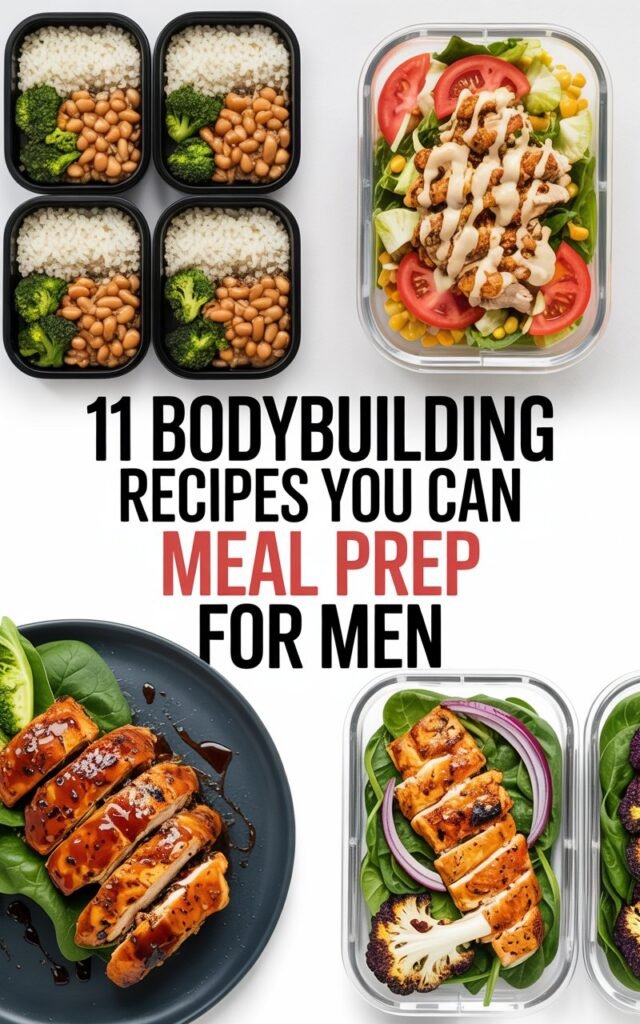
Here’s the reality: building muscle isn’t just about crushing endless sets in the gym or obsessing over protein shakes.
Too many men focus only on size, and that’s where progress stalls.
Here’s what most guys don’t hear often enough:
- Consistency beats intensity alone: Showing up regularly, training smart, and eating right over weeks and months matters more than occasional “extreme” workouts.
- Nutrition is king: You cannot out-train a poor diet. Hitting protein goals, balancing carbs and fats, and getting enough calories are essential for growth.
- Recovery is non-negotiable: Muscle grows outside the gym. Sleep, rest days, and proper recovery are just as important as lifting.
- Supplements don’t replace meals: They can help, but real, nutrient-dense foods are the foundation of sustainable muscle gains.
- Patience is part of the process: Building lean muscle takes time; there’s no shortcut to lasting, strong results.
Understanding this truth allows men to train smarter, eat better, and stay consistent, rather than chasing quick fixes or unrealistic results.
What Muscle Really Needs to Grow

Muscle growth isn’t magic—it comes down to giving your body the right combination of stimulus, fuel, and recovery.
Too often, men focus solely on lifting heavy, but without proper nutrition and recovery, gains are limited.
Here’s what muscle actually needs:
- Progressive Resistance Training: Muscles grow when they are challenged beyond their usual capacity. Compound lifts like squats, deadlifts, bench presses, and rows are especially effective.
- Sufficient Protein Intake: Muscle repair and growth require high-quality protein—think chicken, beef, fish, eggs, and dairy. Aim for roughly 1.6–2.2g of protein per kilogram of body weight.
- Adequate Calories: You need a slight caloric surplus to support growth; too little energy means muscles won’t have the fuel to repair and expand.
- Rest and Recovery: Muscles don’t grow in the gym—they grow during sleep and rest days, when your body repairs the microtears caused by training.
- Consistency: Regular workouts, proper nutrition, and recovery over weeks and months are what create real, sustainable muscle gains.
For men serious about building lean muscle, it’s about training smart, eating right, and giving your body time to adapt, not just chasing “bigger” in the mirror.
Muscle Building Foods That Actually Work

After years of trial and error, I’ve learned that building lean muscle isn’t just about lifting heavy—it’s about what you eat.
I used to focus only on the gym, but the real gains came when I started fueling my body with the right foods consistently.
Here are the muscle-building staples that actually make a difference for me:
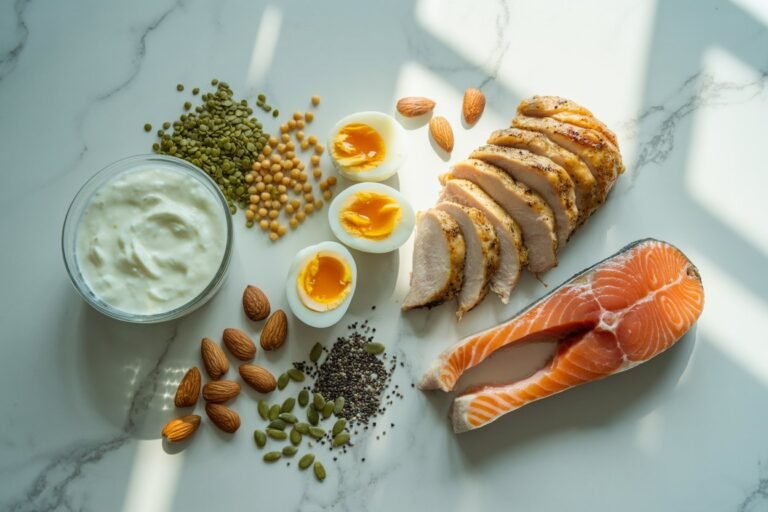
- Lean Proteins: Chicken breast, turkey, lean beef, eggs, Greek yogurt, and fish are my go-to sources. They give my muscles the amino acids they need to repair and grow, especially after intense workouts.
- Complex Carbs: I rely on brown rice, quinoa, sweet potatoes, and oats for sustained energy, whether I’m crushing a gym session or chasing a busy day at work.
- Healthy Fats: Avocado, nuts, seeds, olive oil, and fatty fish support hormone production, joint health, and long-lasting energy.
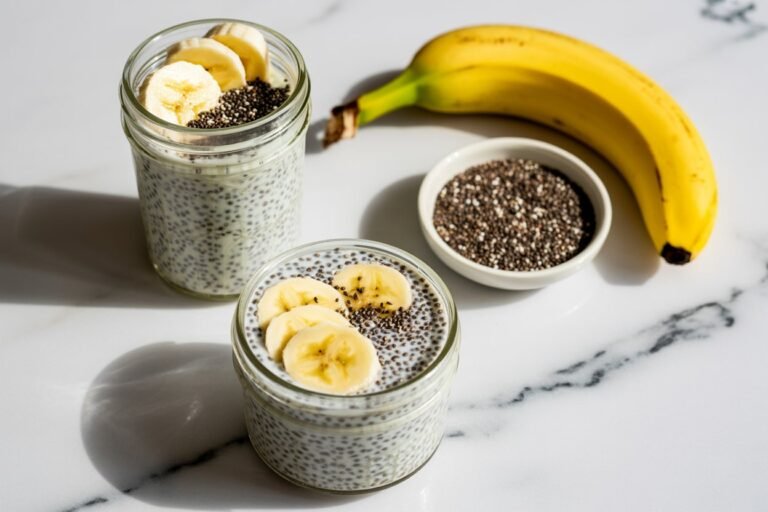
- Vegetables & Fruits: Spinach, broccoli, berries, and bananas provide essential micronutrients and antioxidants, helping me recover faster and feel stronger.
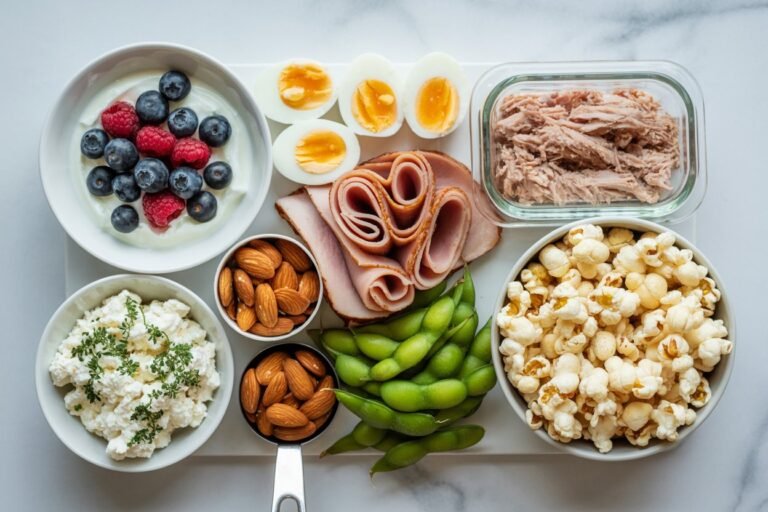
- Protein-Rich Snacks: Hard-boiled eggs, cottage cheese, beef jerky, and protein shakes are lifesavers when I need to hit protein goals between meals without overcomplicating life.
For me, pairing these foods with smart strength training and proper recovery is what actually drives results.
Eating clean and protein-rich consistently has helped me build lean muscle, stay energized, and finally see real progress—without relying on gimmicks or extreme diets.
Carbohydrates: The Fuel Men Ignore
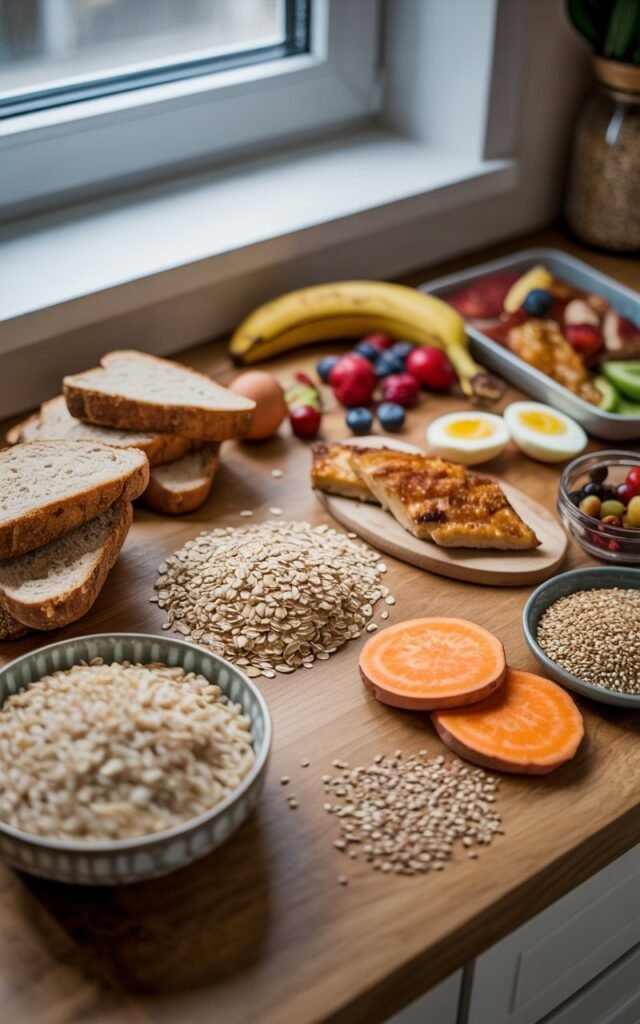
Carbs often get blamed unfairly. In reality, they power workouts, support recovery, and prevent muscle breakdown.
Good sources include:
- Oats for steady energy
- Rice and potatoes for fullness
- Fruits for quick fuel
- Vegetables for digestion and balance
Men who avoid carbs often feel weak, flat, or tired during training.
Fats: The Silent Supporter

Healthy fats support hormone balance, which is especially important for men.
Cutting fats too low can slow progress and reduce energy.
Useful sources:
- Olive oil for daily meals
- Nuts and seeds for snacks
- Avocados for balance
- Fatty fish for recovery
You don’t need excess—just consistency.
A Muscle-Friendly Eating Structure That’s Easy to Follow
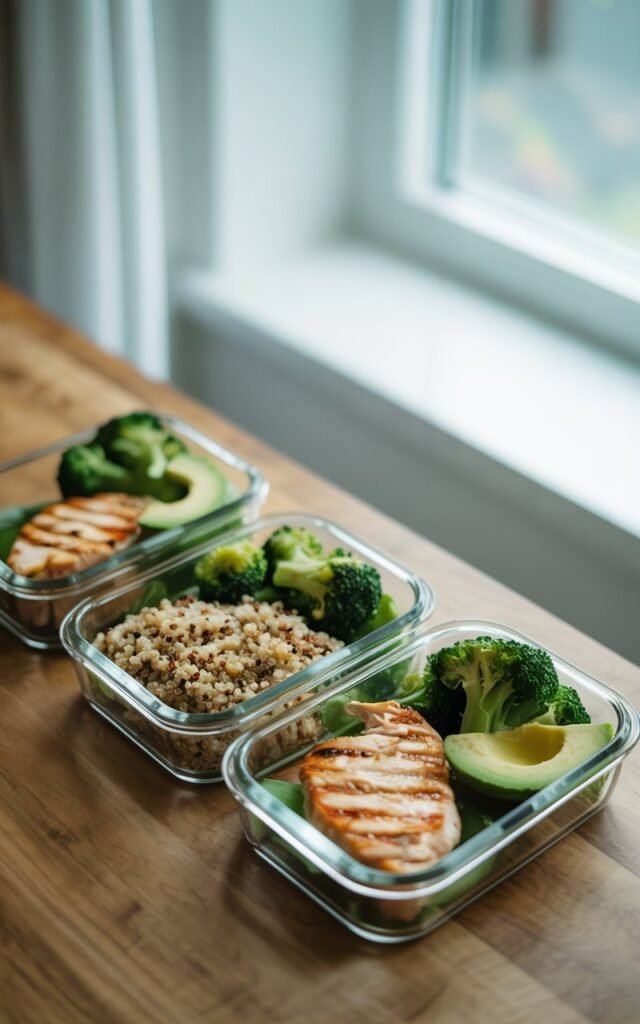
I’ve found that men do better with structure that doesn’t feel restrictive.
Morning meals that include protein set the tone for the day.
Midday meals should refuel the body, not drain it. Evening meals support recovery, not overload digestion.
This approach works whether you train hard or not.
For Men Who Train Regularly

If you’re consistent at the gym, food becomes your recovery system. Eating properly:
- Improves strength gains
- Reduces soreness
- Keeps motivation steady
- Prevents burnout
Training breaks muscle down. Nutrition builds it back stronger.
For Men Who Are Less Active or Just Tired
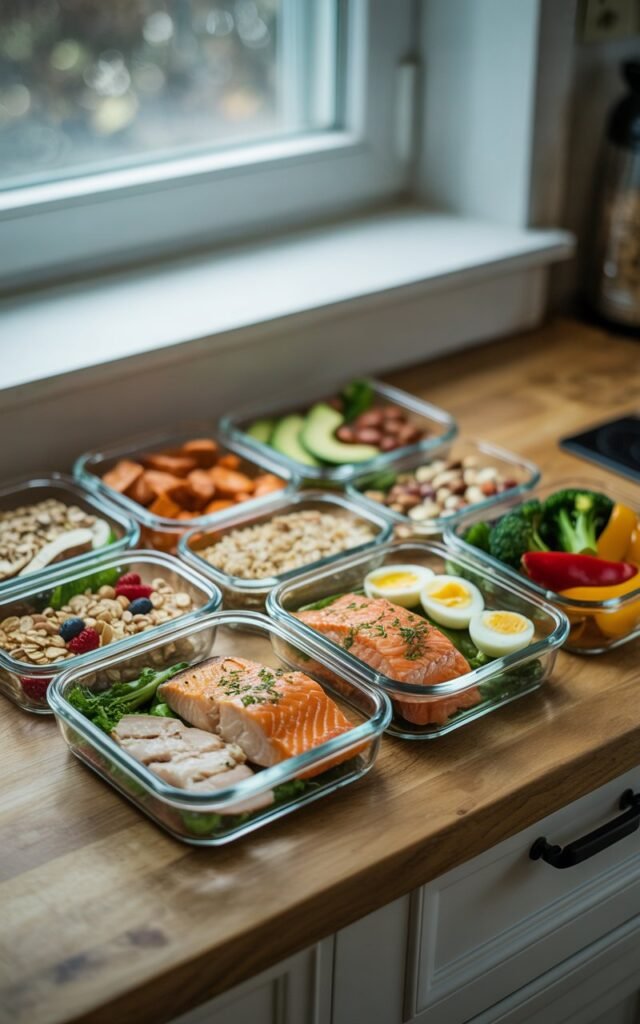
Not everyone enjoys intense workouts.
Some men work long hours, feel drained, or simply don’t enjoy gym environments.
That doesn’t mean muscle is out of reach.
A smart diet helps:
- Maintain muscle mass
- Prevent weakness
- Improve posture
- Increase daily energy
Even light movement paired with proper eating can preserve strength.
Why Consistency Beats Motivation Every Time

Motivation fades. Life gets busy. Energy levels change. What stays effective is routine.
I’ve seen men transform not because they pushed harder, but because they stayed steady.
Eating well most days beats extreme plans followed for short periods.
Muscle responds to patience.
Personal Observation That Changed My View

I used to think muscle growth was all about lifting heavy and eating protein—but one moment completely changed my perspective.
After weeks of intense training with little progress, I realized that I had been neglecting the bigger picture: overall nutrition, meal timing, and recovery.
Here’s what I learned:
- Protein alone isn’t enough: Without carbs and healthy fats, my workouts suffered and recovery lagged.
- Consistency beats intensity: Regular, balanced meals and steady training produced better results than occasional extreme efforts.
- Recovery is crucial: I had underestimated how much sleep, rest days, and proper hydration contribute to muscle growth.
Since I started combining smart workouts with balanced meals, sufficient carbs, protein, fats, and recovery, my strength and muscle gains improved dramatically.
It taught me that muscle-building success isn’t just about effort in the gym—it’s about fueling your body properly and being consistent.
Final Thoughts
Building lean muscle isn’t just about lifting heavy or chasing the mirror—it’s about training smart, eating strategically, and giving your body the recovery it needs.
From my experience, the men who see the best results aren’t necessarily the ones who spend the most hours in the gym—they’re the ones who balance high-quality protein, carbs, healthy fats, and consistent workouts.
Here’s what I’d tell any man serious about muscle growth:
- Prioritize nutrition as much as training: Protein, carbs, and fats all have a role in fueling performance and recovery.
- Be consistent, not extreme: Small, sustainable habits over weeks and months beat occasional “all-out” efforts.
- Value recovery: Sleep, rest days, and hydration are essential—they allow muscles to repair and grow.
- Listen to your body: Adjust portions, intensity, and meals based on your energy and results, not what someone else posts online.
At the end of the day, muscle building is about creating a strong, functional, and sustainable body—not just chasing size. Stick with the plan, fuel wisely, and stay consistent, and the results will follow.