

For the longest time, Romanian deadlifts were one of those exercises I wanted to love but secretly dreaded.
Every time I added them to my workouts, I walked away feeling them more in my lower back than in my glutes or hamstrings.
I kept thinking I was just “built wrong” for the movement or that my flexibility wasn’t good enough.
It turns out, the problem wasn’t my body at all. It was how I was doing the lift.

Once I stripped the movement down and focused on just five key steps,
Romanian deadlifts went from uncomfortable and frustrating to one of the most effective exercises in my routine.
These steps helped me build stronger glutes, stretch my hamstrings properly, and lift heavier without that nagging lower-back tension.
Here’s exactly how I approach Romanian deadlifts now, and why it works so much better.
Step 1: Master the Hip Hinge Before You Touch a Barbell

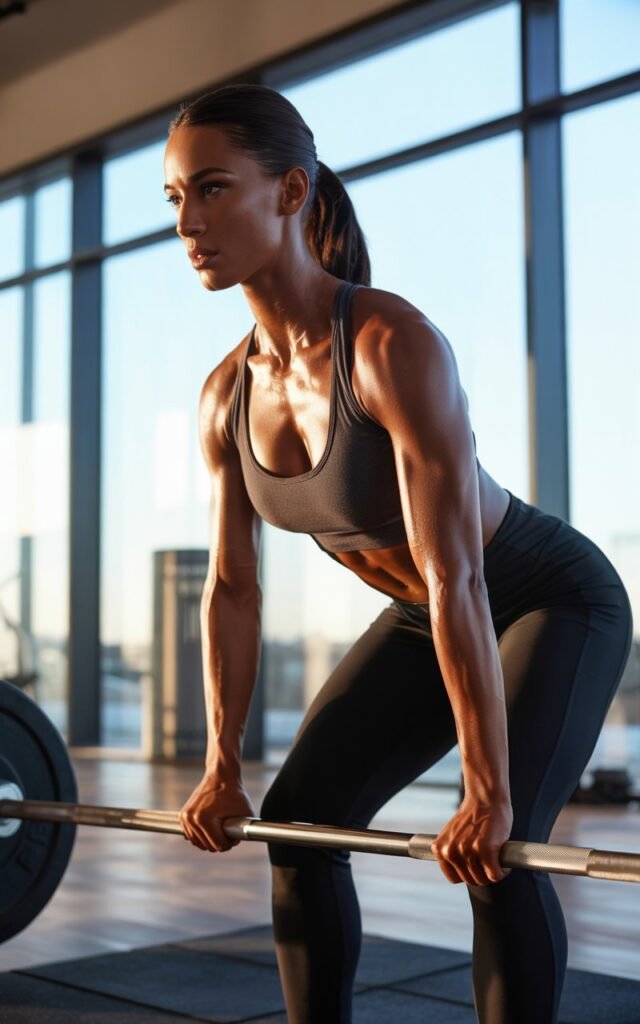
Everything starts with the hip hinge. If you don’t get this right, nothing else matters.
The Romanian deadlift is not about bending forward at the waist.
That mistake alone is why so many people feel the movement in their lower back.
Instead, the goal is to push your hips back horizontally while keeping your spine neutral.
The cue that finally made this click for me was imagining I was carrying groceries from the car.
I step out, the car door is still open behind me, and instead of turning around, I close it by pushing my hips back.
That “butt back” motion is exactly what you want.
Your knees don’t need to be locked straight, but they shouldn’t bend much either.
A slight bend is natural and helps keep tension in the hamstrings.
What you want to avoid is collapsing forward and turning the movement into a stretch for your lower back instead of a hinge through your hips.
When I started focusing on this, I immediately felt the difference in where the tension landed.
Step 2: Stop Letting Grip Strength Hold You Back
This was a mental hurdle for me at first.
I avoided wrist straps because I felt like I should be able to hold the bar on my own.
But once I started pushing real working weights on Romanian deadlifts, my grip always gave out long before my glutes or hamstrings did.
That’s when it clicked: this exercise isn’t meant to train grip strength.
Using straps doesn’t mean you’re weak. It means you’re letting the right muscles do the work.
Your glutes and hamstrings are powerful, and they deserve to be trained without being limited by your hands.
Now, I use straps for my heavier sets without hesitation, and my progress has been noticeably better since.
Step 3: Set the Bar Up at Waist Height to Save Energy
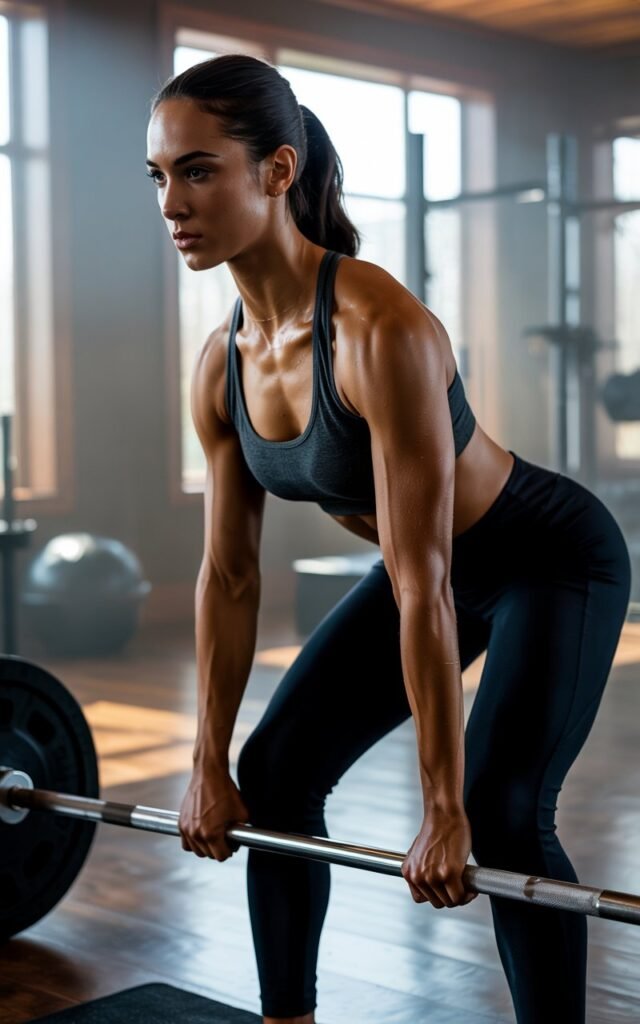
Another small change that made a big difference was how I set up the lift.
Instead of pulling the bar from the floor every set, I load it in a rack at about waist height.
This saves energy and keeps the focus on the actual movement rather than just getting the bar into position.
Once the bar is set:
- I strap in
- Lift the bar out
- Take a step back
- Set my stance
- And start my reps
From here, the same cue repeats every time: hips back to “close the door,” then hips forward to stand tall.
This setup keeps my reps consistent and my energy where it belongs.
Step 4: Pull Your Hips Back and Slightly Up

This was one of the biggest breakthroughs for me.
Instead of only thinking about pushing my hips back, I started imagining pulling them back and slightly up, almost toward the back top corner of the room.
Visually, it doesn’t look very different, but the internal sensation is completely changed.
As soon as I made this adjustment, my hamstrings started stretching far more deeply at the bottom of each rep.
I felt more control, more tension, and less temptation to rush through the movement.
This cue helped me slow down, stay connected to the lift, and really load the muscles I was trying to train.
Step 5: Use Smarter Foot Pressure for Better Range of Motion

Foot pressure used to be something I never thought about, and it was quietly limiting my progress.
I used to focus on screwing my feet outward and pushing hard through the outside edges or my heels.
While that cue works for some lifts, it actually restricted how far I could hinge during Romanian deadlifts.
Now, as I lower the bar, I allow my feet to roll slightly inward into a more natural position.
My weight shifts more through the middle of my foot, which lets my hips travel further back.
As I come up, I focus on pushing through the middle of the foot, around the ball of the foot, and driving my hips forward.
My weight may drift slightly toward my heels at the bottom, and that’s perfectly fine.
After making this change, I gained so much extra range that I eventually had to stand on a small deficit just to keep the plates from touching the floor.
That added range put my glutes and hamstrings under far more tension and helped me build strength where I had always felt weak.
Why This Approach Works So Well

By improving range of motion and staying balanced through the feet, the Romanian deadlift becomes a true posterior-chain exercise.
You’re training your glutes and hamstrings in their end ranges, which builds both strength and flexibility over time.
Instead of forcing the movement, you’re allowing your body to move naturally while staying under control.
Keep the Basics Simple and Adjust for Your Body

I’ve learned that Romanian deadlifts don’t need to be complicated.
If you focus on:
- A proper hip hinge
- Removing grip as a limiting factor
- Smart setup and positioning
- Pulling the hips back and up
- Using natural foot pressure
You’ll get far more out of the exercise without beating up your lower back.
From there, you can experiment with stance width, back position, or pelvic tilt based on what feels strongest and most comfortable for your body.
Those details are personal, and there’s no single perfect setup for everyone.
Once I stopped fighting the movement and started respecting these fundamentals,
Romanian deadlifts went from a problem lift to one I actually look forward to. And that made all the difference.
