Starting a low-carb diet can feel overwhelming at first.
You know the basic rule—reduce the number of carbohydrates you eat—but what does that actually look like in real life?
What foods are allowed, how many carbs should you aim for, and how do you build meals that keep you full and energized?
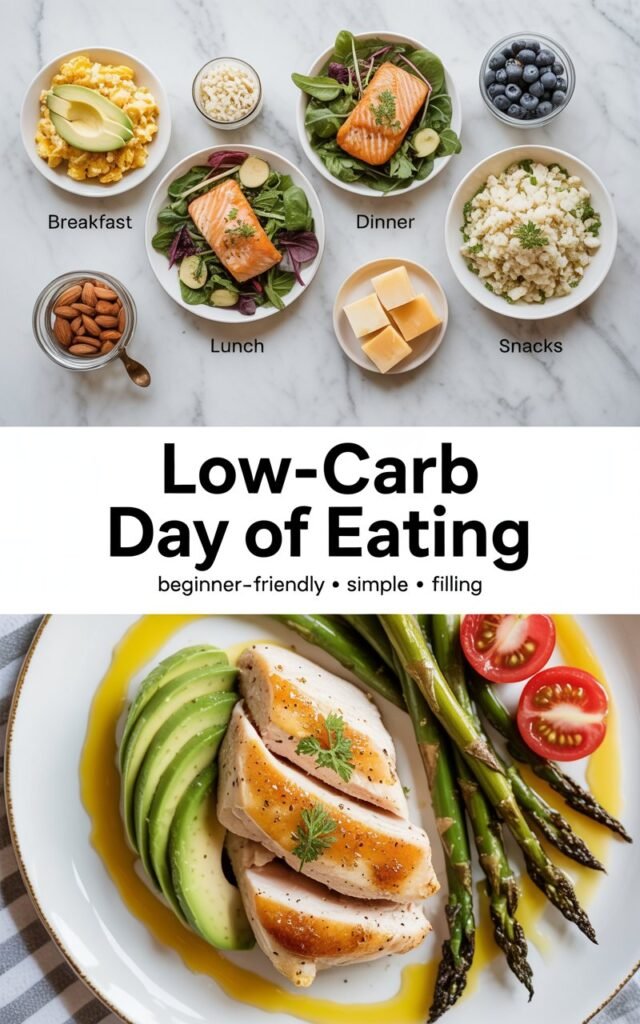
In this post, I’m walking you through a full day of eating on a low-carb diet, designed specifically for beginners.
This approach clears up common confusion, explains carb ranges, and shows you how to structure meals using whole, satisfying foods.
Affiliate Disclaimer: Some links in this post are affiliate links. I may earn a small commission at no extra cost to you.
AMAZON SHOPPING LIST (LOW-CARB ESSENTIALS)
- Spiralizer for Veggies
Make zucchini noodles, veggie ribbons, and low-carb pasta alternatives easily
BUY NOW ON AMAZON - Digital Food Scale
Accurately measure portions for carb tracking and meal planning
BUY NOW ON AMAZON - Low-Carb Cookbook
Provides easy, beginner-friendly recipes to keep meals delicious and varied
BUY NOW ON AMAZON - Reusable Meal Prep Containers
Perfect for prepping low-carb meals ahead of time
BUY NOW ON AMAZON - Healthy Snack Box (Nuts, Seeds, & Low-Carb Treats)
Keep satisfying, low-carb snacks on hand for busy days
BUY NOW ON AMAZON
Understanding Low-Carb vs. Keto: How Many Carbs Should You Eat?
One of the biggest sources of confusion when starting a low-carb lifestyle is understanding how many carbohydrates are appropriate.
While there is no universally agreed-upon definition, a helpful guideline is:
- Low-carb diet: up to 125 grams of total carbohydrates per day
- Ketogenic (keto) diet: no more than 50 total carbs per day
The example day shared here falls right in the middle, providing about 75 total grams of carbohydrates.
This makes it an excellent transition plan for anyone moving away from a high-carb diet without diving straight into strict keto.
This gradual approach allows your body to adapt more comfortably while still supporting fat loss and blood sugar control.
Breakfast: A Low-Carb Smoothie That Keeps You Full

A great way to start a low-carb day is with a smoothie made from low-sugar fruits paired with fiber and healthy fats.
This combination slows digestion, stabilizes blood sugar, and helps prevent early hunger.
Smoothie Ingredients
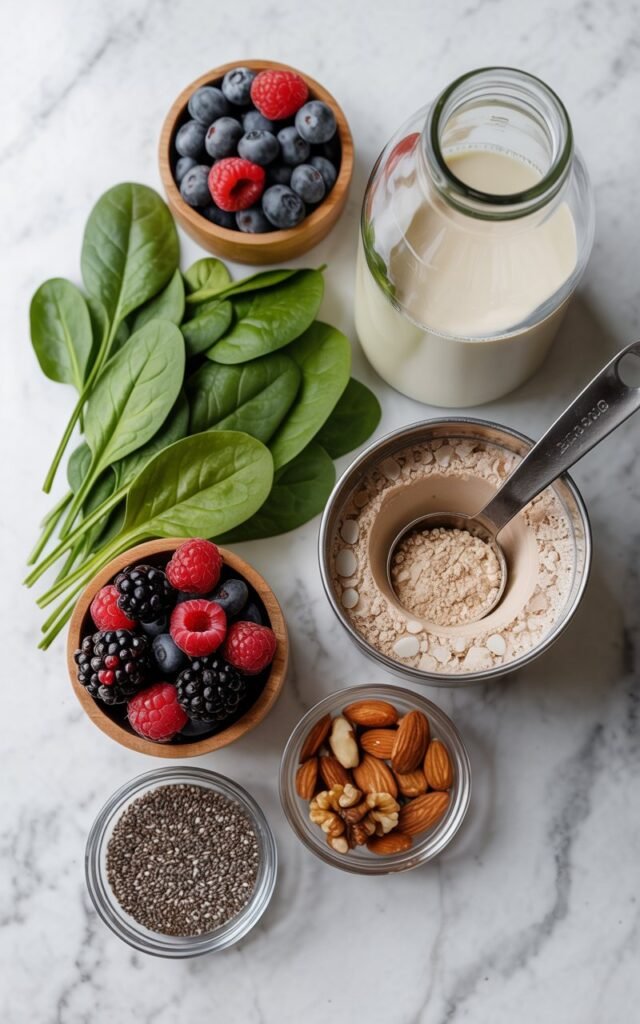
- ½ avocado
- ½ cup frozen strawberries
- 1 cup unsweetened almond milk
- A handful of spinach
- 1 tablespoon almond butter
This smoothie contains 23 grams of total carbohydrates, but nearly 10 grams come from fiber, giving it an excellent fiber-to-carb ratio.
Fiber slows carbohydrate absorption, which helps:
- Reduce blood sugar spikes
- Prevent insulin surges
- Keep you full longer
This is very different from refined breakfasts like muffins or pastries, which are quickly absorbed and can promote fat storage when insulin levels rise.
Why Blood Sugar Stability Matters on a Low-Carb Diet
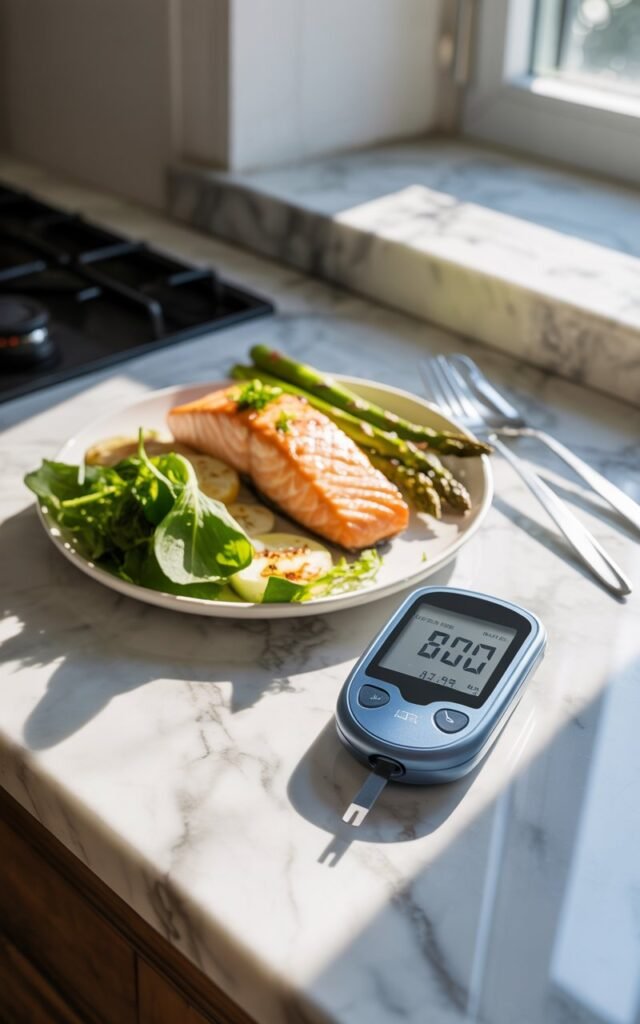
When insulin levels are high, your body cannot efficiently release stored fat from fat cells.
By choosing meals that digest slowly—like this smoothie—you support a metabolic environment that encourages fat burning rather than fat storage.
Starting the day with a balanced, fiber-rich breakfast sets the tone for the rest of the day.
Lunch: A Satisfying Low-Carb Salad with Healthy Fats
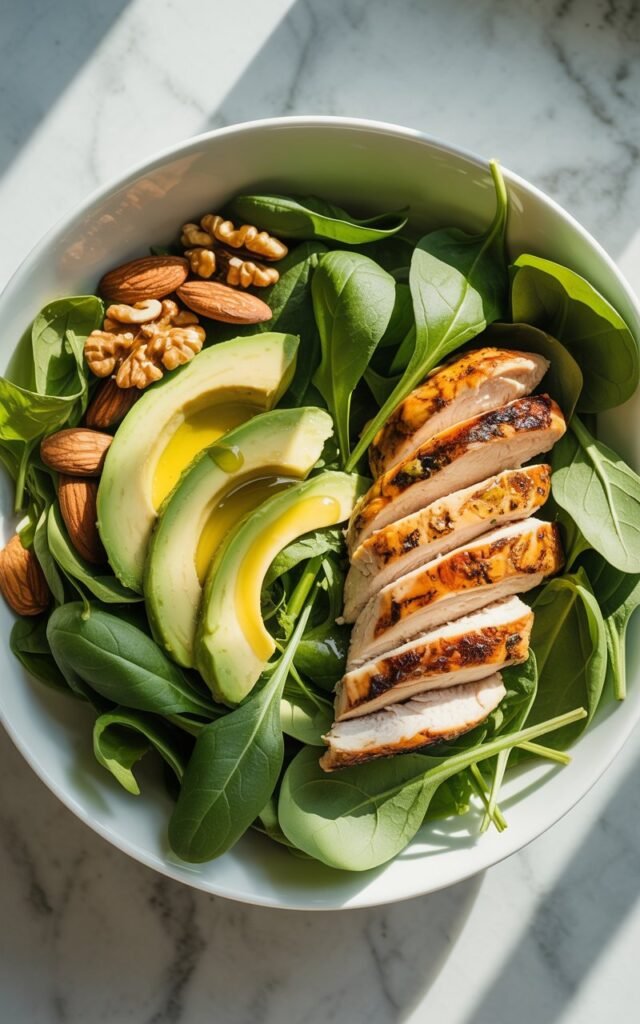
As you transition into low-carb eating, salads become a powerful foundation meal.
Why Salads Work So Well
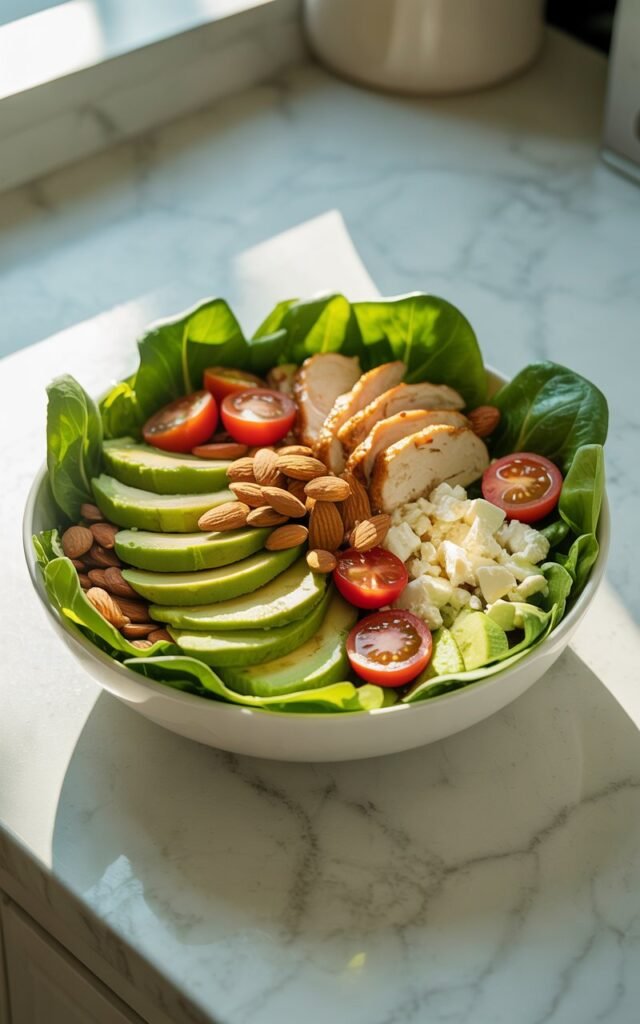
- Leafy greens are naturally low in carbohydrates
- They provide large volume for very few calories
- They allow you to easily add healthy fats
This lunch salad contains about 4 cups of greens, delivering only 6 carbs and 4 grams of fiber—a high-volume, low-impact base.
Healthy Fats in This Salad
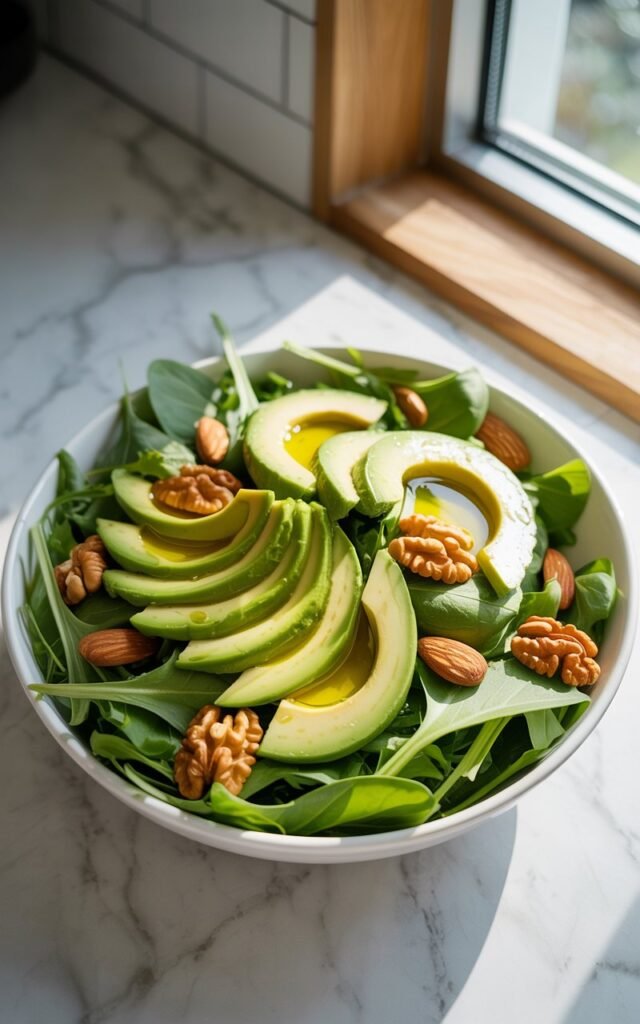
- The other half of the avocado from breakfast
- One hard-boiled egg
- Feta cheese crumbles
- Walnuts
- Full-fat dressing made with avocado oil
Altogether, the salad contains:
- 27 grams of carbohydrates
- 9 grams of fiber
- 36 grams of healthy fats
A few slices of apple add crunch and light sweetness without overwhelming the carb count.
Overcoming the Fear of Fat on a Low-Carb Diet
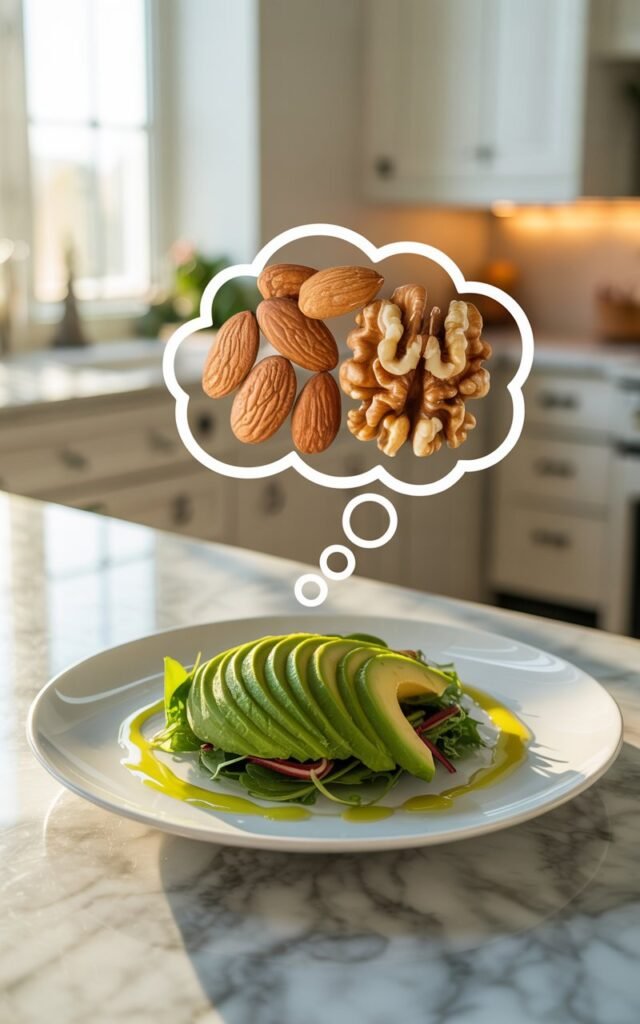
One of the biggest mental hurdles when switching to low-carb eating is increasing fat intake. For years, we were told that fat makes you fat.
In reality, high-quality fats help your body transition from burning carbs to burning fat.
When carbohydrates are reduced, fat becomes your primary energy source—and including enough fat helps control hunger and maintain energy levels.
Dinner: Easy Low-Carb Stir-Fry for Beginners

Dinner doesn’t have to be complicated. Stir-fry is an ideal low-carb option, especially when using convenience foods wisely.
How This Meal Was Made
- A bag of frozen stir-fry vegetables
- Pre-cooked rotisserie chicken
- 1 tablespoon avocado oil
Everything is cooked together quickly, making it practical for busy evenings.
A Simple Homemade Low-Carb Sauce

Many store-bought sauces contain sugar or high-fructose corn syrup, which can quietly sabotage weight loss.
Instead, this low-carb sauce includes:
- ¼ cup chicken broth
- 2 tablespoons soy sauce
- 1 tablespoon red wine vinegar
This keeps flavor high without unnecessary carbohydrates.
Dessert or Snack: Choosing the Right Yogurt on Low-Carb
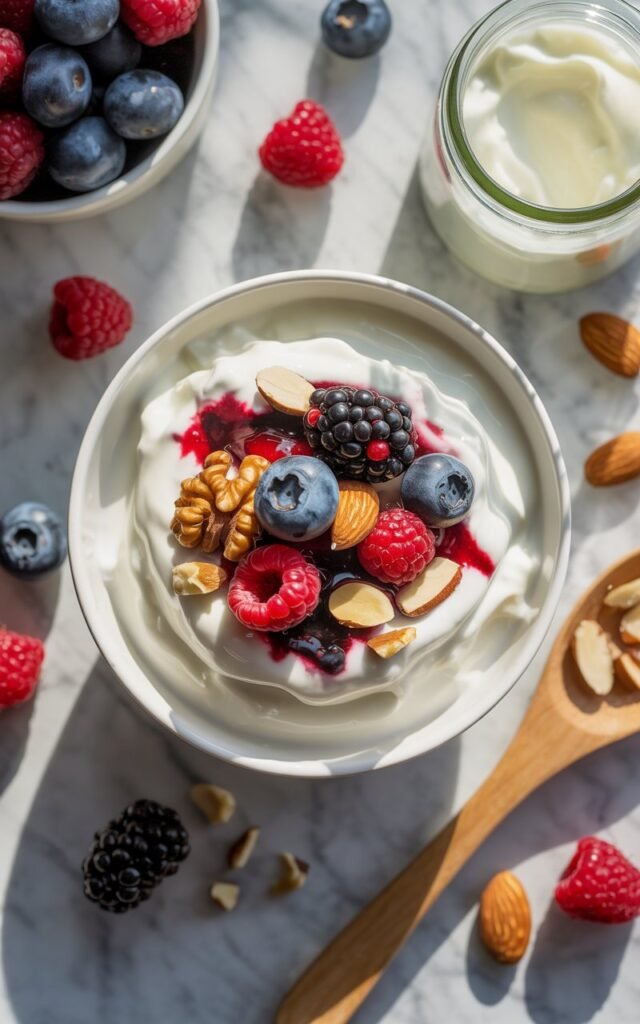
Yogurt can absolutely fit into a low-carb lifestyle—but only if you choose carefully.
Most single-serve yogurts are:
- Low in fat
- High in added sugars
When fat is removed, flavor is often replaced with sugar.
The Better Choice
- Plain, full-fat yogurt
- Add your own flavor at home
Yogurt Dessert Ingredients

- ½ cup full-fat plain yogurt
- ¼ cup frozen blueberries (microwaved briefly and pressed for juice)
- ½ teaspoon vanilla extract
- A pinch of pure stevia
This approach keeps carbs controlled while preserving taste and satiety.
Daily Macros: What This Low-Carb Day Looks Like
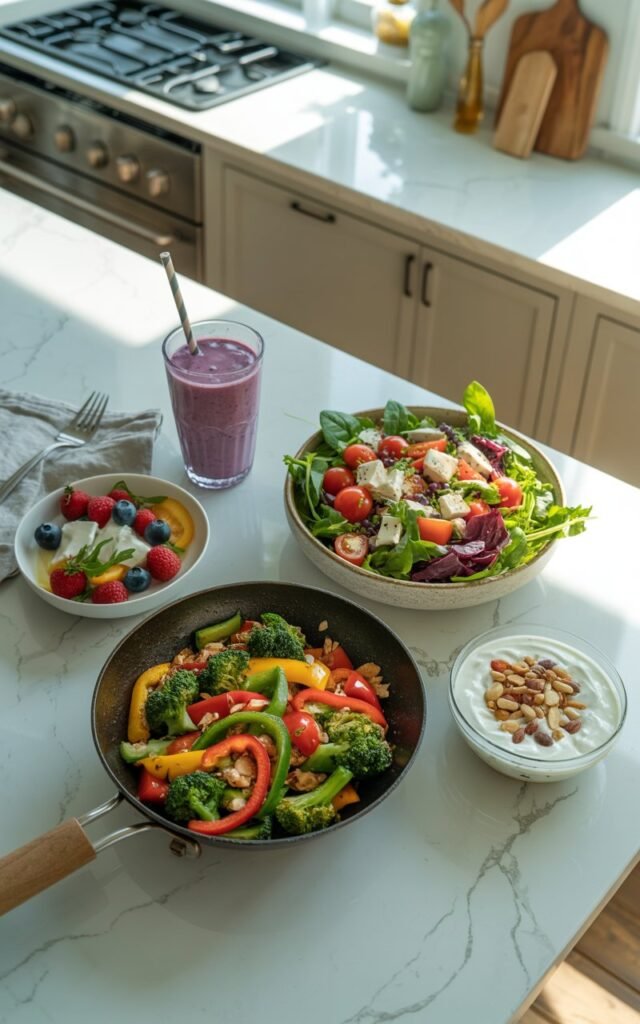
This full day of eating totals just over 1,200 calories, which is intentionally modest for demonstration purposes. It is much easier to add calories than to subtract them.
Macro Breakdown
- 75 grams total carbohydrates (25% of calories)
- 25% of calories from protein
- Just over 50% of calories from healthy fats
For many people coming from a high-carb diet, this balance feels sustainable and comfortable.
Why This Approach Reduces “Keto Flu” Symptoms

By easing into a low-carb lifestyle rather than dropping carbs aggressively, you may still experience some fatigue—but it is often less severe than jumping straight into keto.
This gradual shift gives your metabolism time to adapt.
Fruit, Bread, and Whole Foods on Low-Carb
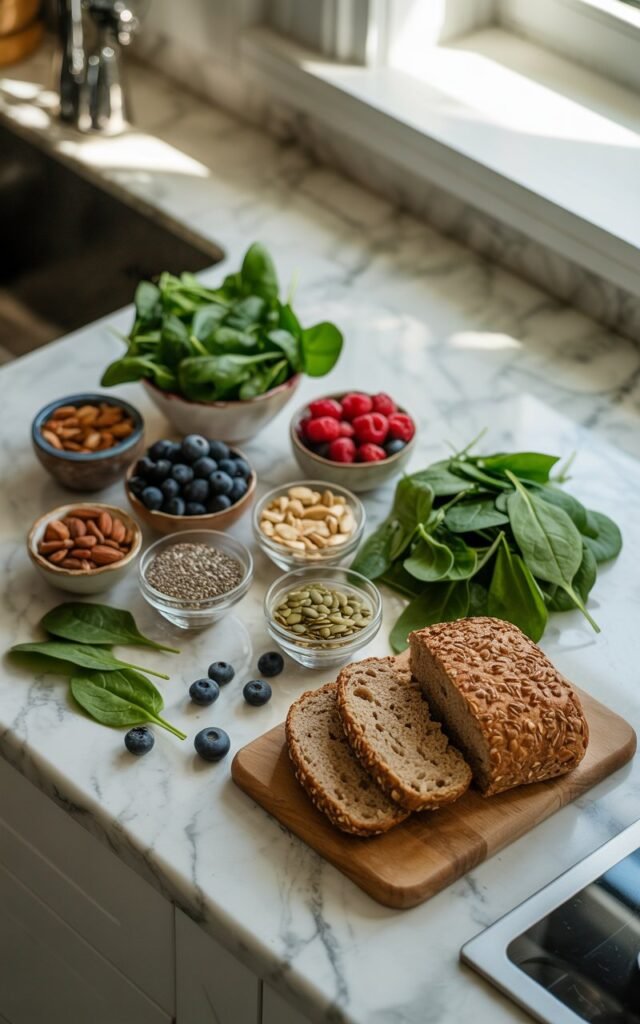
This menu includes small servings of fruit:
- Strawberries
- Blueberries
- Apple slices
Many beginners tolerate limited fruit well, but tolerance varies.
Long-term success often comes from moderating fruit intake over time.
You’ll also notice:
- No bread items like toast or bagels
Even whole-grain bread is refined and quickly absorbed, leading to blood sugar and insulin spikes that encourage fat storage.
Why “Low-Carb” Processed Foods Can Be a Trap

Some breads are marketed as low-carb or no-carb by manipulating ingredients and emphasizing net carbs. While this looks appealing on paper, these foods are often:
- Highly processed
- Quickly absorbed
- Potential triggers for insulin response
This is why focusing on total carbs from whole foods is often more effective for weight loss than relying on net-carb math.
Can Beans Fit into a Beginner Low-Carb Diet?
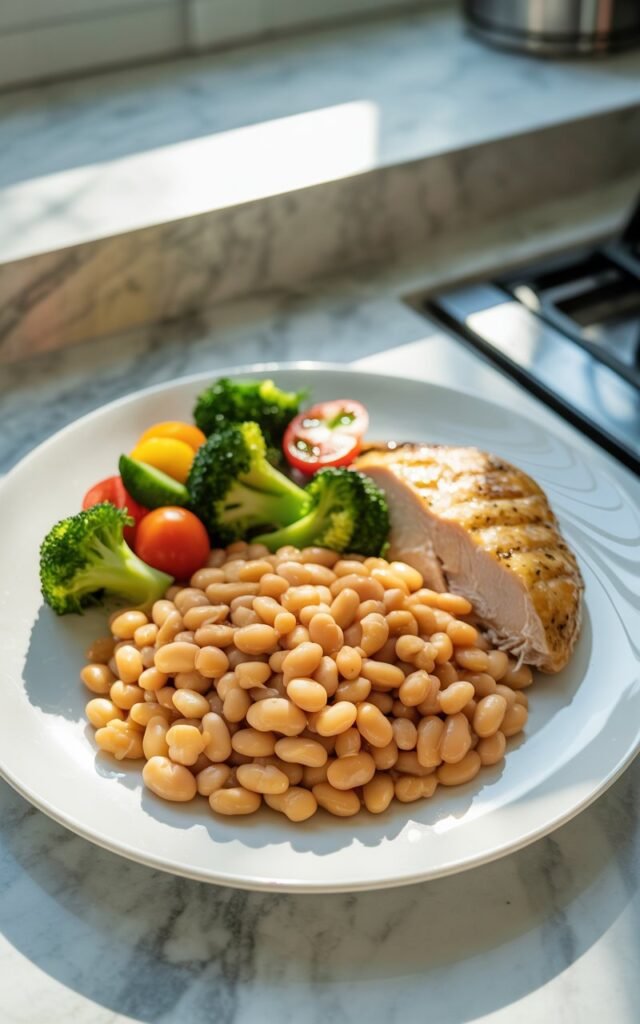
Beans are nutrient-dense whole foods, but they are also higher in carbohydrates.
For example:
- ½ cup black beans = 22 carbs and 9 grams of fiber
If you enjoy beans and account for them within your daily carb total, they can sometimes fit—especially during the transition phase.
Final Thoughts on Starting a Low-Carb Lifestyle
A low-carb diet built around whole foods, healthy fats, fiber, and quality protein can be both enjoyable and effective for weight loss.
This is just one example day, but there are many satisfying low-carb options available.
If you’re looking for more guidance, I offer a free downloadable PDF with 100 low-carb foods that you can print and keep on hand.
Thank you for reading, and enjoy the rest of your day.