
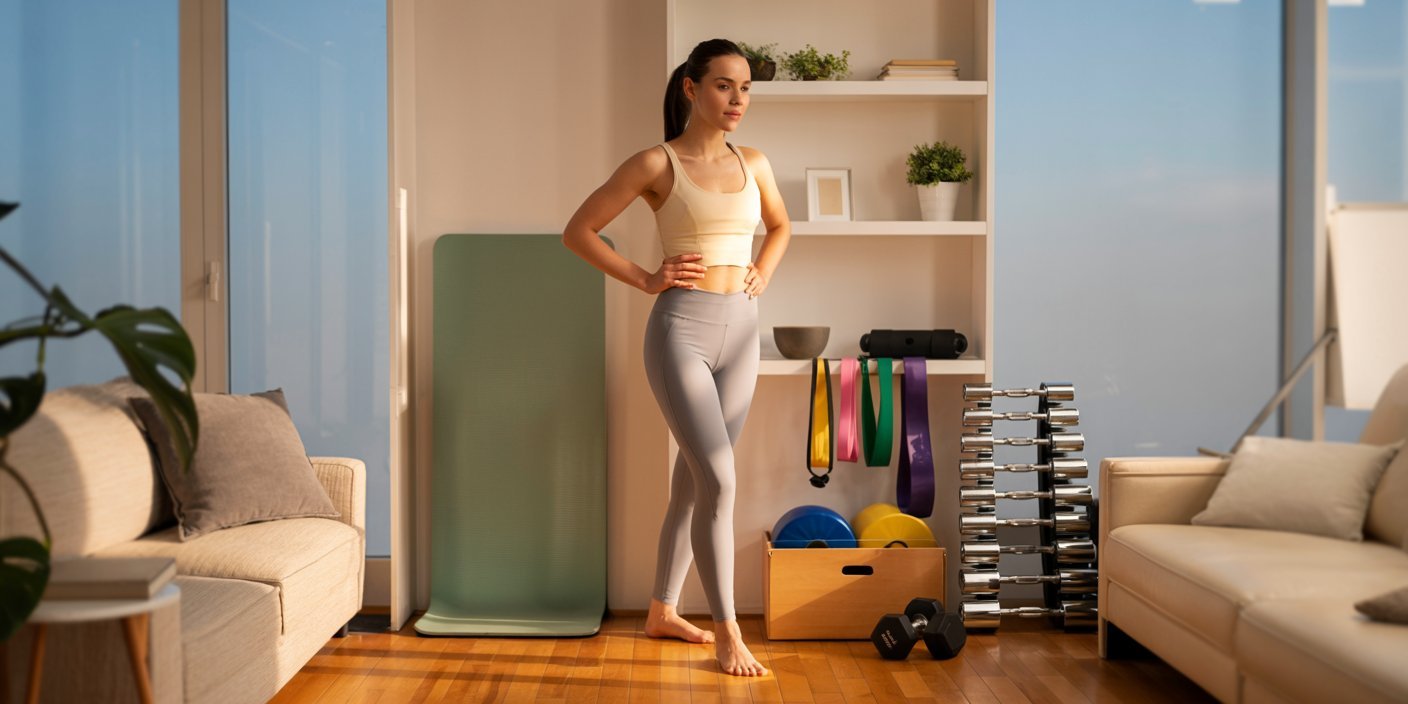
I used to believe I needed a “proper” gym to get fit.
You know the kind—machines everywhere, mirrors, matching equipment, and a monthly fee quietly draining your account.
But the truth is, I didn’t need all that.
What I needed was something that worked with my space, my budget, and my life.
I live a normal life. Bills. Busy days. Limited space.
Some days full of motivation, some days where just showing up feels like a win.
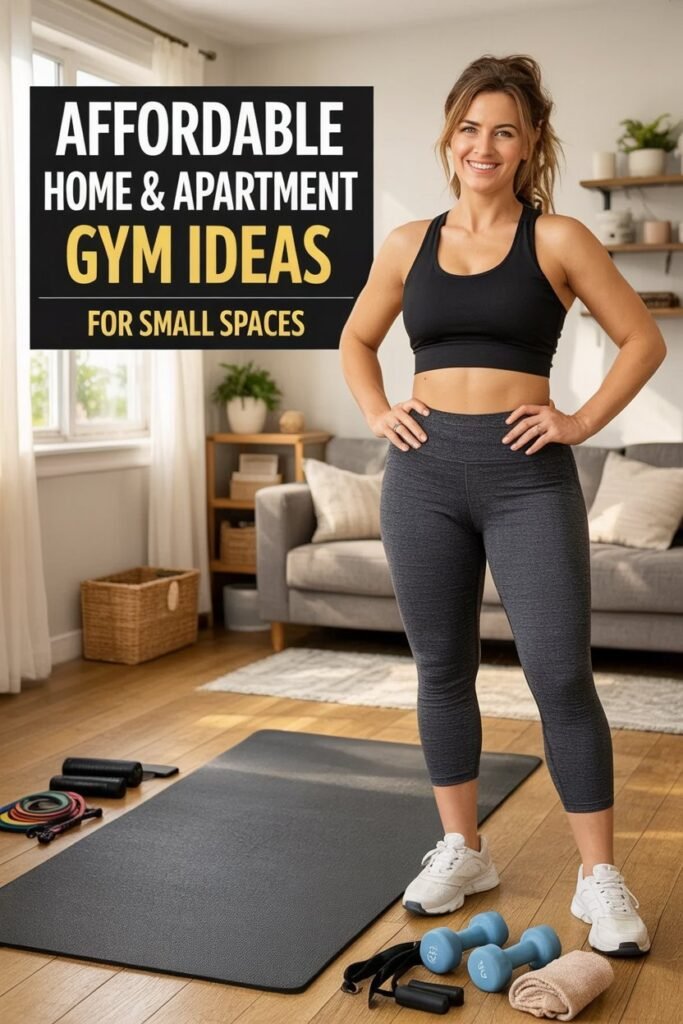
I learned that a home or apartment gym doesn’t have to be fancy—it just has to be usable.
This post is for anyone who:
- Lives in a small apartment or shared home
- Doesn’t want to spend a lot of money
- Wants to work out consistently without pressure
- Is tired of seeing unrealistic “Pinterest-perfect” gyms
Let’s build something real.
Why a Budget Home Gym Actually Works Better
What surprised me the most wasn’t how much money I saved—it was how much mental resistance disappeared.
When your gym is at home:
- You don’t have to look “ready”
- You don’t waste time commuting
- You don’t skip workouts because the gym feels intimidating
Even on low-energy days, I found myself saying, “I’ll just do 10 minutes.” And most of the time, 10 minutes turned into more.
A budget gym removes pressure. And pressure is usually what stops people from starting.
1. The Floor-Only Bodyweight Setup (Where Everything Begins)
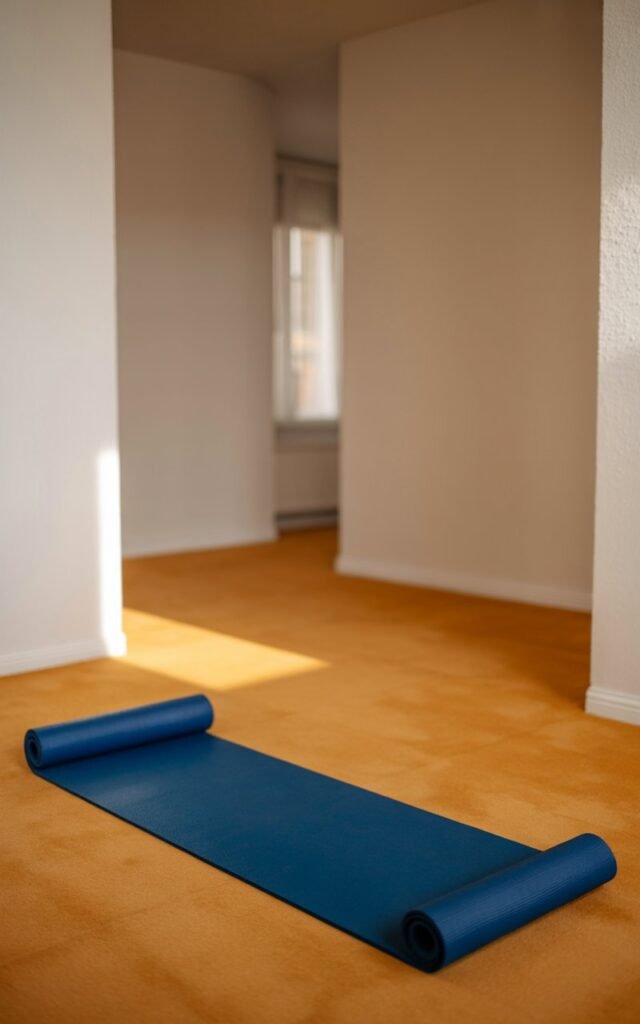
This is where I always tell people to start—because it costs almost nothing and teaches you discipline.
What you actually need
- A yoga mat (or even a folded towel at first)
- Clear floor space the size of a mattress
That’s it.
With just that space, I was able to do:
- Squats and lunges
- Push-ups (on knees at first, no shame)
- Glute bridges and hip thrusts
- Planks and core work
- Stretching and mobility
Why this setup matters
It teaches you consistency before equipment.
If you can’t show up for bodyweight workouts, buying gear won’t fix that.
Real-life tip: I used to move my coffee table slightly, roll out my mat, and that was my gym. No excuses.
2. Resistance Bands: The Best Money I Ever Spent
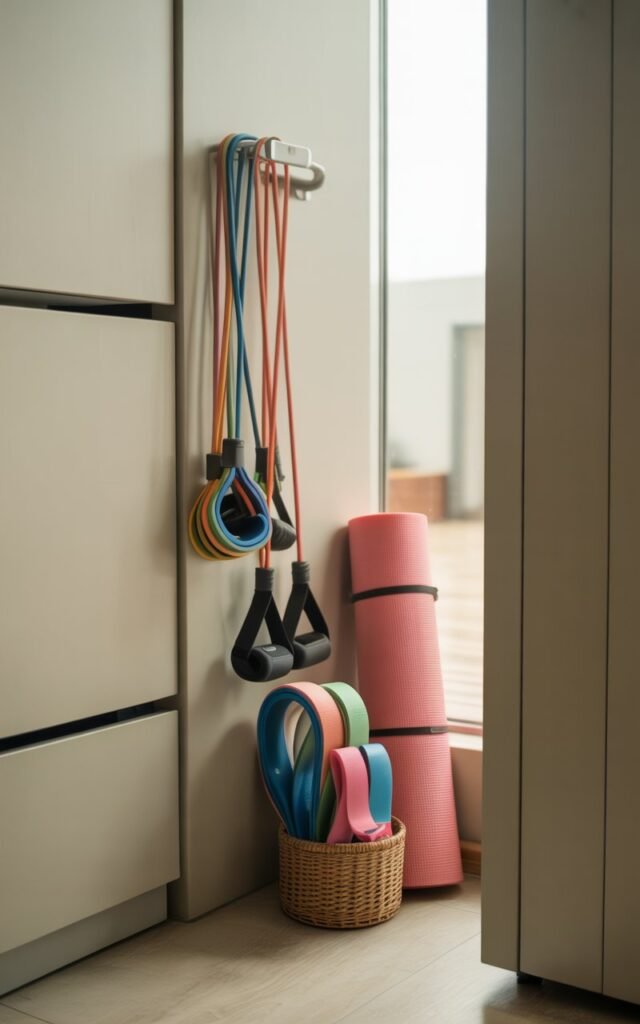
If there’s one thing I recommend to anyone on a budget, it’s resistance bands.
Why bands are perfect for apartments
- Cheap
- Quiet
- Lightweight
- Easy to store
- Extremely versatile
With bands, I trained:
- Arms
- Glutes
- Back
- Shoulders
- Core
And I could increase difficulty just by switching band tension.
Budget advice: Don’t buy single bands one by one. A basic set is usually cheaper and lasts years.
3. The “One Pair of Dumbbells” Rule
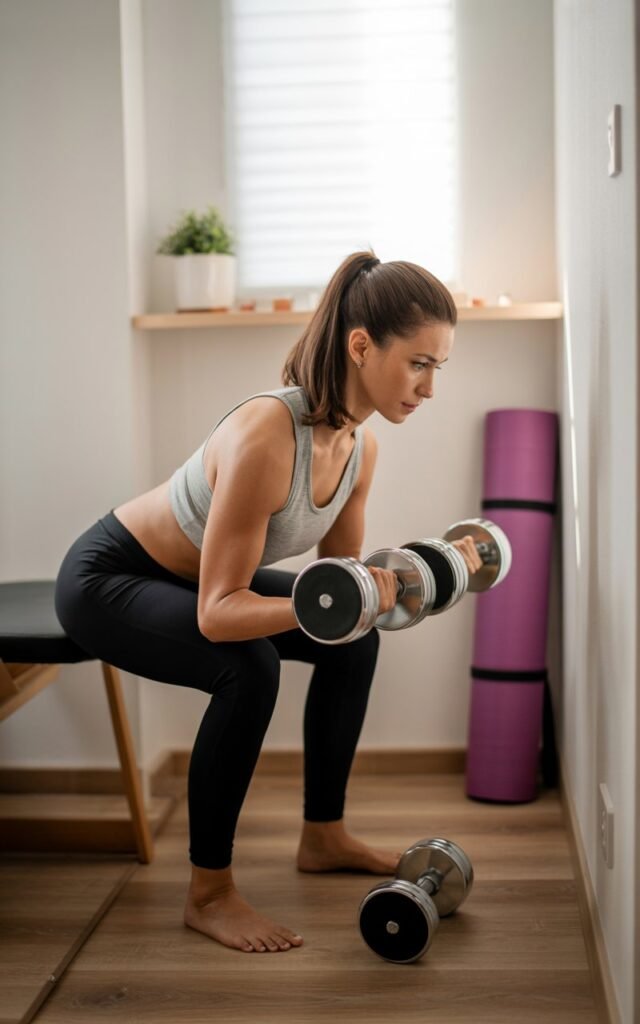
I didn’t start with a full rack of weights. I started with one pair.
What worked
- Medium-weight dumbbells
- Stored neatly in a corner or under furniture
With those dumbbells, I did:
- Goblet squats
- Romanian deadlifts
- Shoulder presses
- Chest presses
- Rows
Important lesson: You don’t need heavy weights at the beginning. You need good form and control.
Upgrading slowly saved me money and prevented injuries.
4. Doorway Pull-Up Bar (Zero Floor Space, Big Results)
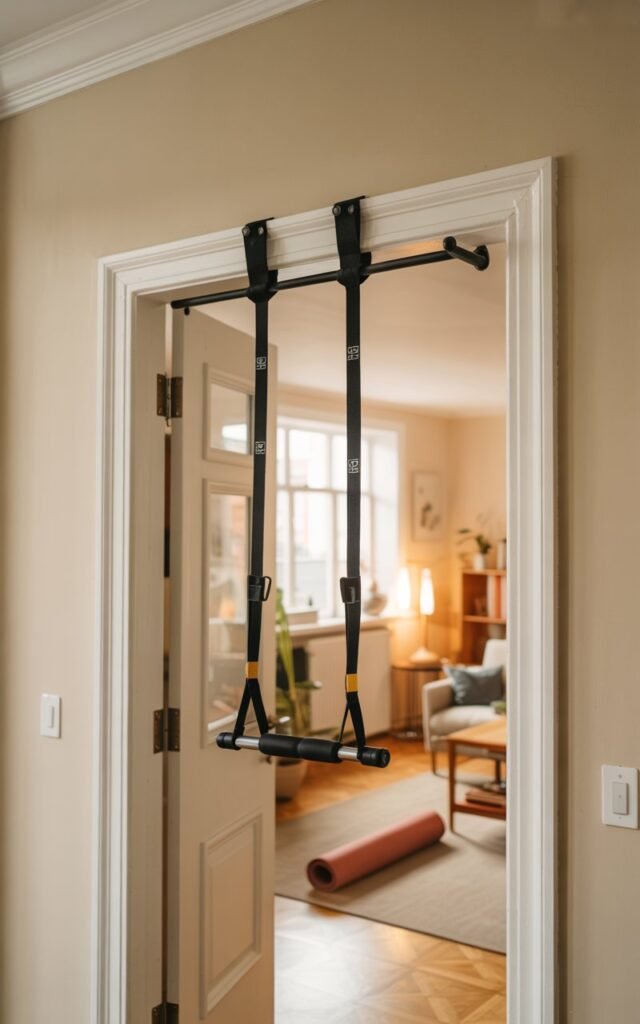
This setup feels advanced, but it’s actually very beginner-friendly.
Why I added it
I wanted upper body strength without buying bulky equipment.
What I used
- A no-drill doorway pull-up bar
Even before I could do pull-ups, I used it for:
- Dead hangs
- Assisted pull-ups
- Knee raises
Safety tip: Always double-check your doorframe. If it doesn’t feel solid, skip this setup.
5. Yoga, Stretching, and Slow Days (Still Count)
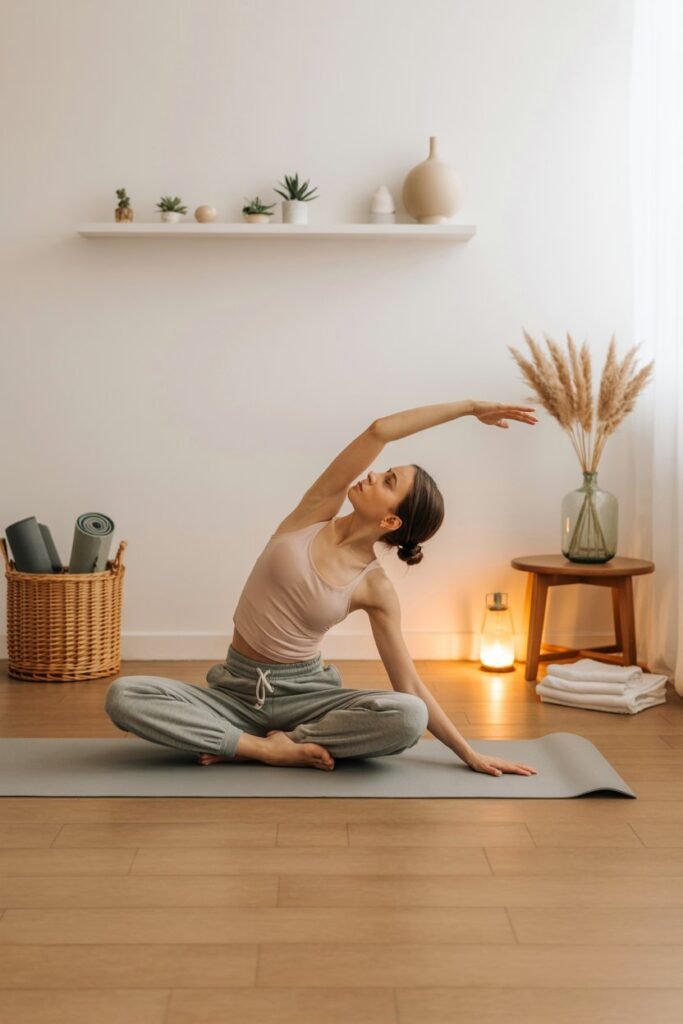
Not every workout needs to be intense. Some days, stretching was all I had in me—and that was enough.
My calm setup
- Yoga mat
- Quiet corner
- Sometimes just dim lighting
This space helped with:
- Flexibility
- Stress relief
- Recovery
- Better sleep
Budget truth: Stretching is free, and it keeps you injury-free. That alone makes it valuable.
6. The Living Room Gym That Disappears After Use
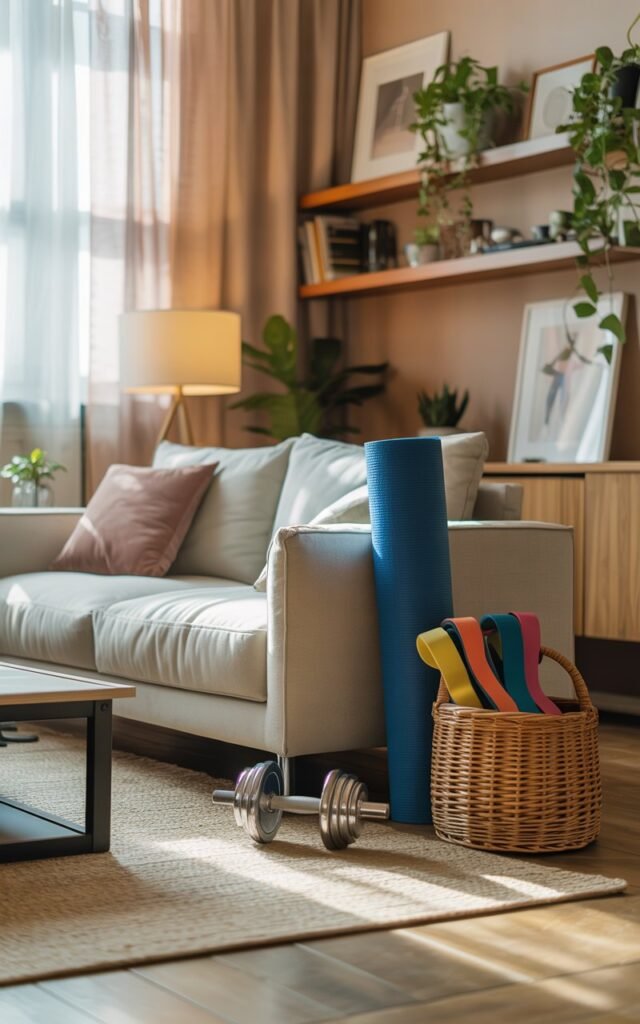
I don’t have a spare room, so my gym had to be invisible.
How I made it work
- Dumbbells under the couch
- Bands in a basket
- Mat rolled and tucked away
When everything is easy to put away, you’re more likely to use it again.
Real-life tip: If setup takes more than 2 minutes, you’ll skip workouts more often.
7. Cardio Without Machines (Because Machines Are Expensive)
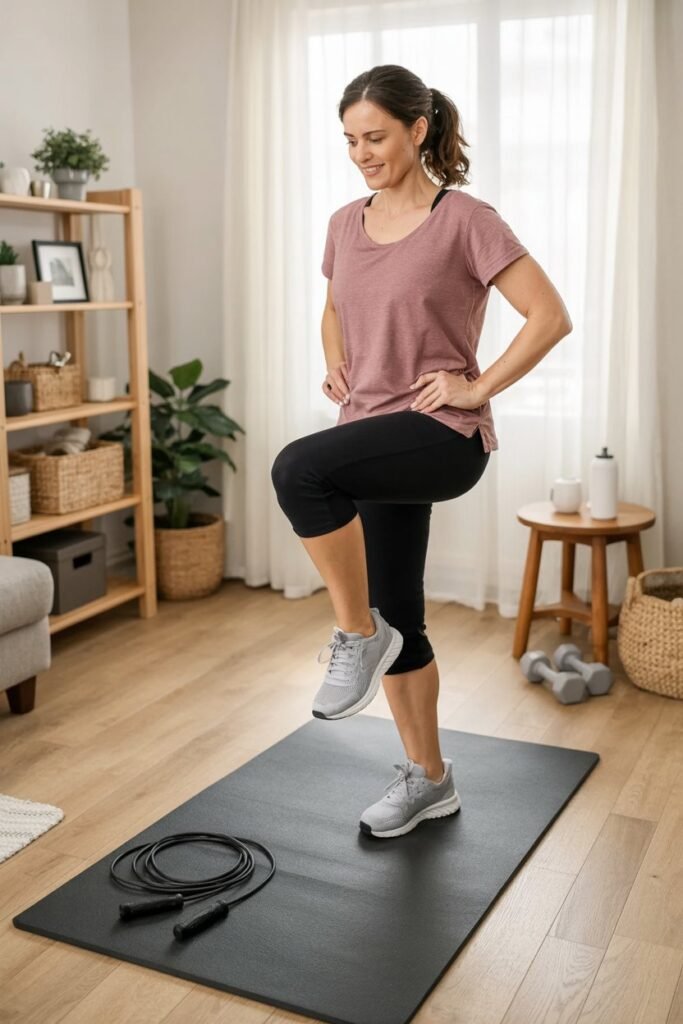
I didn’t buy a treadmill or bike—and I don’t regret it.
What I used instead
- Jump rope
- Marching in place
- Step-back lunges
- HIIT circuits
These workouts:
- Took little space
- Burned serious calories
- Didn’t cost much
Apartment-friendly tip: Use low-impact moves if noise is an issue. Consistency matters more than intensity.
8. Organizing What You Have (Instead of Buying More)
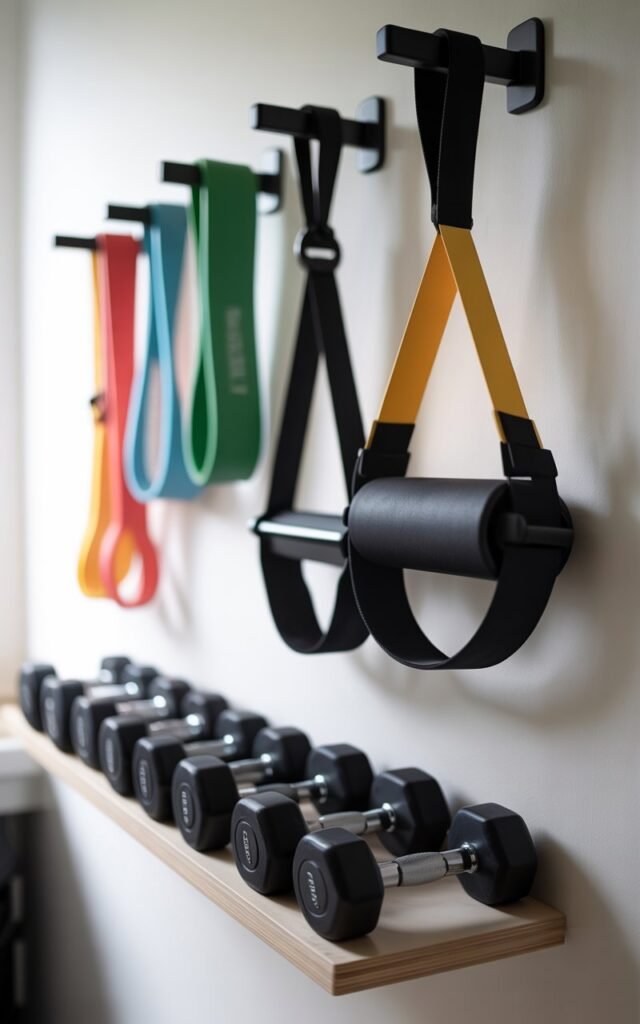
One of the best upgrades I made wasn’t equipment—it was organization.
Simple fixes
- Wall hooks for bands
- Small shelf for weights
- Basket for random gear
When everything had a place, workouts felt easier to start.
9. Using a Mirror You Already Own
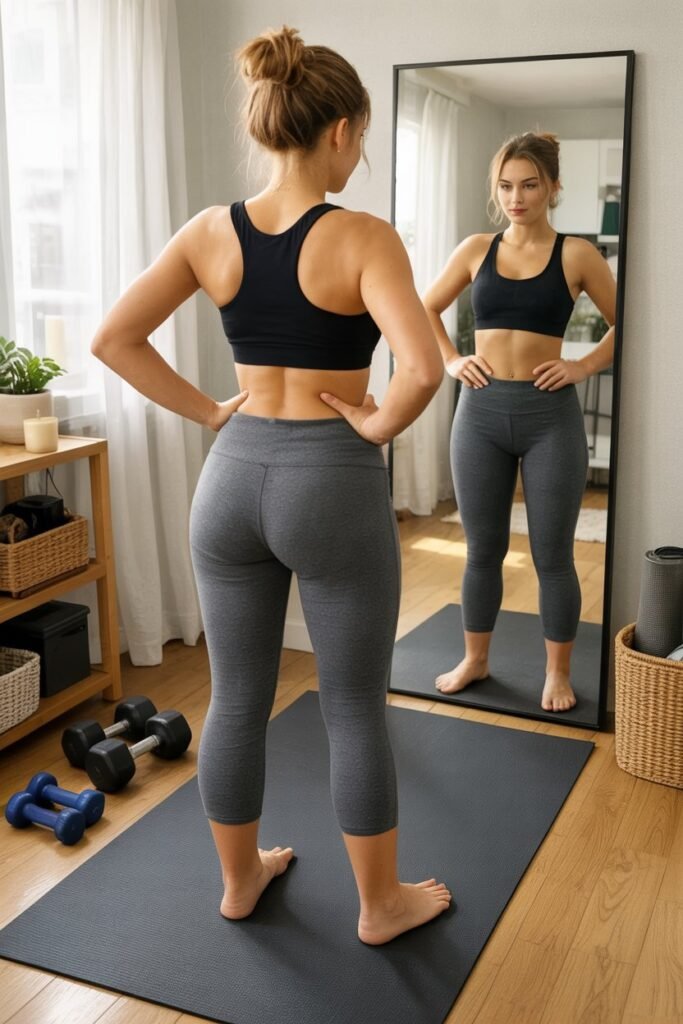
I didn’t rush out to buy a gym mirror.
I used:
- A full-length mirror from my bedroom
It helped me:
- Check posture
- Fix form
- Feel more confident
This step is optional, not essential.
10. Short-Workout HIIT Corner (For Busy Days)
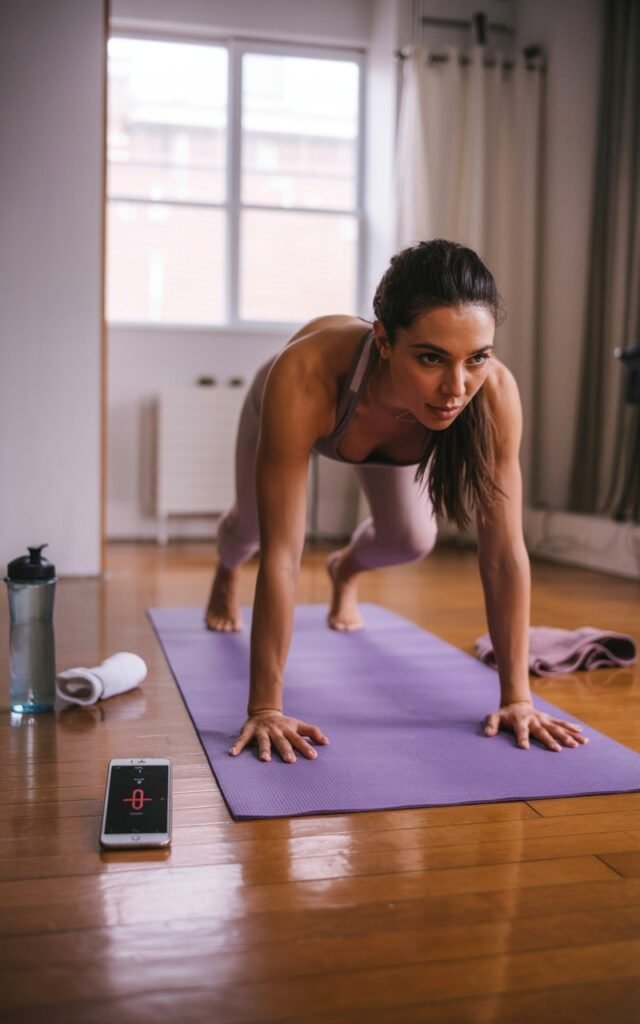
Some days I had 15–20 minutes, and that had to be enough.
My setup
- Phone timer
- Mat
- Clear space
Those short workouts kept me consistent even on chaotic days.
Reminder: Short workouts done often beat long workouts done rarely.
11. Recovery Station (Because Your Body Needs Care)
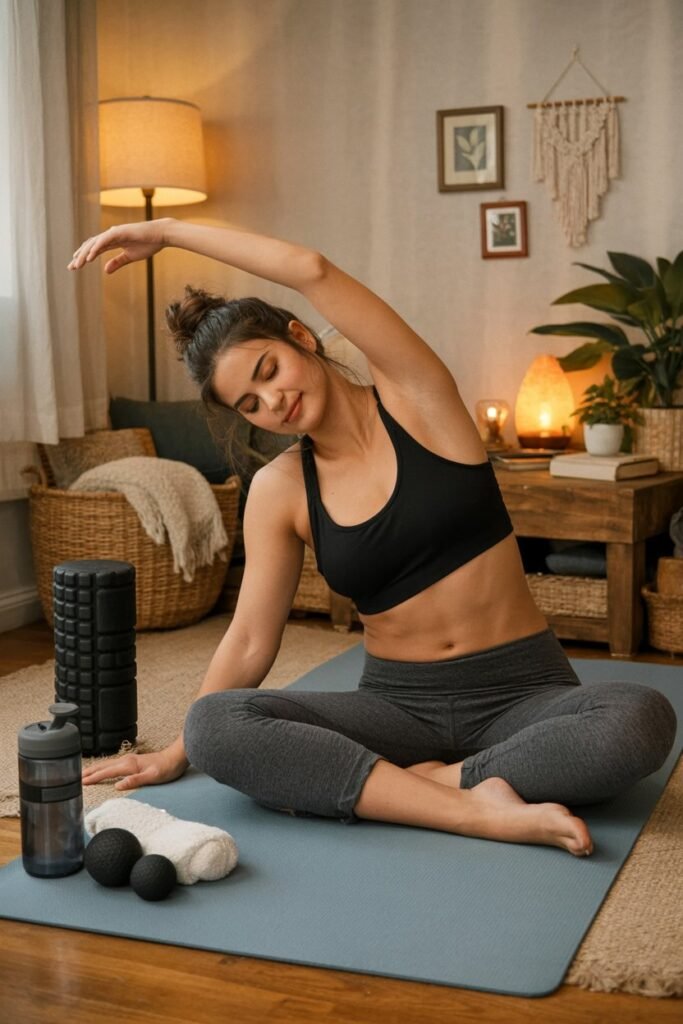
Recovery doesn’t need fancy tools.
What I used
- Foam roller or tennis ball
- Gentle stretching
This helped me:
- Reduce soreness
- Improve mobility
- Stick with my routine long-term
Skipping recovery is one of the biggest mistakes beginners make.
Budget Rules I Live By
These rules saved me money and frustration:
- I don’t buy equipment until I’ve outgrown my current setup
- I avoid fitness trends and gimmicks
- I focus on habit-building, not aesthetics
- I remind myself that showing up imperfectly still counts
Your gym doesn’t need to look good. It needs to work.
Real Questions People Ask (And Honest Answers)
Can I really get fit without expensive equipment?
Yes. Consistency matters more than gear.
What if my apartment is extremely small?
If you can stand, squat, and lie down, you have enough space.
Is it okay to start slow?
It’s not just okay—it’s smart.
Final Thoughts
Building a home or apartment gym on a budget taught me something important: progress doesn’t come from having more—it comes from using what you already have consistently.
Start where you are.
Use what you have.
Give yourself grace.
That’s how real results happen.
