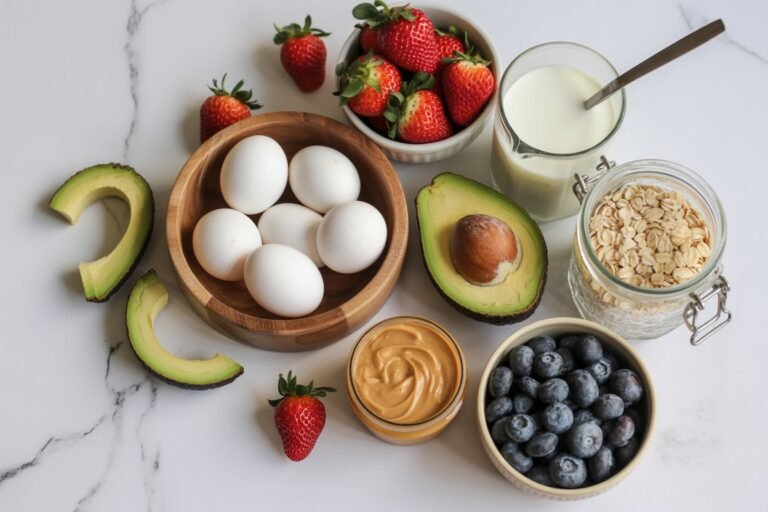
There was a time when I genuinely believed fat loss required a gym membership, expensive machines, intense cardio sessions, and some kind of secret formula only fitness trainers knew.
I thought if I wasn’t drenched in sweat or waking up sore every morning, nothing was happening.
I was wrong.
What I didn’t understand back then was the difference between effort and effectiveness.
I was putting in effort — random workouts, cutting meals, trying trends — but I wasn’t applying strategy.
And fat loss, especially at home, is about strategy.
The real shift happened when I stopped chasing “weight loss” and started learning how fat loss actually works.
I began studying calorie balance, muscle preservation, protein intake, daily movement, hormones, sleep, and stress.
I realized that fat loss isn’t about punishment — it’s about creating the right internal environment for your body to release stored energy.
And here’s what surprised me most:
Almost everything that truly mattered could be done at home.
No fancy equipment.
No crash diets.
No extreme cardio.
Just structured habits repeated consistently.
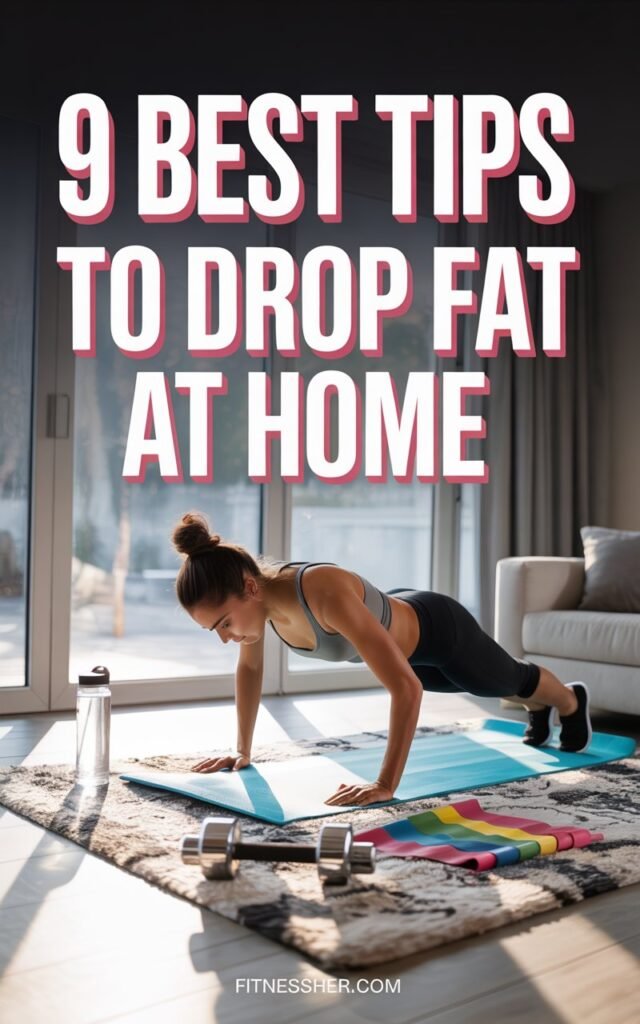
Dropping fat at home is not about copying a 20-minute viral workout and hoping for transformation.
It’s about understanding your metabolism, protecting your muscle, managing your appetite, and building systems that fit into your daily life.
When I started applying those principles — strength training in my living room, walking more, increasing protein, sleeping better — my body began to change in a way that felt sustainable. Not dramatic.
Not chaotic. Just steady progress.
If you want to drop fat at home, you don’t need more motivation.
You need clarity.
Here are the 9 best tips that helped me reduce body fat realistically — without extreme dieting, without burnout, and without turning my entire life upside down.
How I Planned My Fat Loss Routine at Home

I planned my fat loss routine at home by focusing on simplicity, consistency, and realistic habits I could actually stick to.
Instead of trying to do everything at once, I broke my goals into small daily actions that fit into my lifestyle.
First, I created a basic workout schedule using simple home exercises like squats, lunges, planks, and cardio moves.
I didn’t aim for perfection—I just aimed for consistency, even if it was only 20–30 minutes a day.
Next, I planned my meals in a way that supported weight loss without feeling restrictive.
I focused on high-protein foods, fruits, vegetables, and balanced portions to help control cravings and stay full longer.
I also made sure to set a realistic routine that matched my energy levels. Some days were more intense, while others were lighter, but I stayed active every day in some form.
Most importantly, I tracked my progress through how I felt—more energy, better mood, and improved strength—instead of only focusing on the scale.
This helped me stay motivated and committed long-term.
1. Understand the Difference Between Weight Loss and Fat Loss
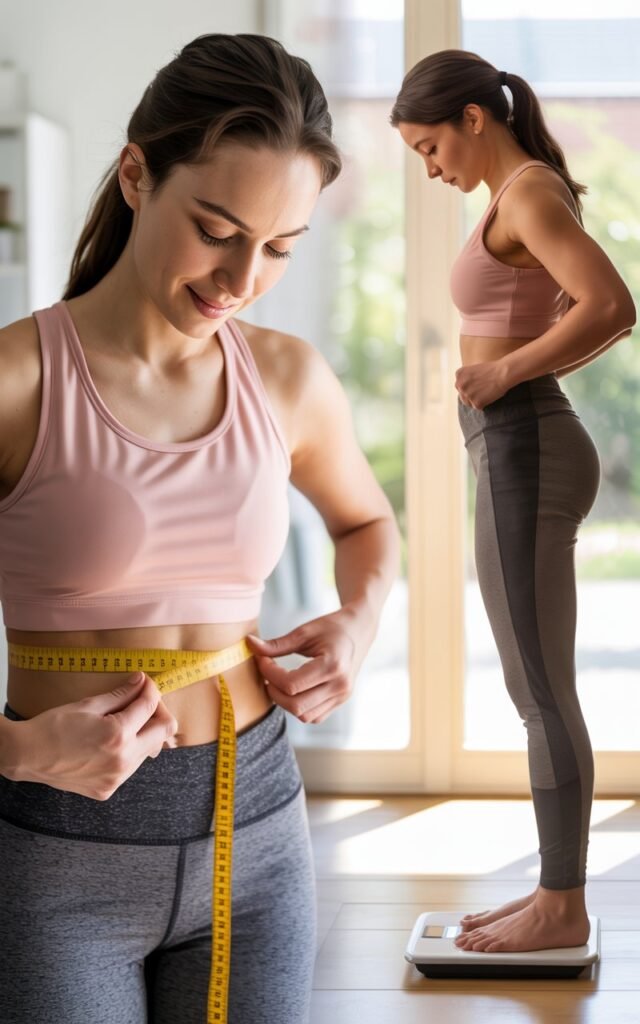
This is where I made my first major mistake.
For a long time, I judged progress only by the number on the scale.
If it dropped, I felt successful. If it didn’t, I assumed nothing was working.
That mindset kept me stuck longer than any workout plan ever did.
Here’s what I eventually learned:
Weight loss is a reduction in total body weight. That includes:
- Water
- Glycogen (stored carbohydrates)
- Muscle
- Fat
Fat loss, on the other hand, is specifically the reduction of stored body fat while preserving as much lean muscle as possible.
That distinction changes everything.
When you drastically cut calories or overdo cardio without strength training, the scale might drop quickly — but a significant portion of that loss can come from water and muscle.
Losing muscle slows your metabolism over time, making future fat loss harder.
When I started strength training consistently at home and increased my protein intake, something interesting happened.
The scale didn’t move as fast as before. Some weeks it barely moved at all.
But my waist measurement decreased.
My clothes fit differently.
My body looked firmer.
That’s when I understood: I was losing fat, not just weight.
Educational Insight:
Muscle is metabolically active tissue. The more lean mass you preserve, the higher your resting metabolic rate tends to be.
Protecting muscle during a calorie deficit is critical for long-term fat loss success.
Practical Shift That Helped Me:
- I stopped weighing myself daily.
- I measured my waist and hips every two weeks.
- I tracked strength progress in my workouts.
- I paid attention to how my body composition looked, not just scale weight.
If your goal is to drop fat at home, don’t chase a lower number blindly.
Chase body composition improvement.
Fat loss is slower than water loss.
It’s less dramatic.
But it’s far more sustainable — and far more powerful.
2. Prioritize Protein at Every Meal
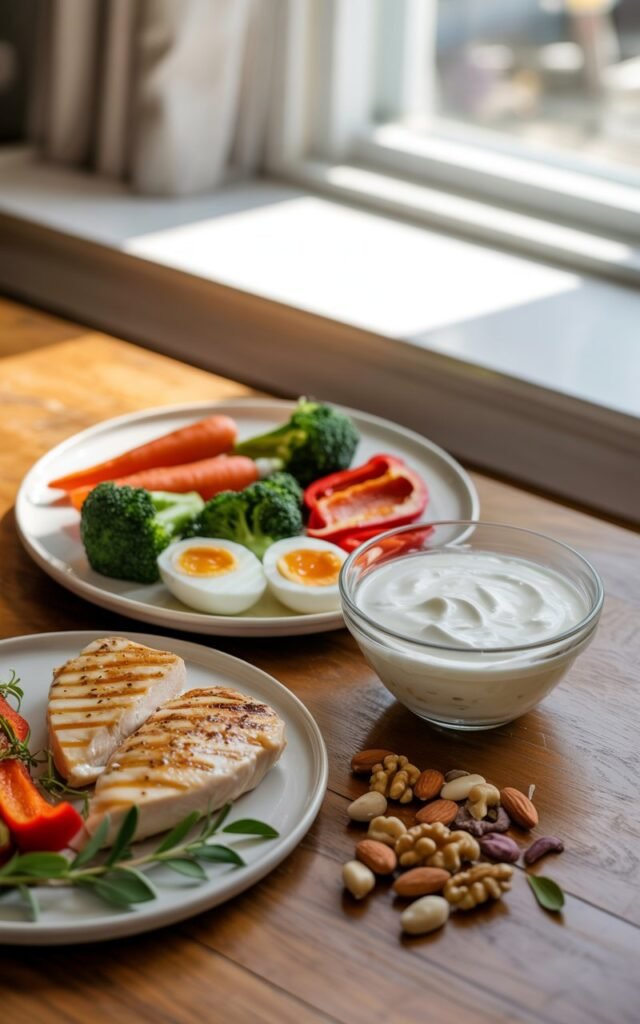
If there is one habit that quietly accelerated my fat loss at home, it was this:
I stopped building meals around carbs and started building them around protein.
Before that shift, my meals were “normal” but unstructured. Toast for breakfast. Rice-heavy lunches. Snacks that were mostly carbs.
I was always hungry again within two hours, which made staying in a calorie deficit feel like constant willpower.
When I understood the role protein plays in fat loss, everything became easier.
Here’s why protein matters:
1. It preserves muscle during a calorie deficit.
When you’re trying to drop fat, you’re eating fewer calories.
Without enough protein, your body may break down muscle tissue for energy.
Preserving muscle keeps your metabolism stronger and helps your body look leaner as fat decreases.
2. It increases satiety.
Protein keeps you full longer than carbs or fats.
It reduces cravings and helps control portions naturally.
3. It has a higher thermic effect.
Your body burns more calories digesting protein compared to carbs or fats.
This isn’t magic, but it’s a small metabolic advantage that adds up over time.
Once I understood this, I made one simple rule:
Every meal must contain a clear protein source.
My meals started looking like this:
- Breakfast: Eggs with fruit, or Greek yogurt with nuts
- Lunch: Grilled chicken, tofu, beans, or fish with vegetables
- Snack: Cottage cheese, boiled eggs, or a protein smoothie
- Dinner: Lean beef, turkey, or legumes with a balanced plate
Nothing extreme. Just intentional.
Practical guideline that worked for me:
I aimed for roughly 0.7–1 gram of protein per pound of body weight. If tracking felt overwhelming,
I focused on getting 25–35 grams of protein per main meal and at least 15–20 grams in snacks.
That structure alone reduced my random snacking.
Educational Insight:
When protein intake is too low during fat loss, you risk losing lean mass.
Losing lean mass reduces resting energy expenditure, which can slow long-term progress and increase the likelihood of regaining fat later.
Protein is not just about muscle building. It’s a fat loss strategy.
If you’re trying to drop fat at home and feel constantly hungry, your first question shouldn’t be, “Should I eat less?”
It should be, “Am I eating enough protein?”
That one adjustment made staying consistent feel realistic instead of restrictive.
Related Weight Loss Snack & Food Guides
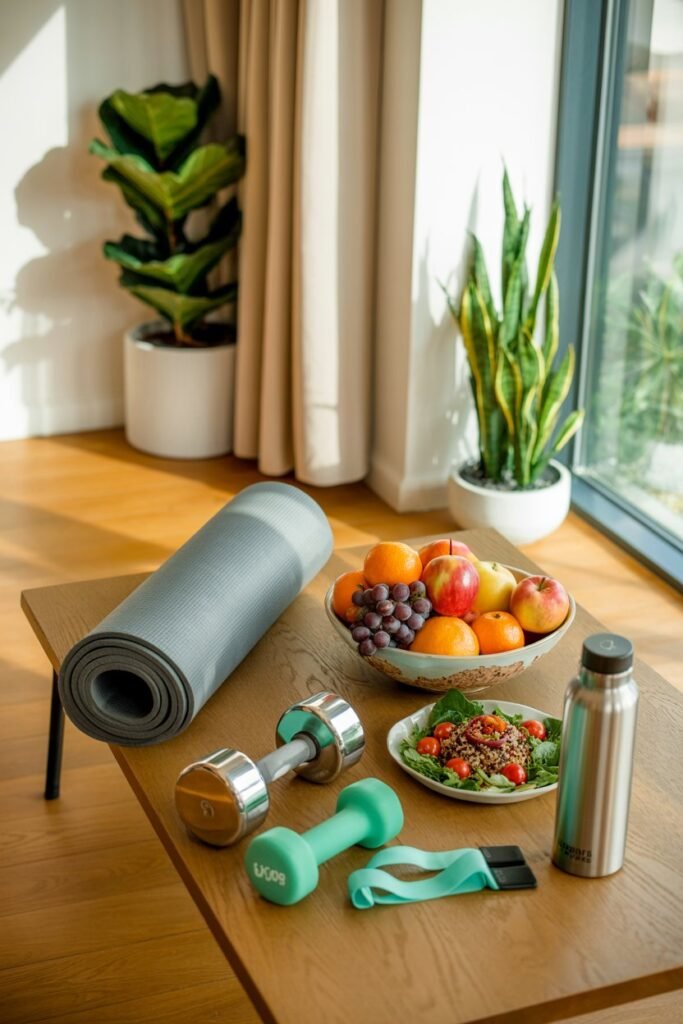
- 9 Snacks Fit Women Eat for Rapid Weight Loss
- 10 Fruits to Eat for Rapid Weight Loss
- 10 Snacks I Ate to Lose 20 Pounds Fast
3. Lift Weights — Even If It’s Just at Home
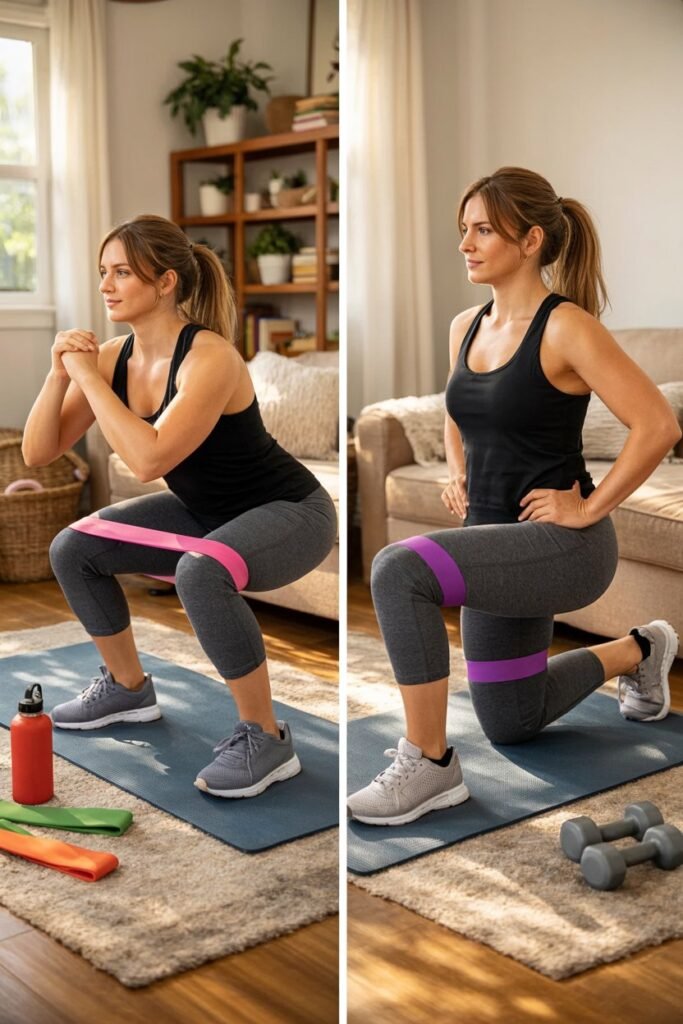
For a long time, I thought fat loss meant doing more cardio.
More jumping.
More sweating.
More exhaustion.
But when I finally understood how body composition works, I realized something important: if you want to drop fat and actually look leaner, strength training is not optional.
It’s foundational.
When you’re in a calorie deficit, your body doesn’t automatically choose to burn only fat.
Without resistance training, it can also break down muscle tissue. And losing muscle is the fastest way to slow your metabolism.
That’s when I shifted my focus.
Instead of asking, “How many calories can I burn today?”
I started asking, “How can I protect and build muscle today?”
The answer was strength training — at home.
You do not need a gym to make this work.
I started with:
- Bodyweight squats
- Lunges
- Push-ups (on knees at first)
- Glute bridges
- Planks
- Resistance band rows
Three to four sessions per week. About 30–40 minutes each.
Nothing extreme. Just progressive and consistent.
Educational Insight:
Muscle is metabolically active tissue.
The more lean mass you maintain, the higher your resting metabolic rate tends to be.
That means you burn more calories even when you’re not exercising.
Cardio burns calories during the workout.
Strength training changes your metabolism over time.
That difference is powerful.
Another thing I noticed was this: my body started looking firmer before the scale showed major changes.
My arms felt tighter. My waist looked smaller. My posture improved.
That’s the effect of recomposition — losing fat while preserving or slightly increasing muscle.
Practical Structure That Worked for Me:
- 3–4 strength workouts per week
- Focus on full-body movements
- 8–12 repetitions per exercise
- 3–4 sets per movement
- Gradually increasing reps or resistance over time
You don’t need to feel destroyed after every session. You need to feel challenged and progressive.
If your goal is to drop fat at home, don’t rely only on cardio. Use strength training as your anchor.
It protects your metabolism.
It shapes your body.
And it makes fat loss sustainable instead of temporary.
4. Walk More Than You Think You Need To

One of the simplest yet most underestimated fat loss strategies I discovered was walking.
Seriously — I used to roll my eyes at “just walk more” advice, thinking it was too basic to matter. But adding intentional movement throughout my day made a huge difference.
Here’s why walking works for fat loss:
- Burns extra calories without stress: Unlike intense cardio, walking is low-impact and easy to sustain. I could fit in 30–60 minutes without feeling drained, which added up over the week.
- Supports recovery and reduces stress: Walking increases circulation, helps your muscles recover, and lowers cortisol, the stress hormone that can encourage fat storage, especially around the belly.
- Improves insulin sensitivity: Regular movement helps your body handle carbohydrates better, reducing the likelihood of excess calories being stored as fat.
How I made it work at home:
- I took 30–45 minute walks around my neighborhood almost every day.
- On days I couldn’t walk outside, I used an indoor walking routine while listening to music or a podcast.
- I also increased “non-exercise activity” — taking stairs, pacing while on calls, and even doing quick laps around the house when cleaning.
Practical Tip:
If your workouts are only 20–40 minutes a few times per week, adding daily walking can double your fat-burning impact without feeling like a workout.
It’s sustainable, low-stress, and realistic for home life.
The key lesson I learned: Fat loss isn’t just what you do in your workout—it’s what you do all day.
Walking consistently became the habit that bridged the gap between my workouts and everyday life, helping me shed fat steadily and without burnout.
5. Control Liquid Calories
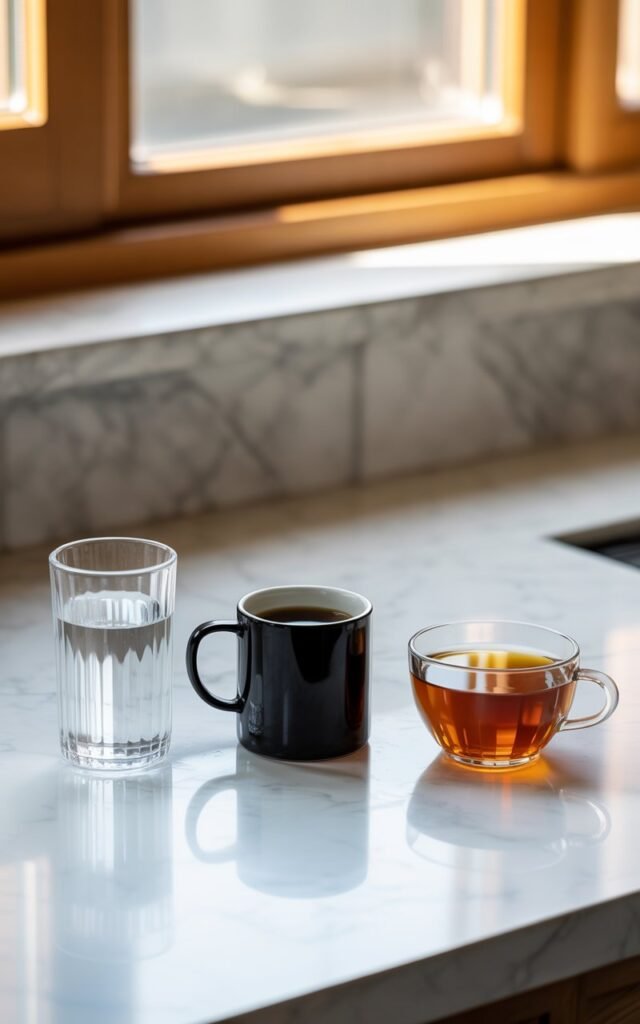
One of the sneakiest culprits in my fat loss journey was drinks. I didn’t realize how much sugar and hidden calories I was consuming until I started tracking everything.
Morning lattes, flavored teas, sodas, even fruit juices — they were quietly adding hundreds of calories each day without making me feel full.
Here’s why liquid calories matter:
- They don’t satisfy hunger: Your brain doesn’t register liquid calories the same way it does solid food, so you end up eating the same amount at meals, plus the extra calories from drinks.
- They spike blood sugar: Sugary drinks can cause insulin surges, leading to increased fat storage, cravings, and energy crashes.
- They’re easy to overconsume: One sweetened coffee or juice might be 200–300 calories, and it’s easy to forget you drank it.
What I did differently:
- Switched to water as my main beverage.
- Enjoyed black coffee or unsweetened tea in the mornings.
- Occasionally used sparkling water with a splash of lemon to satisfy the craving for something flavorful.
Practical Tip:
If you’re struggling to lose fat at home, audit your drinks first.
Cutting out or reducing liquid calories is one of the easiest ways to create a calorie deficit without feeling deprived.
Educational Insight:
Even small adjustments add up. Removing a 200-calorie daily latte translates to 1,400 calories per week — roughly equivalent to half a pound of fat.
Over a month, that’s significant progress with almost zero extra effort.
Controlling liquid calories was the first change that made fat loss feel doable instead of overwhelming.
Once I implemented this habit consistently, other healthy changes — like structured meals and strength training — became far easier to stick with.
6. Sleep Like It Matters (Because It Really Does)

I used to underestimate sleep completely.
Late nights scrolling on my phone, irregular bedtimes, and early mornings became the norm.
I thought as long as I worked out and ate “healthy enough,” I could ignore it.
Fat loss at home taught me otherwise.
Sleep isn’t just rest — it’s a critical hormone-regulating process that directly affects your body’s ability to lose fat.
Here’s what happens when you skimp on sleep:
- Increased hunger hormones (ghrelin): Makes you crave high-calorie, carb-heavy foods.
- Decreased satiety hormones (leptin): Leaves you feeling less full after meals, so you overeat without realizing it.
- Elevated stress hormone (cortisol): High cortisol encourages fat storage, particularly around your midsection.
- Slower recovery and energy crashes: Less motivation to exercise, weaker workouts, and higher risk of skipping planned activity.
When I started prioritizing 7–8 hours of quality sleep, the difference was noticeable:
- Cravings reduced significantly.
- I had more energy for home workouts and daily walks.
- My fat loss progress became steadier and more consistent.
Practical Tips That Helped Me Sleep Better:
- Set a consistent bedtime and wake-up time — even on weekends.
- Dim lights and reduce screen time 30–60 minutes before bed.
- Keep the bedroom cool, dark, and quiet — it signals your body it’s time to rest.
- Avoid late-night heavy meals or sugar — it can spike energy and disrupt sleep cycles.
Educational Insight:
Sleep is not optional for fat loss — it’s a vital part of the process.
Without it, even perfect diet and exercise habits are less effective.
Making sleep a priority was one of the first changes that made home-based fat loss sustainable.
Once I respected my body’s need for rest, every other tip — strength training, walking, protein intake — worked even better.
7. Stop Snacking Mindlessly

One habit that quietly sabotaged my fat loss for months was mindless snacking.
I didn’t even realize I was doing it — nibbling while cooking, grazing during TV shows, or reaching for something “just because it was there.”
Those extra calories added up faster than I could track, and they made staying in a calorie deficit feel impossible.
Here’s why mindless snacking is such a problem:
- Calories without awareness: You often eat more than you think because you’re distracted.
- Disrupts hunger signals: Eating when you’re not actually hungry confuses your body and can lead to overeating at meals.
- Encourages unhealthy choices: Snacks are usually processed or high-calorie foods, not the nutrient-dense items your body actually needs.
What I did to fix it:
- I structured my meals and snacks intentionally. I only ate at the table, sitting down, fully focused on my food.
- I stocked my kitchen with protein-rich, nutrient-dense snacks: boiled eggs, Greek yogurt, nuts, or fresh vegetables.
- I learned to ask myself before eating: “Am I really hungry, or just bored/stressed?”
Practical Tip:
Try removing one mindless snack per day and replace it with a short pause: take a few deep breaths, drink a glass of water, and reassess hunger.
This small habit can save hundreds of calories each week.
Educational Insight:
Mindless snacking may feel minor, but it has a big impact over time.
Controlling when and why you eat trains your body to respond to real hunger signals, making fat loss at home much more achievable.
Once I mastered this, I realized I could enjoy meals fully, feel satisfied longer, and maintain a steady fat loss — all without extreme restriction.
8. Reduce Stress (It Affects Belly Fat)

I didn’t expect stress to play such a big role in fat loss, but it became clear quickly.
Late deadlines, household chaos, and juggling responsibilities created a constant background tension I barely noticed — until I realized my belly fat wasn’t budging, even though I was eating well and working out at home.
Here’s why stress matters:
- Cortisol spikes: Chronic stress elevates cortisol, a hormone that encourages fat storage, especially around the abdomen.
- Cravings increase: High stress often leads to cravings for sugar and carbs, making calorie control difficult.
- Sleep disruption: Stress interferes with quality sleep, compounding the fat loss struggle.
- Reduced motivation: When you’re stressed, workouts feel harder, and you’re more likely to skip them.
What I did to manage it:
- Daily walks: Even 20–30 minutes outside helped me reset my mind and reduce tension.
- Journaling: Writing down my thoughts and planning my day cleared mental clutter.
- Short mindfulness exercises: I spent a few minutes breathing deeply or doing guided meditation, especially before meals or workouts.
- Boundaries: I learned to say no to non-essential tasks and prioritize my health.
Practical Tip:
You cannot out-exercise chronic stress. Even the best workout routine or perfect meal plan won’t fully work if your stress levels remain high.
Make stress reduction a daily habit — it’s as important as protein or strength training.
Educational Insight:
Cortisol affects fat distribution, appetite, and energy levels. Managing stress isn’t just about feeling better mentally; it directly impacts your body’s ability to burn fat efficiently.
When I started prioritizing stress management, I noticed subtle but consistent changes: less bloating, fewer cravings, better workouts, and fat loss that finally felt predictable.
It reminded me that fat loss is not just physical — it’s emotional and mental too.
9. Stay Consistent, Not Extreme

This was the biggest lesson I learned on my fat loss journey at home: consistency beats intensity every single time.
Early on, I tried every “fast fat-loss” trick I could find — 2-hour workouts, crash diets, and extreme intermittent fasting.
Sure, I saw quick drops on the scale, but they were temporary.
I would burn out, gain back the weight, and feel frustrated.
The turning point came when I shifted my mindset from chasing quick results to building repeatable habits:
- Strength training 3–4 times per week
- Walking daily
- Eating enough protein at every meal
- Controlling liquid calories
- Sleeping consistently
- Managing stress
- Avoiding mindless snacking
I didn’t try to do everything perfectly.
I just focused on doing small, effective actions every day and repeating them.
That is what moved the needle long-term.
Educational Insight:
Fat loss isn’t a sprint; it’s a process. Extreme measures may show results quickly but are rarely sustainable.
Consistency, even at moderate intensity, reshapes your body and metabolism gradually — and more reliably.
Practical Tip:
Instead of aiming for “perfect fat loss” every day, aim for mostly consistent habits.
If you miss a workout or have an indulgent meal, it’s not failure — it’s part of the process. What matters is returning to your habits consistently over weeks and months.
Once I embraced consistency over extremes, fat loss at home became manageable, predictable, and surprisingly enjoyable.
I could live my life, follow a routine that fit my schedule, and finally see the results stick.
FAQ: 9 Best Tips to Drop Fat at Home
1. Can you really lose fat at home without equipment?
Yes, bodyweight exercises combined with a healthy diet are very effective for fat loss.
2. What are the best home exercises for fat loss?
Squats, lunges, jumping jacks, mountain climbers, and planks are great options.
3. How many days should I work out at home?
3–5 days per week is ideal for consistent fat loss.
4. Do I need to follow a strict diet?
No, but eating balanced meals and maintaining a calorie deficit is important.
5. Why am I not losing fat at home?
Common reasons include inconsistency, overeating, or lack of progressive workouts.
6. How long does it take to see results?
Most people notice changes within 4–8 weeks with consistency.
7. Is cardio necessary for fat loss?
Cardio helps, but combining it with strength training gives better results.