Hi friends! Jay here. If you’ve been following my weight loss journey, you know I’m always looking for ways to challenge myself and push my limits.
Last month, I embarked on a 30-day squat challenge, and the experience has completely changed the way I view my body—not just how it looks, but how it feels and functions.

I want to share my full journey with you: the struggles, the lessons, the tips, and, of course, the results.
If you’re thinking about starting a squat challenge or just want some inspiration to get moving, this post is for you.
Why I Started the Squat Challenge
Before this challenge, I hadn’t done squats consistently in over two years.
I wanted something simple but effective—a daily movement that would help me strengthen my legs, improve my endurance, and build confidence in my body.
I initially thought I would aim for 100 squats per day, inspired by another blogger challenge.
But on my first trial day, I barely managed 20 squats, and I realized I needed to start smaller and be realistic.
The last thing I wanted was to overwhelm myself and give up before I even got started.
So I adjusted the challenge to 50 squats per day, sometimes adding an extra five reps at the end for a little motivational push.
This approach allowed me to push myself without overdoing it, making the challenge both challenging and sustainable.
Day One to Day Three: Early Struggles

The first few days were humbled and sore. On day two, my legs were in pain like never before, and I questioned whether I could really do this for 30 days straight.
By day three, I realized my muscles couldn’t go as deep into the squats because of soreness.
A viewer suggested that I take rest days, and after doing some research, I learned that muscles need 24–72 hours to recover when working the same group.
Incorporating rest days was a game-changer.
It allowed me to maintain consistency while protecting my body from injury.
I quickly learned that a squat challenge isn’t just about pushing every day; it’s about strategic recovery, listening to your body, and showing up consistently.
Warm-Up & Stretch Routine

Before squats, a quick warm-up makes a big difference for form, strength, and injury prevention.
5-Minute Warm-Up
- Leg Swings – Forward/back, 30 sec per leg
- Hip Circles – Clockwise & counterclockwise, 30 sec
- Glute Bridges – Lift hips, squeeze glutes, 10–15 reps
- Bodyweight Lunges – 10 reps per leg
- Plank (Optional) – 20–30 sec, core tight
Quick Stretch
- Hamstrings: Reach toward toes, 15 sec per leg
- Quads: Pull heel to glutes, 15 sec per leg
- Hip Flexors: Gentle lunge, 15 sec per leg
💡 Tip: Just 5 minutes of movement activates your glutes, warms up joints, and improves squat performance.
Week 1: Build the Habit (30-Day Squat Challenge)
Daily: 20–30 squats (2–3 sets)
Focus: Proper form + lower body strength
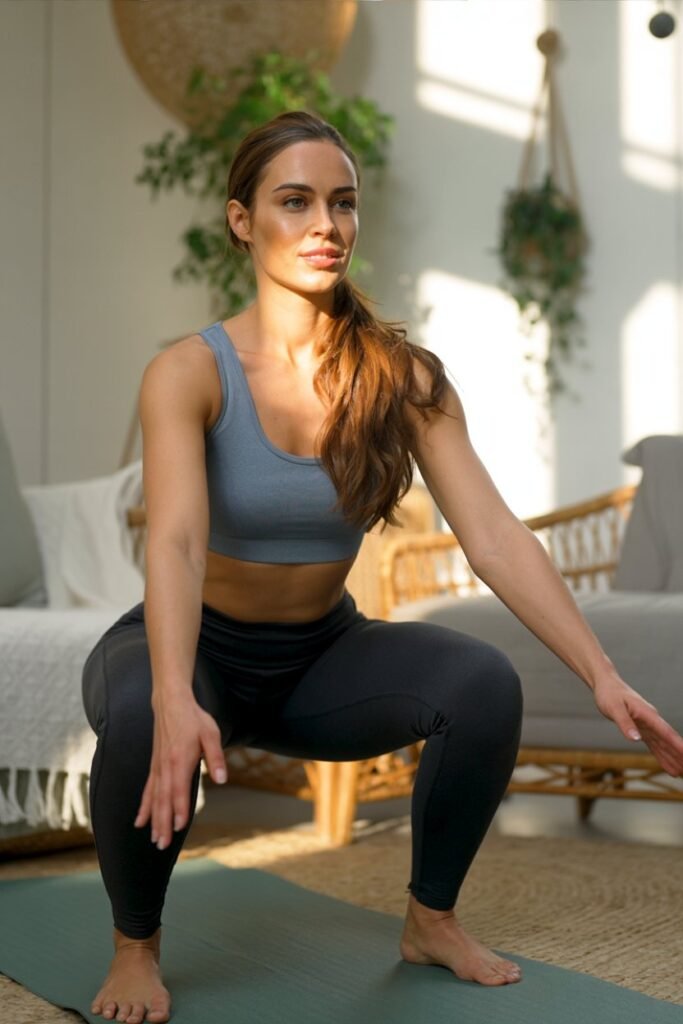
How to Do Squats Properly:
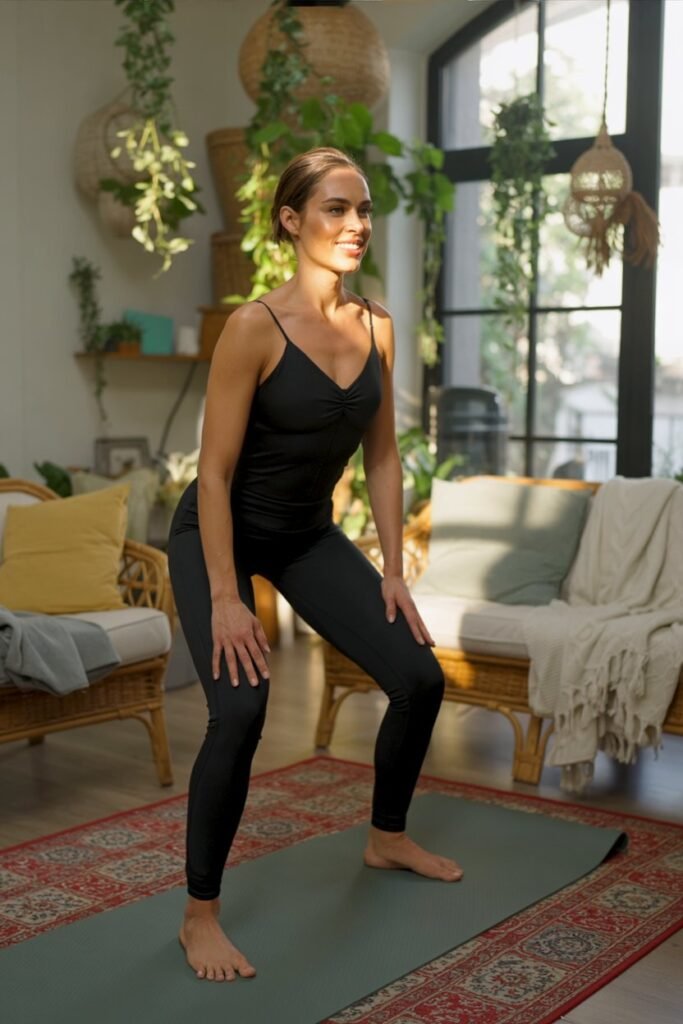
- Feet shoulder-width, toes slightly out
- Push hips back, bend knees, weight in heels
- Lower thighs parallel to floor
- Stand up, squeeze glutes, keep chest up
Tip: Slow and controlled reps help build glutes, tone legs, and strengthen quads. Avoid knees collapsing inward.
Week 2: Increase Volume & Control

Daily: 40–60 squats (3–4 sets)
Add: Pause squats (hold bottom 2–3 sec)
Focus: Core engagement, glute activation, full lower body workout
How to Do Pause Squats:
- Lower slowly, hold 2–3 seconds
- Exhale up, squeeze glutes
- Keep chest up, weight on heels
Weekly Structure:
- Day 1–3: Regular squats
- Day 4–5: Pause squats
- Day 6: Mix both
- Day 7: Light/recovery
Week 3: Add Intensity (30-Day Squat Challenge)

Daily: 70–100 squats (3–4 sets)
Focus: Muscle growth, endurance, glute activation
Squat Variations:
- Pulse squats: Lower halfway, pulse 3–5 times, then stand
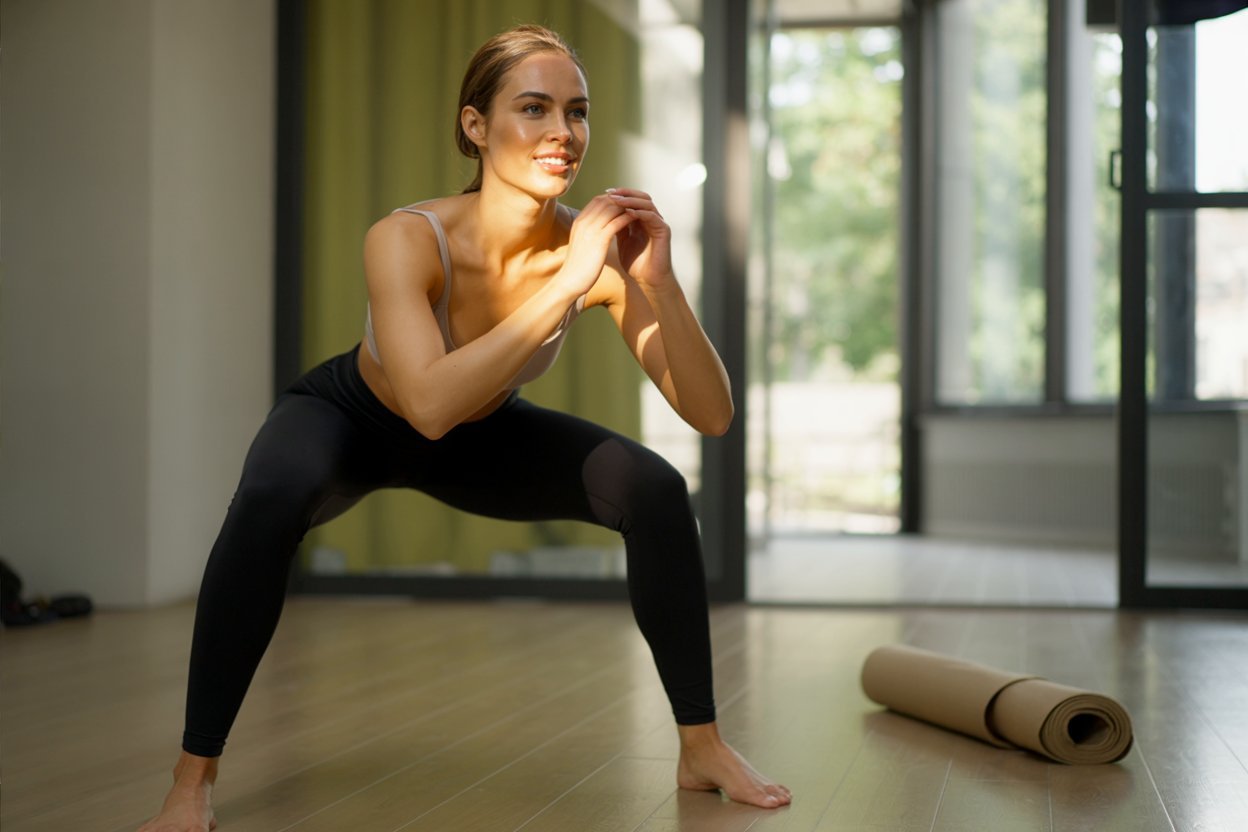
- Sumo squats: Wider stance, toes out, lower deep for inner thighs
- Regular squats: Keep chest up, core tight, heels on floor
Tip: Move slowly, squeeze glutes at top, focus on toning legs and building lower body strength.
Week 4: Push & Transform
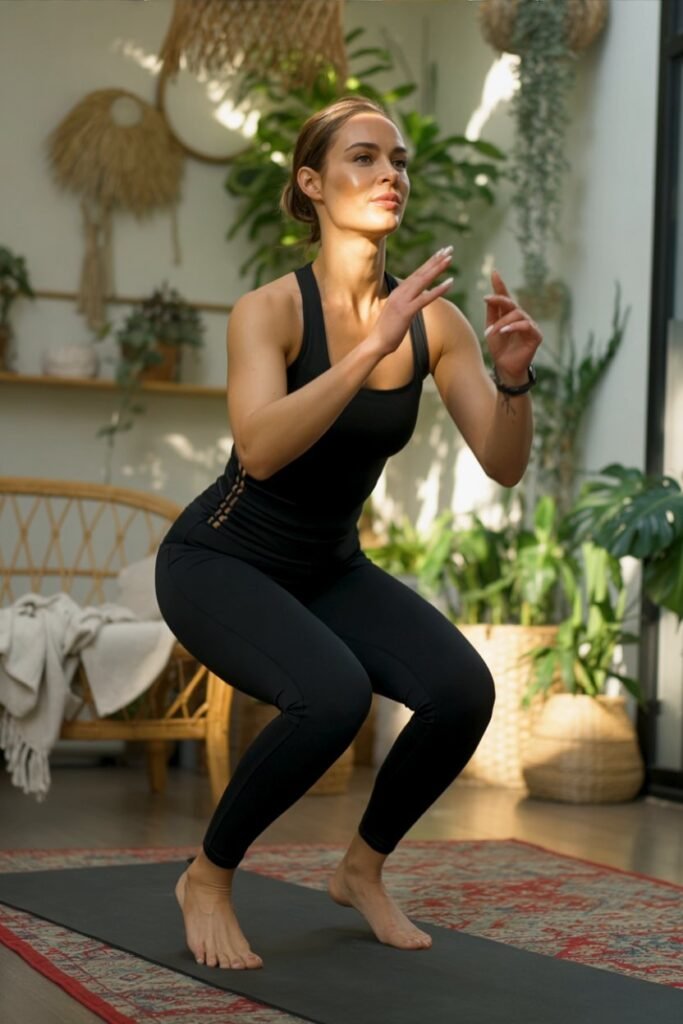
Daily: 100–150 squats (split sets if needed)
Focus: Full lower body workout, strength, and definition
Advanced Squat Variations:
- Jump squats: Explosive push from bottom, land softly
- Mixed squats: Combine regular + pulse + sumo in one set
- Optional weighted squats: Use dumbbells or resistance bands if available
Weekly Structure:
- Day 1–2: Jump squats + regular
- Day 3–4: Pulse + sumo
- Day 5: Mixed sets
- Day 6: Light/recovery
- Day 7: Rest or active stretching
Common Mistakes to Avoid

When I first started my 30-day squat challenge, I made a few mistakes that slowed my progress—and I want you to avoid them. Squats are simple but doing them wrong can limit results or even cause injury.
1. Knees Collapsing Inward
One of the most common errors is letting your knees cave toward each other. This puts stress on your joints and reduces glute activation.
Fix: Focus on pushing your knees out over your toes during the squat. Imagine spreading the floor apart with your feet.
2. Rushing Through Reps
I used to speed through sets to “get it over with.” Fast reps feel easy, but you lose control, reduce muscle engagement, and risk poor form.
Fix: Lower slowly, pause at the bottom if needed, and stand up with control. Each rep should feel deliberate.
3. Leaning Forward / Rounding Your Back
Leaning too far forward shifts the load to your lower back instead of glutes and quads. Rounding your back can cause pain over time.
Fix: Keep your chest up, shoulders back, and core tight. Imagine a straight line from your head to your tailbone.
4. Lifting Heels Off the Ground
If your heels rise, you lose balance and reduce power from your glutes and hamstrings.
Fix: Keep weight in your heels, pressing firmly into the floor. You should be able to wiggle your toes slightly without lifting your heels.
5. Skipping Warm-Ups
Jumping straight into squats without warming up can lead to tight muscles and poor form.
Fix: Spend 3–5 minutes doing leg swings, hip circles, glute bridges, or bodyweight lunges before squatting.
6. Overtraining / Ignoring Recovery
Doing too many reps without rest can cause fatigue and muscle soreness, slowing progress.
Fix: Stick to the 30-day plan, take light or rest days seriously, and stretch after each session.
Tips for Anyone Wanting to Try a Squat Challenge

If you’re thinking of starting a squat challenge, here’s what I learned along the way:
- Start Small: Begin with a number of squats you can realistically do and increase gradually.
- Prioritize Form: Proper squat form protects your joints and maximizes results.
- Schedule Rest Days: Muscles need time to recover—don’t skip rest.
- Make it Fun: Music, dancing, or changing environments can make a huge difference.
- Be Flexible: Adapt the challenge to your schedule, travel plans, or energy levels.
- Consistency is Key: Showing up every day, even for 15 minutes, leads to results.
- Celebrate Invisible Wins: Strength, endurance, and confidence are just as important as appearance.
Motivation & Consistency

- Track daily progress
- Set mini-goals
- Use accountability (buddy or community)
- Celebrate milestones
Final Thoughts
This 30-day squat challenge has been more than just a fitness experiment—it’s been a journey of discovery, growth, and self-confidence.
I learned to push myself, listen to my body, and enjoy the process, and the results speak for themselves.
Whether you’re looking to tone your legs, build strength, or simply challenge yourself, a squat challenge is accessible, effective, and flexible.
You don’t need a gym, fancy equipment, or hours of your day—just consistency, focus, and belief in your body.
For me, this challenge wasn’t just about visible transformation—it was about unlocking my body’s potential and realizing how much it could handle.
And let me tell you, the confidence and excitement I feel now are worth so much more than any number on a scale.
So, if you’ve been thinking about trying a squat challenge, I hope my journey inspires you to start today.
Trust me, your body is capable of more than you think, and the results—both visible and invisible—are truly worth it.